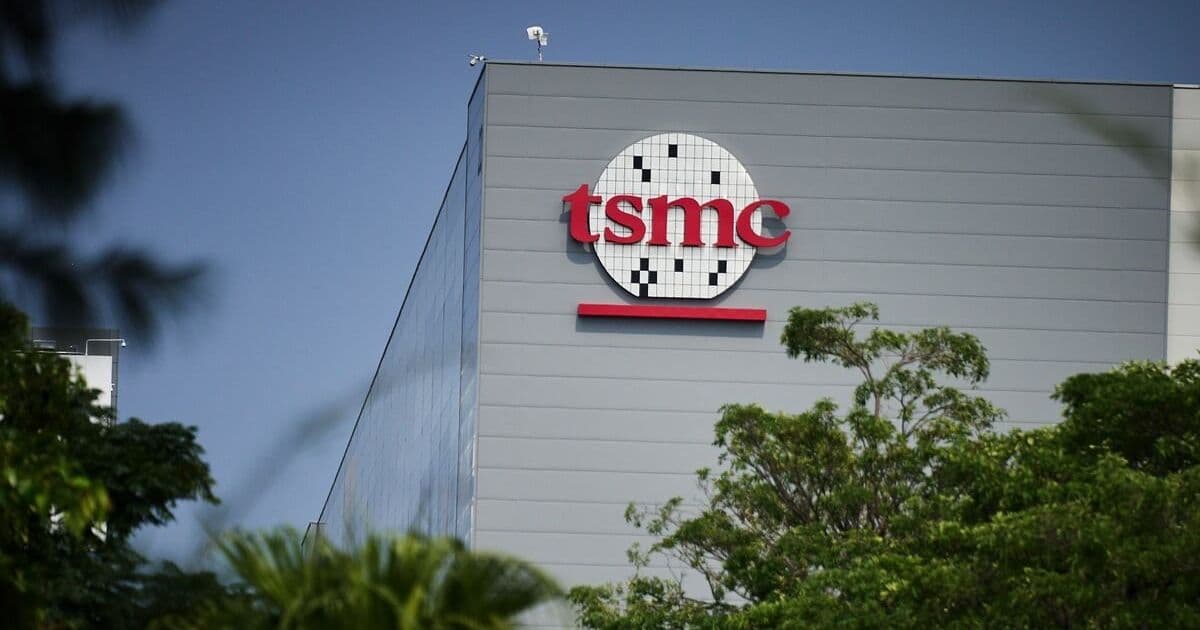
Taiwan Semiconductor Manufacturing Company reports Q1 revenue of $35.6B, beating estimates and suggesting global AI chip demand stayed robust even as geopolitical tensions escalated in the Middle East.
Taiwan Semiconductor Manufacturing Company (TSMC) delivered a strong first-quarter performance, reporting revenue of approximately $35.6 billion, a 35% year-over-year increase that exceeded market expectations of $35.2 billion. The results, announced on April 10, 2026, suggest that global demand for AI chips remained resilient during the early weeks of the conflict in the Middle East.
The world's largest contract chipmaker's performance provides a crucial barometer for the broader semiconductor industry and AI hardware market. TSMC manufactures chips for major tech companies including Apple, Nvidia, and AMD, making its financial results a key indicator of technology sector health.
What the Numbers Reveal
TSMC's revenue growth outpaced analyst projections, signaling continued strong demand for advanced semiconductor manufacturing. The company's ability to maintain this growth trajectory during a period of heightened geopolitical uncertainty suggests that AI development and deployment remain priorities for tech companies despite broader economic concerns.
The timing is particularly noteworthy. The revenue figures encompass the period when tensions in the Middle East began escalating, yet TSMC's performance remained robust. This indicates that AI chip demand has become somewhat insulated from traditional geopolitical risk factors, at least in the short term.
Industry Context
TSMC's results come amid a broader semiconductor industry that has seen mixed signals. While some segments have shown weakness due to macroeconomic pressures, the AI chip segment has remained a bright spot. Companies like Nvidia have reported exceptional demand for their AI-focused GPUs, and TSMC's results suggest this trend extends to the manufacturing level.
The strong performance also reflects TSMC's continued technological leadership. The company has been investing heavily in advanced manufacturing processes, including 3-nanometer and upcoming 2-nanometer technologies, which are crucial for the most demanding AI applications.
Market Implications
Investors and industry analysts are interpreting TSMC's results as confirmation that the AI hardware boom has staying power. The company's ability to exceed expectations during a period of global uncertainty suggests that AI infrastructure spending remains a priority for major technology companies.
However, some analysts caution that TSMC's strong performance may mask underlying vulnerabilities. The company's heavy concentration in Taiwan makes it susceptible to geopolitical risks, particularly tensions with China. The Middle East conflict, while not directly affecting TSMC's operations, serves as a reminder of how quickly global stability can shift.
Competitive Landscape
TSMC's results also highlight the competitive dynamics in the semiconductor industry. While Intel and Samsung have been attempting to challenge TSMC's dominance in contract manufacturing, the company's continued strong performance suggests it has maintained its technological edge.
The revenue growth may also reflect TSMC's success in expanding its customer base beyond traditional partners. As more companies develop AI applications, demand for advanced chip manufacturing has broadened, benefiting TSMC's business model.
Looking Ahead
TSMC has indicated that it expects continued strong demand for AI chips throughout 2026. The company is investing heavily in capacity expansion to meet this demand, with plans to build new fabrication facilities in Arizona, Japan, and potentially Europe.
However, the semiconductor industry remains cyclical, and some analysts warn that the current AI-driven demand surge may not be sustainable indefinitely. TSMC's ability to navigate potential future downturns while maintaining its technological leadership will be crucial for its long-term success.
Broader Economic Signals
The strong revenue growth also provides insight into the broader technology economy. Despite concerns about inflation, interest rates, and geopolitical tensions, companies continue to invest heavily in AI infrastructure. This suggests that many tech leaders view AI as a fundamental shift rather than a temporary trend.
TSMC's performance may also influence other sectors. Strong demand for AI chips could drive continued investment in data centers, cloud computing, and related infrastructure, creating ripple effects throughout the technology ecosystem.
Conclusion
TSMC's 35% revenue growth in Q1 2026 represents more than just strong financial performance—it signals the enduring strength of AI-driven demand in the global technology market. The company's ability to exceed expectations during a period of geopolitical tension suggests that AI infrastructure spending has become a priority that transcends traditional risk factors.
As the semiconductor industry continues to evolve, TSMC's performance will remain a crucial indicator of broader technology trends. The company's success in maintaining growth while navigating complex geopolitical challenges positions it as a key player in the ongoing AI revolution.
For more information on TSMC's financial performance and semiconductor industry trends, visit TSMC's official investor relations page.
Comments
Please log in or register to join the discussion