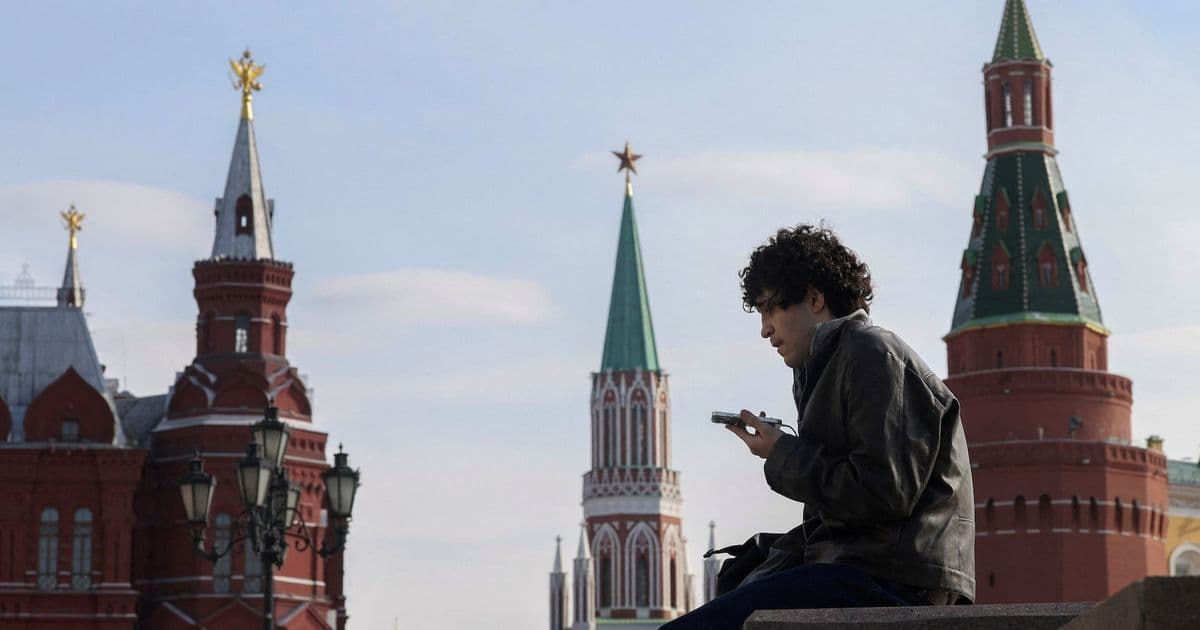
Russians are increasingly using VPN services and carrying multiple phones to circumvent the Kremlin's expanding internet restrictions, with VPN downloads surging 14 times year-over-year in March. The crackdown, which has disrupted banking, transport, and e-commerce, is contributing to falling approval ratings for Putin ahead of September elections.

A Russian interior designer sitting in a Moscow café performs a daily digital ritual that would seem absurd to most Western users. She enables a VPN to message friends abroad on WhatsApp, toggles it off to book train tickets on Russian Railways (which blocks VPN connections), then picks up a second phone to check client messages on MAX, the state-controlled messaging app.
This is the new normal for millions of Russians navigating what has become the most aggressive internet crackdown under President Vladimir Putin. The technical gymnastics required to simply communicate with colleagues, access basic services, or read international news have created a parallel digital infrastructure where carrying two phones and switching VPNs on and off throughout the day is considered routine.
The Scale of the Response
The numbers tell a striking story. In March 2026 alone, there were 9.2 million downloads of the five most popular VPN services from the Google Play store in Russia, according to data from Digital Budget, a Moscow-based consultancy. That represents a 14-fold increase compared to the same month last year.
"We've never seen this kind of take-up rate before," said Sarkis Darbinyan, a Russian internet freedom activist now based in Lisbon (Moscow has designated him a "foreign agent").
The surge in VPN adoption reflects a broader shift in how Russians access the internet. According to the Levada Center, an independent pollster also labeled a foreign agent by Moscow, the percentage of Russians acknowledging VPN use has climbed from 23% in 2022 to 36% this year. Younger, tech-savvy Russians are buying VPN subscriptions for their parents or setting up custom VPN servers for their families.
What's Actually Driving the Crackdown
The Kremlin frames internet controls as necessary during what officials describe as an existential confrontation with the West over Ukraine. Spokesman Dmitry Peskov has repeatedly justified the restrictions on security grounds.
But the timing and targeting suggest a political dimension. The disruptions intensified in March with a nearly three-week mobile internet outage in Moscow that reportedly frustrated senior bureaucrats who rely on internet access and Telegram to organize support for the ruling United Russia party ahead of September's parliamentary elections.
The FSB security service has also ordered telecom companies to shut down mobile internet for days at a time in regions across Russia, claiming Ukrainian attack drones could use mobile networks for navigation assistance. Meanwhile, Roskomnadzor, the state communications regulator, has been blocking or slowing connections to a growing list of apps and websites it alleges host illegal or extremist content.
Both WhatsApp and Telegram have accused Russia of attempting to force users toward less secure, government-mandated alternatives.
The "Digital Sovereignty" Push
Officials have been promoting state-backed alternatives to foreign apps and websites as part of a "digital sovereignty" campaign. MAX, which launched last year and is owned by technology giant VK, has accumulated over 85 million daily users according to its owner.
But trust is scarce. Kremlin critics and some Western tech companies have warned that MAX could be used for surveillance. VK denies these claims.
The concerns are not unfounded. Even loyal government officials reportedly take precautions, downloading VPNs and carrying multiple phones to keep MAX separate from their other digital activities. Some remove microphones and cameras from devices with MAX installed in case the FSB gains access.
"Even if you're not up to any mischief, nobody wants the FSB reading your messages," one source familiar with the practice told Reuters.
Real-World Consequences
The crackdown has tangible economic costs. In April, government offices, banks, and major online retailers began blocking users with active VPN connections from accessing their sites, acting on Roskomnadzor's instructions.
Wildberries, Russia's equivalent of Amazon, saw internet traffic drop 10% following the implementation. "Many users do not switch off their VPN to access the site and simply lose interest in making a purchase if they cannot open the product page," Digital Budget reported.
When navigation apps stopped working during the Moscow shutdown in March, delivery drivers for Flowwow, an online flower and gift marketplace, resorted to using vendors' Wi-Fi connections to download directions to customer addresses. Paper map sales more than doubled in the capital during the shutdown, according to Wildberries data.
The disruptions have also affected banking, transport, and e-commerce more broadly, generating frustration that appears to be contributing to declining political support. State pollster VTsIOM reported Putin's approval rating fell from 75.1% in February to 65.6% in April, its lowest level since the 2022 invasion of Ukraine. It has since recovered slightly to around 67%.
Frustration over internet restrictions, combined with rising prices, tax hikes, and war fatigue, is widely believed to have driven the decline.
A Softer Touch
Putin acknowledged the political risk in April, instructing the government to "tread more softly" and telling lawmakers it was "counterproductive" to "focus solely on bans and restrictions."
Recent moves suggest officials are listening. The government postponed a plan that would have charged mobile customers extra for using more than 15 gigabytes of foreign data per month, a measure targeting VPN users that media reports say will likely be introduced after the election. Putin has also asked the government and FSB to ensure critical services like healthcare platforms and online payment systems remain operational.
Yet the fundamental architecture of control remains in place. Kirill Dmitriev, Putin's special envoy, openly uses VPNs and posts regularly on X, which cannot be accessed inside Russia without one. The irony of a senior official circumventing his own government's restrictions while promoting them to the public is not lost on ordinary Russians.
The Cat-and-Mouse Game Continues
While VPN use is not illegal in Russia, Roskomnadzor has restricted access to hundreds of VPN services, creating what activists describe as a "game of cat and mouse" where users must constantly download new services to access blocked content.
For many Russians, the effort is not worth it. "Most Russians simply do not see the need to go to any extra trouble," wrote Denis Volkov, director of the Levada Center. "What is readily available is quite sufficient for them."
For those who do bother, the digital life has become a series of toggles and switches, a constant negotiation between access and surveillance. As one Russian user put it, invoking a common saying: "Nothing is more permanent than the temporary."
Comments
Please log in or register to join the discussion