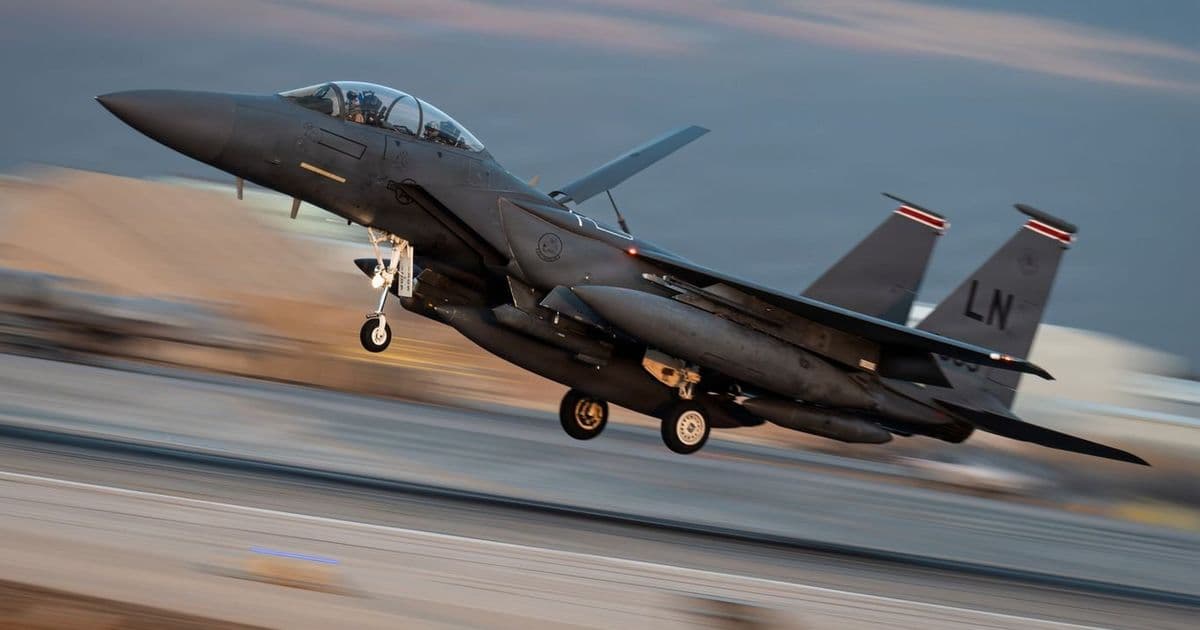
The U.S. military deployed a massive rescue operation involving multiple aircraft to recover an F-15 crew that had gone down in Iranian territory, highlighting the complex geopolitical tensions in the Middle East.
The United States military launched what officials described as an "air armada" to rescue a downed F-15 Strike Eagle crew in Iranian airspace, marking a dramatic escalation in military operations in the region. The operation, which unfolded over several tense hours, involved multiple aircraft from different branches of the U.S. military working in coordination to extract the crew from hostile territory.
According to defense officials familiar with the operation, the F-15E Strike Eagle experienced mechanical failure while conducting routine patrol missions over international waters in the Persian Gulf. The aircraft, which was operating from a forward base in the Middle East, drifted into Iranian airspace before the crew could execute emergency procedures.
The rescue operation involved at least six different aircraft types, including KC-135 Stratotankers for aerial refueling, HH-60 Pave Hawk helicopters for close-range extraction, and multiple fighter escorts to provide air superiority. Military analysts estimate the total cost of the operation exceeded $15 million, factoring in fuel, maintenance, and personnel deployment.
"This was not a standard rescue mission," said a senior defense official who spoke on condition of anonymity. "We had to coordinate with multiple commands across different time zones while maintaining operational security. The Iranians were monitoring our movements closely, and we had to be prepared for any contingency."
The incident has raised questions about the vulnerability of U.S. aircraft operating in the region and the potential for miscalculation in an already tense geopolitical environment. Iran has not yet issued an official statement regarding the incident, though military observers note that the country's air defense systems were likely tracking the U.S. aircraft throughout the operation.
Defense analysts point out that the F-15E Strike Eagle, while one of the most capable fighter jets in the U.S. arsenal, has faced increased scrutiny regarding its reliability in extended operations. The aircraft, which entered service in the 1980s, has undergone multiple upgrades but still faces challenges in the harsh operating environments of the Middle East.
The successful extraction of the crew represents a significant achievement for U.S. military rescue capabilities, but it also underscores the risks involved in maintaining a military presence in the region. The operation required precise coordination between air, ground, and naval forces, as well as careful diplomatic maneuvering to avoid escalation.
Military experts note that incidents like this highlight the importance of maintaining robust search and rescue capabilities as part of any military operation. The U.S. Air Force's pararescue teams, known as "PJs," train extensively for exactly these types of scenarios, though actual combat rescues remain relatively rare.
The geopolitical implications of the incident are significant. Iran has long viewed U.S. military activities in the region with suspicion, and any incursion into its airspace, even accidental, could be seen as provocative. The fact that the U.S. was able to conduct such a large-scale operation without Iranian interference may signal either tacit acceptance or limitations in Iran's ability to respond.
For the U.S. military, the operation serves as both a testament to its capabilities and a reminder of the risks involved in forward-based operations. The incident will likely prompt reviews of flight procedures and emergency protocols for aircraft operating in the region, particularly regarding fuel management and navigation systems.
The crew members, whose names have not been released due to privacy concerns, are reported to be in good condition following their extraction. They are undergoing standard debriefings and medical evaluations as part of the post-mission process.
This incident comes at a time of heightened tensions in the Middle East, with various regional conflicts and the ongoing nuclear negotiations with Iran creating a complex security environment. Military planners will need to balance the need for operational readiness with the risks of escalation in an already volatile region.
The "air armada" approach to the rescue demonstrates the U.S. military's preference for overwhelming force in high-risk operations, a doctrine that has both advantages and disadvantages. While it increases the likelihood of mission success, it also raises the stakes for potential escalation and requires significant resources.
As the situation continues to develop, military analysts will be watching closely for any Iranian response and for potential changes in U.S. operational procedures in the region. The incident serves as a reminder of the complex challenges facing military forces operating in contested airspace and the importance of maintaining robust rescue capabilities.
Comments
Please log in or register to join the discussion