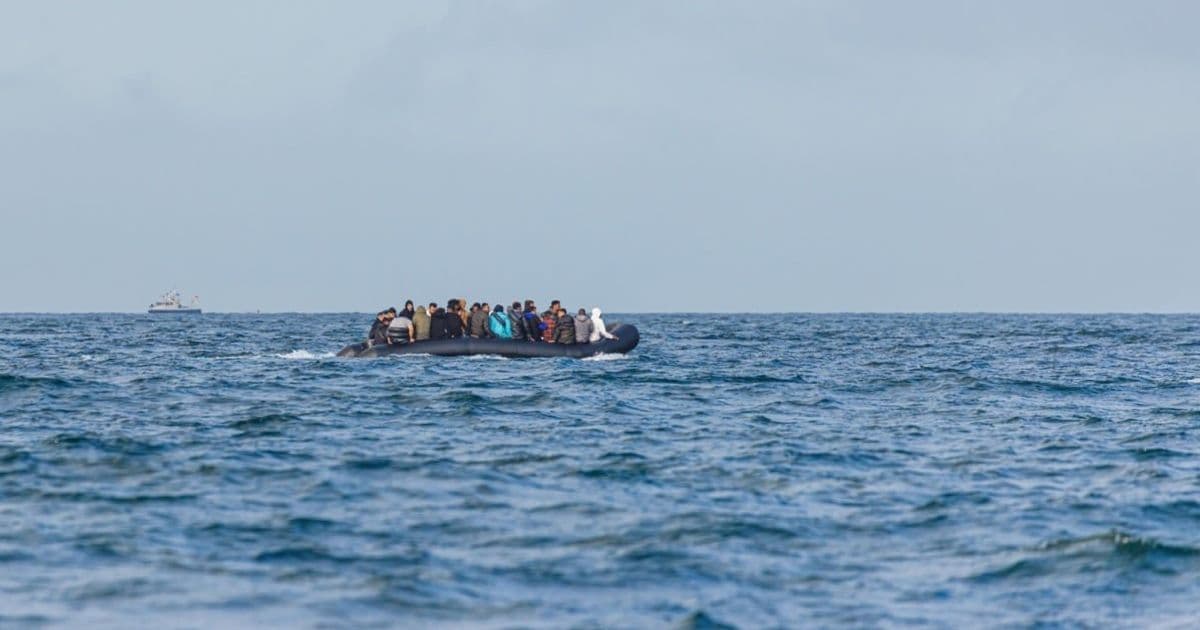
The UK government is investing heavily in a new maritime surveillance system that fuses drone, satellite, and radar data to autonomously track small boats crossing the English Channel, raising questions about privacy, effectiveness, and the growing role of private contractors in border enforcement.
The UK Home Office has announced a procurement for a £100 million maritime surveillance system designed to autonomously detect and track small boats in the English Channel. The system, part of the Border Security Command's (BSC) new Coastal Maritime ISR Service, aims to fuse data from land-based intelligence, Beyond Visual Line of Sight (BVLOS) drones, satellite-based automatic identification, and radar to create a real-time "Tracks as a Service" for the Royal Navy and Home Office decision-makers.
This investment represents a significant escalation in the technological arms race at the UK's borders. The system's core requirement is to autonomously identify "non-cooperative vessels"—boats that don't transmit standard identification signals—across the Channel. The winning supplier will be expected to integrate multiple data streams into a common operating picture accessible to first responders and command centers across the UK, Crown Dependencies, and British Overseas Territories.
The Technical Architecture
The proposed system operates on several technological layers:
Beyond Visual Line of Sight (BVLOS) Drones: These unmanned aerial vehicles can patrol the Channel without requiring direct visual contact from operators, significantly extending surveillance range. The system would need to handle complex regulatory and safety challenges for BVLOS operations over water.
Satellite-Based Automatic Identification: Traditional maritime AIS transponders are often disabled on small boats used for Channel crossings. The system would likely rely on satellite-based AIS receivers that can detect even weak signals, combined with synthetic aperture radar (SAR) satellites that can image vessels regardless of weather or time of day.
Radar Integration: Coastal radar stations provide continuous coverage, but small wooden or inflatable boats present challenging radar signatures. The system would need sophisticated signal processing to distinguish these from marine clutter.
Data Fusion Engine: The critical component is an API-driven platform that normalizes disparate data formats from satellites, drones, and coastal sensors into unified "tracks." This requires solving complex problems in data synchronization, attribution confidence scoring, and real-time processing.
The system's "autonomous" capability suggests machine learning algorithms for pattern recognition—identifying boat shapes from drone imagery, predicting likely crossing routes based on weather and tidal patterns, and flagging anomalies. However, the notice doesn't specify the level of human oversight required, which is crucial for accountability.
Political Context and Effectiveness Questions
The timing of this procurement reflects ongoing political pressure around Channel crossings. Successive UK governments have faced criticism for their response to small boat arrivals, which peaked at over 45,000 people in 2022. The Home Office's notice explicitly frames the system as addressing "clandestine entry," but the technology's effectiveness in actually reducing crossings is debatable.
Maritime security experts note that surveillance technology primarily enables interdiction, not deterrence. Once a boat is detected and tracked, the Royal Navy or Border Force vessels must physically intercept it—a process that remains resource-intensive and carries significant safety risks in the Channel's busy shipping lanes and often rough conditions. The system might improve detection rates but doesn't solve the fundamental challenge of what happens after detection.
Furthermore, the focus on technology may address symptoms rather than root causes. The drivers of migration—conflict, economic hardship, climate displacement—remain outside the Home Office's technological purview. Critics argue that £100 million spent on surveillance could alternatively fund more asylum processing capacity or diplomatic initiatives with source countries.
Privacy and Civil Liberties Concerns
The system's capability to monitor maritime traffic comprehensively raises privacy questions. While the focus is on "non-cooperative vessels," the same infrastructure could theoretically monitor legitimate fishing vessels, pleasure craft, or even coastal communities. The UK already has extensive surveillance networks, and adding autonomous drone patrols creates new data collection points.
The "common operating picture" accessible to multiple agencies also creates data sharing risks. Without strict governance, information collected for border security could be repurposed for other law enforcement or intelligence activities. The Home Office has faced criticism in the past for data handling, including a 2023 report by the UK's data protection watchdog highlighting GDPR failures in its eVisa rollout.
The Private Contractor Ecosystem
This procurement continues a trend of outsourcing border security technology. Research from Progressive International claims private companies have won £3.5 billion in UK border contracts since 2017. The new system will likely be built and operated by defense contractors or technology firms, raising questions about accountability and profit motives influencing border policy.
Private companies may prioritize contract deliverables over ethical considerations. The system's "autonomous" nature could reduce human oversight, potentially leading to automated decisions with significant consequences for migrants' lives. The procurement notice mentions a "supplier portal" with camera feeds and alerts, suggesting real-time operational control may rest with private contractors.
Technical Challenges and Trade-offs
Several technical hurdles could affect the system's performance:
- Weather and Environmental Factors: The Channel experiences fog, rain, and rough seas that can degrade satellite imagery, radar performance, and drone operations.
- Signal Interference: The Channel is one of the world's busiest waterways, with dense shipping traffic creating radar clutter and potential signal interference.
- False Positives: Differentiating small boats from other marine objects (debris, wildlife, fishing equipment) requires sophisticated algorithms that may generate false alarms, wasting interdiction resources.
- Integration Complexity: Merging data from multiple government and military systems (Royal Navy MDAP, Home Office systems) involves significant technical and bureaucratic challenges.
- Cost Overruns: Large government IT projects frequently exceed budgets and timelines. The £100 million figure represents the maximum value over five years, but actual costs could be higher.
Alternative Approaches
Some maritime security experts suggest alternative strategies that might be more cost-effective:
- Enhanced Port of Entry Processing: Investing in faster, more humane asylum processing at designated ports could reduce incentives for dangerous Channel crossings.
- International Cooperation: Working with French authorities to address departure points and with source countries to address root causes of migration.
- Community-Based Monitoring: Involving coastal communities in reporting suspicious activity rather than relying solely on technology.
- Satellite Constellation Sharing: Partnering with European neighbors to share satellite surveillance costs and data, rather than building a standalone UK system.
The Broader Pattern
This procurement fits into a larger trend of "techno-solutionism" in border security. Governments increasingly turn to advanced technology—drones, AI, biometrics—to address complex social and political challenges. While technology can enhance capabilities, it also creates new dependencies and potential failures.
The UK's Emergency Services Network, for example, has faced years of delays and cost overruns as it attempts to migrate from analog radio to a digital network. The Home Office's own digital transformation projects have similarly struggled. The new maritime surveillance system will need to navigate these same challenges while operating in a high-stakes, real-time environment.
Looking Ahead
The procurement process is currently in the "engagement with vendors" phase, meaning the Home Office is gathering industry feedback before finalizing requirements. The contract will likely be awarded in 2026, with implementation over the following years.
Success will be measured not just by technical performance but by actual impact on Channel crossings and maritime safety. However, the system's effectiveness may be limited by factors outside its control: geopolitical instability, economic conditions in source countries, and the UK's asylum system capacity.
The £100 million investment signals the UK's commitment to technological solutions for border security, but it also highlights the growing complexity of modern surveillance. As drones, satellites, and AI converge, the line between security and privacy continues to blur, raising fundamental questions about what kind of society we want to build at our borders.
For more details on the procurement, see the UK Government's procurement notice, and for background on the broader context of UK border technology, the Home Office's Border Security Command provides additional information.
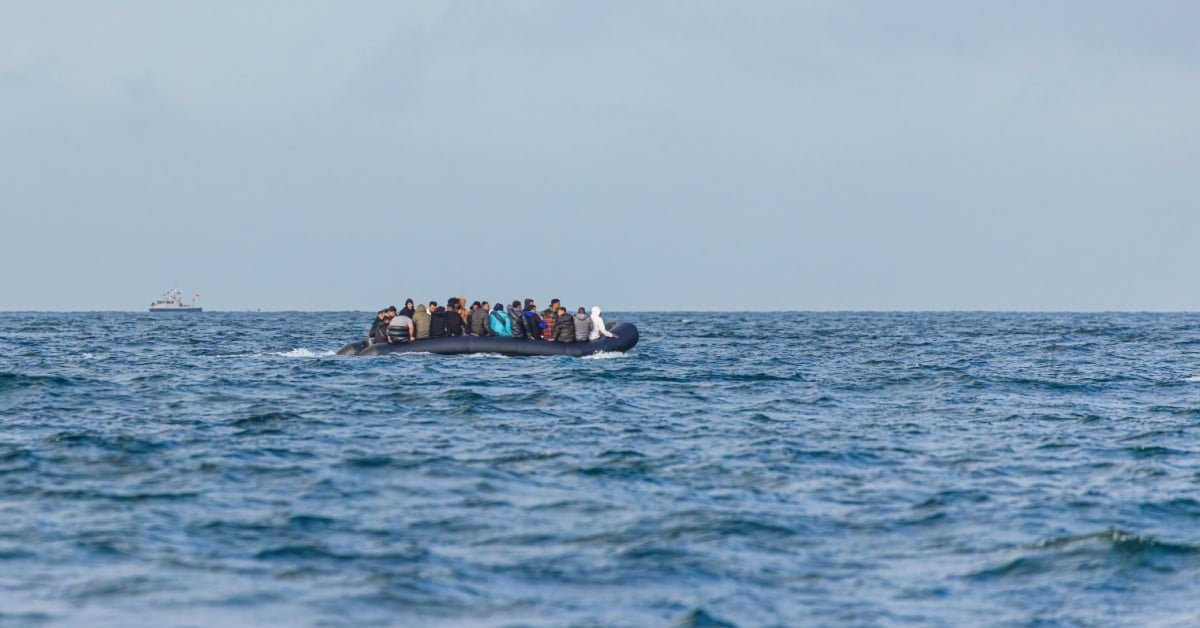
The featured image illustrates the maritime environment where this technology will be deployed, showing the challenging conditions that surveillance systems must navigate in the English Channel.
Comments
Please log in or register to join the discussion