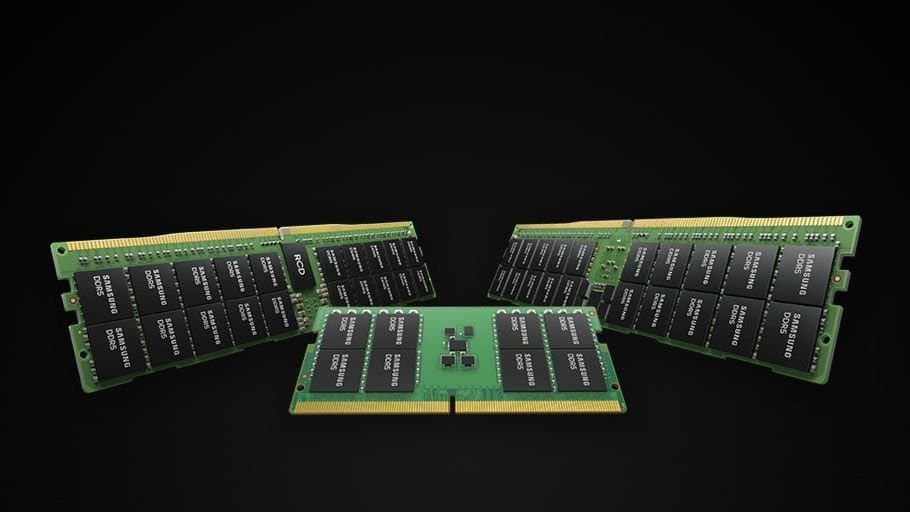
Researchers at the University of Tokyo have created a non-volatile magnetic memory device using manganese-tin (Mn₃Sn) that switches states in just 40 picoseconds while generating minimal heat. This breakthrough addresses critical energy consumption challenges in modern AI hardware by potentially reducing memory refresh overhead and cooling requirements across computing systems.
Researchers at the University of Tokyo have demonstrated a revolutionary non-volatile magnetic switching device capable of flipping states in just 40 picoseconds while consuming unusually little power and generating far less heat than previous ultrafast switching approaches. This development potentially addresses one of the most significant problems facing modern AI hardware: the enormous energy and cooling demands created by moving and storing data.
The device, built using an antiferromagnetic material called manganese-tin (Mn₃Sn), can be reliably switched using ultrashort electrical pulses while retaining stored information after power removal. The researchers also demonstrated similar switching using ultrafast photocurrent pulses generated from a telecom-band laser and photodiode, effectively converting optical signals directly into memory-writing electrical pulses.
At its fundamental level, modern computing relies on switching physical states. Every operation in a computer—whether running applications, training AI models, or loading data—involves billions or trillions of tiny physical state changes. Transistors switch on and off, memory cells charge and discharge, and data moves through interconnects. These switching events physically represent binary information, but they require energy that almost entirely becomes heat.
This reality is increasingly problematic in the AI era. Modern AI accelerators process enormous data volumes, but much of their power consumption comes not just from computation itself, but from constantly moving and refreshing information between caches, memory, storage, and interconnects. As GPU clusters scale to hundreds of thousands of accelerators, power delivery and cooling have become some of the industry's biggest bottlenecks.
Current memory technologies all handle switching differently, with significant tradeoffs:
- DRAM stores information as electrical charge in capacitors, but requires constant refreshing (thousands of times per second), consuming significant power and generating heat even during idle periods.
- Flash memory retains data without continuous power but switches slower and with higher energy intensity, making it unsuitable for high-speed working memory.
- SRAM achieves extremely fast switching using transistor feedback circuits but consumes significant chip area and power, making it expensive and difficult to scale to large capacities.
The industry has long sought a "universal memory" combining the speed of SRAM, density of DRAM, persistence of flash, and low power consumption. This challenge becomes even more difficult at ultrafast timescales, where many experimental switching technologies rely on brute-force heating to destabilize and flip states rapidly. Several previously demonstrated picosecond-scale switching approaches involve temperature rises of several hundred Kelvin during operation.
The Tokyo researchers have pursued a radically different approach through spintronics. Instead of storing information as electrical charge, spintronic devices use magnetic states. While conventional magnetic memories typically use ferromagnets (materials like iron, cobalt, or nickel with aligned magnetic moments), the new device uses an antiferromagnetic material called Mn₃Sn, where neighboring magnetic moments largely cancel each other out.
Antiferromagnets offer potential advantages: they can switch much faster, resist magnetic interference more effectively, and scale to smaller dimensions without generating large stray magnetic fields. The researchers fabricated layered Mn₃Sn/Ta structures on silicon substrates and used ultrafast electrical pulses to flip the material between two stable magnetic configurations representing binary states.
The crucial distinction lies in the switching mechanism. Rather than primarily heating the material, the pulses generate spin-orbit torque—a process that transfers angular momentum directly into the magnetic structure itself, flipping the state without requiring extreme temperature spikes.
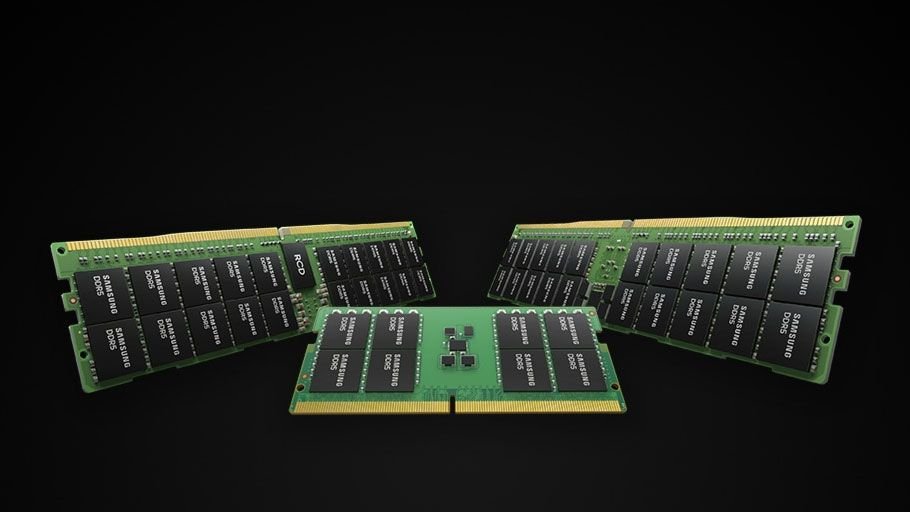
The device reportedly achieved switching in just 40 picoseconds—roughly 1,000 times faster than typical nanosecond-scale memory switching. Simulations showed temperature rises of only about 8K (14.4°F) during switching, supporting the claim that the mechanism relies primarily on direct angular-momentum transfer rather than brute-force thermal switching.
The optical switching demonstration may prove important for future data-center architectures. The researchers generated 60-picosecond photocurrent pulses using a telecom-band laser and photodiode, then used those pulses to switch the device's magnetic state. This could align with industry efforts toward optical interconnects and silicon photonics, where hyperscalers increasingly seek to move information using light rather than conventional electrical signaling.
If technologies like this become commercially viable, they could theoretically:
- Reduce memory refresh overhead
- Lower cooling requirements
- Reduce idle power draw
- Potentially blur the distinction between memory and storage
For personal computing, this could translate into systems that retain working memory contents without standby power, resume instantly, and generate less heat. For hyperscale AI infrastructure, the implications would center around power efficiency and cooling reduction across massive GPU clusters.
However, the technology remains firmly experimental. Current devices are tiny laboratory structures rather than manufacturable memory chips, and the implementation still requires an external bias magnetic field for deterministic switching—a major practical limitation for commercial hardware. Manufacturing scalability, endurance validation, cost competitiveness, and integration with existing CMOS manufacturing processes also remain unresolved.
The history of computing includes numerous promising "next-generation memory" technologies that never displaced mature DRAM or NAND ecosystems. Even so, this work highlights a growing reality in the computing industry: future performance gains may depend less on shrinking transistors and more on reducing the energy required to physically switch, move, and store information.

Comments
Please log in or register to join the discussion