
Adobe Photoshop 27.7 introduces on-device AI processing for the Remove tool, but only on high-end Macs with strict hardware requirements, leaving many users with cloud-based processing options.
Adobe has released Photoshop version 27.7 today, bringing a significant update to the popular image editing software. The headline feature is an on-device AI model for the Remove tool, which allows object removal without requiring cloud processing. This development represents Adobe's continued efforts to bring AI capabilities directly to users' devices, though with some notable limitations that affect compatibility.
The new on-device processing for the Remove tool offers several advantages for users. Primarily, it enables object removal even when an internet connection isn't available, which is particularly valuable for photographers and designers working in remote locations or with unstable connectivity. Additionally, processing images locally provides enhanced privacy benefits, as sensitive image data never needs to leave the user's device for external processing.

Users can now download and manage the on-device AI model directly within Photoshop, with the ability to process edits locally after downloading. The application automatically checks hardware compatibility before downloading the model, and users have the flexibility to switch between cloud and on-device processing modes as needed.
However, the implementation comes with substantial hardware requirements that limit its availability. According to Adobe's specifications, the on-device Remove tool requires:
- Processor: Apple silicon Mac with M1 Pro or later
- Memory (RAM): 24 GB or more
- Operating system: macOS Tahoe (version 26.4) or later
These requirements mean that many Mac users, even those with relatively recent machines, will find the Device option grayed out in Photoshop. They'll be limited to using the cloud-based version of the AI-powered Remove tool, which still offers powerful capabilities but requires an internet connection and processes images on Adobe's servers.
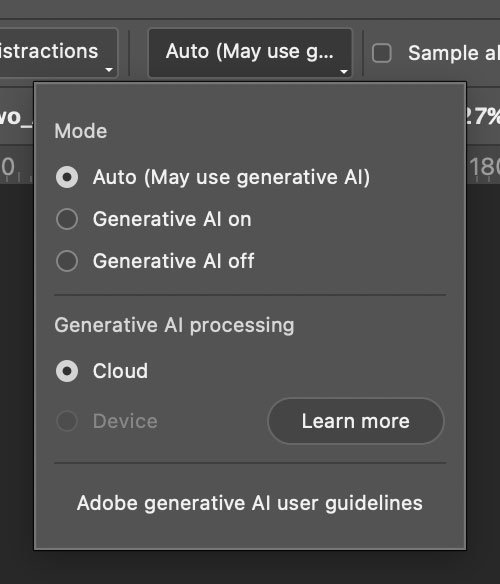
This hardware limitation reflects the computational demands of running sophisticated AI models locally. The Remove tool's AI functionality likely involves complex neural networks that require significant processing power and memory to operate efficiently on-device. While Apple's M1 Pro and later chips offer substantial performance improvements over previous generations, the 24GB RAM requirement indicates the memory-intensive nature of these AI operations.
Beyond the on-device AI processing, Photoshop 27.7 introduces several other noteworthy features:
Photoshop desktop and Firefly Boards integration: Users can now share any Photoshop document directly to Firefly Boards, either by creating a new board or adding to an existing one. This integration is accessible from both the Share panel and the Export menu.
Enhanced Firefly Boards functionality: Firefly Boards is now featured in the Variations panel as a destination for moodboarding and comparison of AI-generated variations. Users can open generated image variations with Ideate in Firefly Boards using a preconfigured Board layout for further exploration.
Guided workflows: New guided workflows help create moodboards and visual concepts, branding and marketing assets, and social media content.
Ungating premium generative AI features: Eligible subscribers now have expanded access to premium generative AI features, with existing generative credits usable across both standard and premium options.
Unified Account Menu: A new Unified Account Menu in the Edit workspace allows users to view and manage their Adobe account, subscription details, and generative credits directly within the application.

For developers and mobile professionals working across platforms, this update highlights an important trend in AI processing: the shift toward on-device capabilities that offer both performance benefits and privacy advantages. However, the hardware requirements also demonstrate the current limitations of running advanced AI models locally, particularly on mobile devices where resources are more constrained than on high-end desktop computers.
The implementation in Photoshop follows a pattern we're seeing across the industry, where AI features are increasingly being offered with both cloud and local processing options. This approach allows software companies to provide cutting-edge functionality while acknowledging the varying hardware capabilities of their user base.
For users who don't meet the minimum hardware requirements for on-device processing, the cloud-based version of the Remove tool remains a powerful alternative. Adobe's cloud infrastructure can handle complex AI operations more efficiently than most consumer hardware, though it does require an internet connection and involves sending image data to external servers.
The update also reflects Adobe's broader strategy of integrating its creative tools with its AI-powered Firefly platform. By enhancing the connection between Photoshop and Firefly Boards, Adobe is creating a more cohesive ecosystem for creative workflows that combines traditional editing with AI-assisted capabilities.
For developers interested in implementing similar on-device AI features in their own applications, Photoshop's approach offers several considerations. The automatic hardware detection and graceful fallback to cloud processing provide a model for handling varying device capabilities. Additionally, the clear communication of requirements helps set user expectations about what features will be available on their specific hardware.
As AI continues to evolve, we can expect to see these on-device processing capabilities become more accessible across a wider range of hardware. Future chip generations and software optimizations will likely reduce the current steep requirements, making features like Photoshop's on-device Remove tool available to more users.
For more information about the updated Remove tool in Photoshop 27.7, you can check Adobe's official documentation here.
Comments
Please log in or register to join the discussion