
A year after DeepSeek's R1 model sparked concerns about US AI leadership erosion, data shows American firms still dominate core AI infrastructure and innovation, with investment patterns unchanged despite geopolitical tensions.
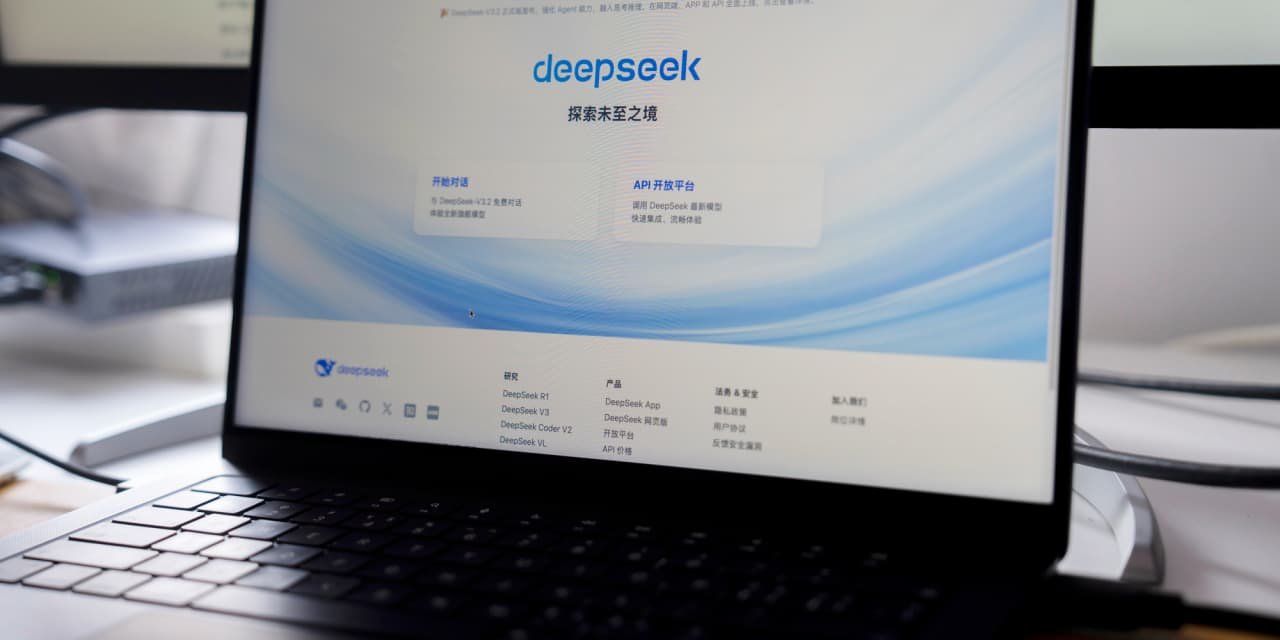
When DeepSeek unveiled its R1 model in early 2025, the Beijing-based AI lab's performance benchmarks briefly suggested a potential inflection point in global AI competitiveness. Yet newly compiled market data reveals US companies retain commanding leads across three critical pillars: AI chip production, large language model (LLM) capabilities, and commercial adoption—with no significant shift in capital allocation toward non-US alternatives. This persistence of American dominance defies predictions that DeepSeek's advances would catalyze investment redistribution.
The Unfulfilled Disruption Narrative
DeepSeek's R1 release demonstrated China's ability to produce frontier models with fewer computational resources, leveraging algorithmic efficiencies to challenge US giants like OpenAI and Anthropic. Industry analysts speculated this could trigger investor migration toward Chinese and European AI ventures. However, sales data through Q4 2025 shows Nvidia's data center GPU revenue grew 78% year-over-year to $47.3 billion, while Chinese alternatives like Huawei's Ascend chips captured less than 6% of the global market. Similarly, enterprise adoption metrics compiled by Gartner indicate US-built models power 89% of commercial AI implementations worldwide.
Structural Advantages Cementing Leadership
Three factors explain the entrenched US position:
Hardware Ecosystem Lock-In: Nvidia's CUDA platform remains the foundational layer for AI development, with alternatives like China's Compute Unified Device Architecture (CUDA-compatible) still lacking critical developer tools. As SambaNova's stalled $1.6B acquisition talks with Intel demonstrate, even well-capitalized challengers struggle against integrated software-hardware moats.
Model Commercialization Velocity: US firms convert research into revenue faster. Anthropic's $9B revenue run rate—up 125% in six months—contrasts with DeepSeek's reliance on government-subsidized deployments. OpenAI's enterprise chatbot ads (launched quietly in January) already attract seven-figure commitments by monetizing API access differently than China's service-first approach.
Investment Inertia: 2025's $58B European VC funding—while impressive—pales against North America's $142B AI investment surge. Crucially, 72% of European capital flowed to hardware and biotech rather than foundation models, per Crunchbase data. The recently approved US House bill imposing congressional oversight on AI chip exports may further discourage diversification.
Limitations and Friction Points
Despite US advantages, three pressures could alter the landscape:
- Geopolitical Fracturing: Export controls are pushing China toward closed-loop ecosystems. Huawei's Shenzhen-based Pangu model now trains exclusively on domestic chips, though performance lags 18 months behind GPT-4.5.
- Compute Economics: Rising power costs threaten US data center expansions. Projects like Kioxia's NAND flash production surge (driven by AI storage demand) face 30% higher energy tariffs in Arizona than in Singapore.
- Regulatory Drag: The EU AI Act's compliance burden disadvantages smaller US entrants, though giants like Anthropic navigate this via constitutional rewrites that prioritize adaptable principles over rigid rules.
As Chris Miller, author of Chip War, notes: "Semiconductor supply chains have 50-year roots. DeepSeek proved algorithmic leaps alone can't override structural realities—yet." With OpenAI targeting a $750B valuation and Intel retooling fabs for AI chips, America's AI industrial complex shows no signs of conceding ground.
Comments
Please log in or register to join the discussion