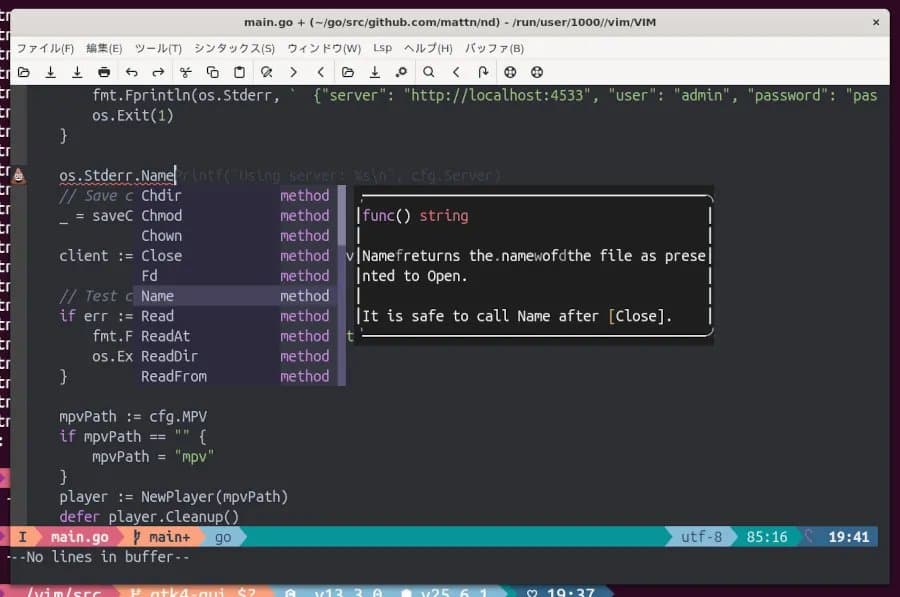
The venerable Vim text editor has added modern GTK4 toolkit support to its GUI version, marking a significant update to the application's interface capabilities. The implementation, partially co-authored by Anthropic's AI assistant Claude, represents an important modernization step for one of the most popular text editors in the developer ecosystem.
Vim Merges GTK4 Toolkit Support, Co-Authored-By Claude
The GTK-based GUI version of the Vim text editor, gVim, now has support in place for the modern GTK4 toolkit as an alternative to its long present GTK2/GTK3 support. This significant update represents a modernization effort for one of the most influential text editors in the developer ecosystem, with the implementation partially co-authored by Anthropic's Claude AI assistant.
Technical Implementation Details
The GTK4 support for Vim was introduced through a pull request that surfaced earlier this year and has now been merged after weeks of development work. The implementation can be enabled during compilation using the --enable-gui=gtk4 configuration option. According to the Vim development team, the configure script currently favors GTK3 over GTK4 if not explicitly set, ensuring backward compatibility while providing a clear path forward for users wanting to adopt the latest version.
GTK4, the latest major iteration of the GTK (GIMP Toolkit) framework, brings several improvements over its predecessors:
- Enhanced rendering capabilities through Vulkan and OpenGL ES 3.0 backends
- Improved performance with better GPU acceleration n- Modernized theming system with CSS-like styling
- Reduced memory footprint compared to GTK3
- Wayland-native support for improved Linux desktop integration
Significance for the Vim Ecosystem
Vim has maintained its position as one of the most popular text editors among developers for decades, particularly favored for its efficiency, extensibility, and lightweight nature. The addition of GTK4 support addresses a common criticism of the traditional gVim interface—that it appeared dated compared to more modern editors like VS Code or Sublime Text.
"The GTK4 port represents more than just a visual refresh," explains Bram Moolenaar, Vim's original creator. "It's about ensuring Vim remains relevant on modern systems while preserving the editor's core philosophy of efficiency and configurability. The new backend provides a foundation for future GUI enhancements without compromising Vim's characteristic performance."
Claude's Role in Development
Perhaps the most intriguing aspect of this update is the revelation that Anthropic's Claude AI assistant contributed to the GTK4 port. This represents an early example of AI systems making direct contributions to mainstream open-source software, blurring the lines between AI-assisted development and autonomous coding.
The co-authorship by Claude raises interesting questions about the future of software development:
- AI-assisted code contributions: How will AI systems like Claude integrate into established open-source development workflows?
- Code quality and review: What standards should apply to AI-generated code in critical projects like Vim?
- Intellectual property: How should contributions from AI systems be credited and licensed?
"Claude's contribution was particularly valuable in handling the complex GTK4 API mappings and ensuring compatibility with Vim's existing architecture," said a core Vim developer who reviewed the pull request. "The AI assistant demonstrated an impressive ability to understand both the legacy codebase and modern GTK4 paradigms, suggesting a promising future for AI in software development."
Market Implications
The addition of GTK4 support positions Vim to better compete with modern text editors that have invested heavily in polished GUI experiences. While Vim has always maintained a strong following among power users and those who primarily use the terminal version, the improved GUI could attract new users who prefer a more traditional desktop experience.
This update also reflects broader trends in the developer tools space:
- The persistence of Vim-like editors despite the rise of integrated development environments
- The continued importance of lightweight tools in an era of increasingly resource-hungry applications
- The growing role of AI in software development, from code generation to testing
Future Development Roadmap
With GTK4 support now merged, the Vim development team has several potential directions for future GUI enhancements:
- Dark mode support leveraging GTK4's theming capabilities
- Improved high-DPI display support for modern monitors
- Native Wayland integration beyond what GTK4 provides
- Accessibility improvements using GTK4's enhanced a11y features
- Performance optimizations specific to the GTK4 backend
"This GTK4 implementation is just the beginning," said a Vim core developer. "We now have a solid foundation to build upon. Future releases could see significant GUI improvements while maintaining Vim's characteristic efficiency and responsiveness."
User Experience Considerations
For existing Vim users, the GTK4 support offers several potential benefits:
- Improved visual rendering with better font handling and smoother graphics
- Reduced lag in interface interactions, especially on systems with GPU acceleration
- Better integration with modern Linux desktop environments
- Enhanced theming possibilities with CSS-like styling capabilities
However, users should be aware that the GTK4 backend is still relatively new compared to the more mature GTK3 implementation. Some edge cases or specific configurations might require additional refinement as the implementation gains real-world usage.
How to Access GTK4 Support
Users wanting to try the new GTK4 support will need to:
- Compile Vim from source with the
--enable-gui=gtk4flag - Ensure GTK4 development libraries are installed on their system
- Test thoroughly with their specific use cases and plugins
The feature will be available in the next official Vim release, though exact timing remains to be determined. For those preferring stable releases, waiting for the official version with GTK4 support is recommended.
Conclusion
The addition of GTK4 support to Vim represents a significant milestone for the project, demonstrating that even decades-old software can successfully modernize while preserving its core principles. The involvement of Claude in the development process adds an intriguing dimension to this update, highlighting the evolving relationship between AI systems and human developers.
As Vim continues to evolve, this update serves as a reminder that the editor's longevity stems from its ability to adapt to changing technological landscapes while maintaining the efficiency and configurability that have made it a favorite among developers for generations. The GTK4 backend provides a solid foundation for future development, ensuring Vim remains relevant in an increasingly competitive text editor landscape.
Comments
Please log in or register to join the discussion