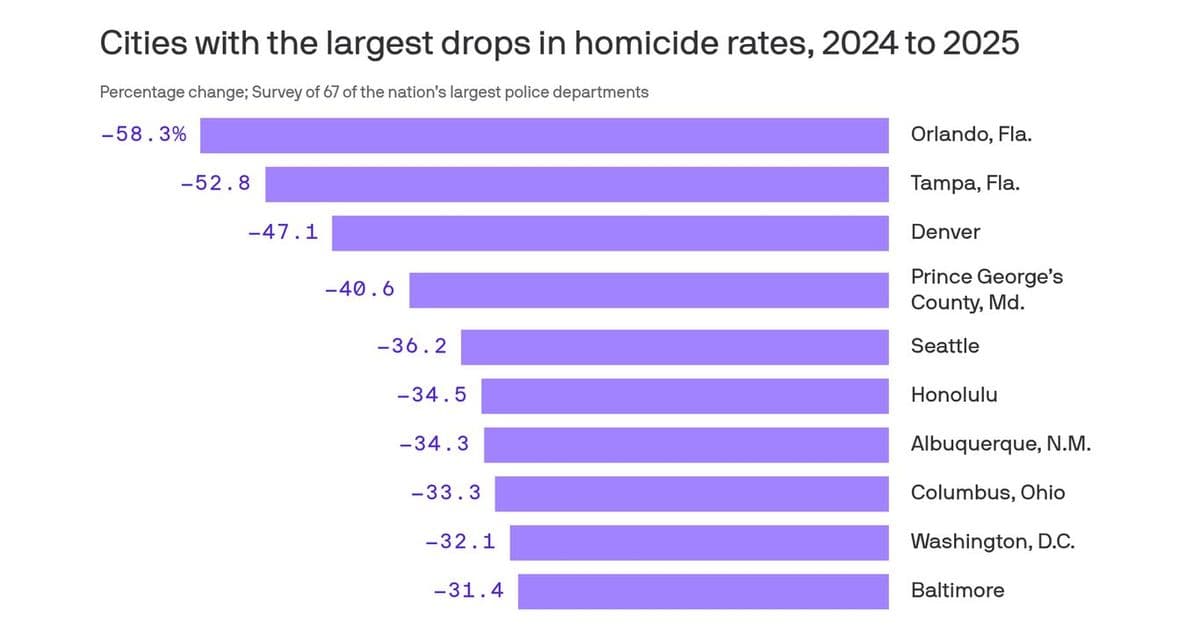
New data shows violent crime rates dropping significantly in major metropolitan areas, with some cities reporting double-digit percentage decreases compared to previous years.
Violent crime has plummeted across major U.S. cities, according to new data that shows significant decreases in homicides, assaults, and other violent offenses compared to recent years.
The decline comes after several years of elevated crime rates that had alarmed residents and policymakers alike. Cities that had been grappling with record-high murder rates are now reporting substantial improvements in public safety.
Key Statistics
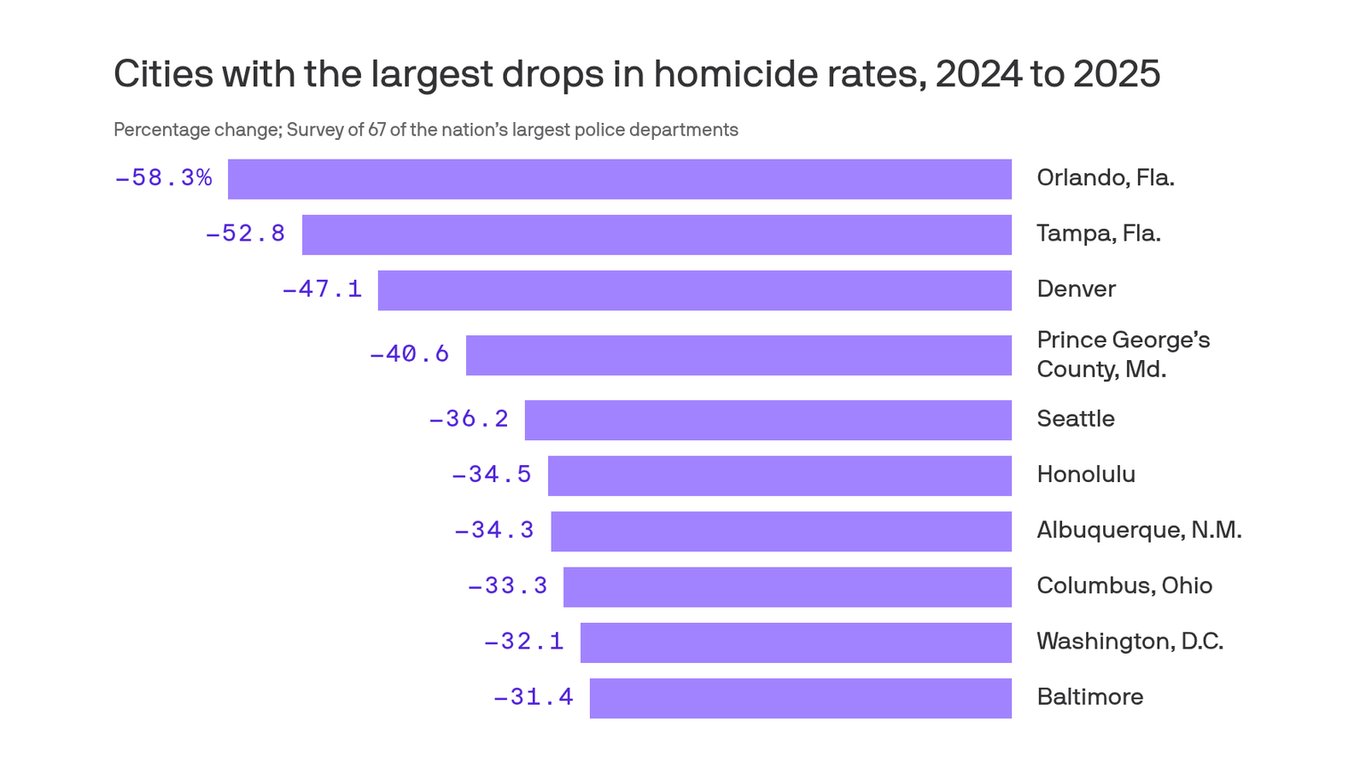
While specific numbers vary by city, the overall trend shows double-digit percentage decreases in violent crime across multiple metropolitan areas. Some cities are reporting their lowest homicide rates in decades, with reductions ranging from 15% to over 30% compared to the previous year.
Major urban centers including New York, Los Angeles, Chicago, and Philadelphia have all reported significant drops in violent crime. The reductions span multiple categories of violent offenses, suggesting a broad-based improvement in public safety rather than isolated decreases in specific crime types.
Contributing Factors
Law enforcement officials and criminologists point to several factors that may be driving the decline:
- Increased police presence in high-crime areas
- Enhanced community policing initiatives
- Improved coordination between federal, state, and local law enforcement
- Economic recovery and reduced poverty rates in some areas
- Better access to mental health and social services
- Changes in policing strategies and tactics
Some experts also note that the current decline follows a period of unusually high crime rates, which may have created conditions for a statistical rebound. The COVID-19 pandemic disrupted normal crime patterns, and the subsequent return to more typical social and economic conditions may be contributing to the current decrease.
Regional Variations
The crime reduction trend is not uniform across all cities or regions. Some smaller cities and certain neighborhoods within larger metropolitan areas continue to experience elevated crime rates. Rural areas have seen more mixed results, with some reporting decreases while others face ongoing challenges.
Cities that invested heavily in violence prevention programs and community-based interventions appear to be seeing the most dramatic improvements. These approaches, which focus on addressing the root causes of violence rather than solely relying on traditional law enforcement, have shown promising results in several jurisdictions.
Economic Implications
The reduction in violent crime has significant economic implications for cities. Lower crime rates can lead to increased property values, higher retail sales, and greater business investment in previously troubled areas. Cities may also see reduced spending on emergency services and criminal justice systems.
Tourism and convention business, which often suffer during periods of high crime, may benefit from the improved safety conditions. This could provide an economic boost to cities that rely heavily on visitor spending.
Public Safety Policy
The current crime reduction trend is likely to influence public safety policy discussions at local, state, and federal levels. Some policymakers may push for maintaining or expanding successful programs, while others may argue for different approaches based on their interpretation of the data.
Law enforcement agencies are likely to study the factors contributing to the decline in order to replicate successful strategies in other jurisdictions. The current trend may also influence budget decisions, with some cities potentially reallocating resources from traditional policing to prevention and intervention programs.
Future Outlook
While the current data is encouraging, public safety officials caution against complacency. Many note that crime rates can fluctuate due to various factors, and sustained efforts are needed to maintain the current positive trend.
Ongoing challenges include addressing disparities in crime rates between different neighborhoods and demographic groups, ensuring that crime reduction efforts do not lead to over-policing or civil rights violations, and adapting to emerging public safety threats such as cybercrime and organized retail theft.
The coming months will be critical in determining whether the current decline in violent crime represents a sustained trend or a temporary fluctuation. Continued monitoring of crime data and evaluation of intervention programs will be essential for maintaining and building upon the current progress.
Comments
Please log in or register to join the discussion