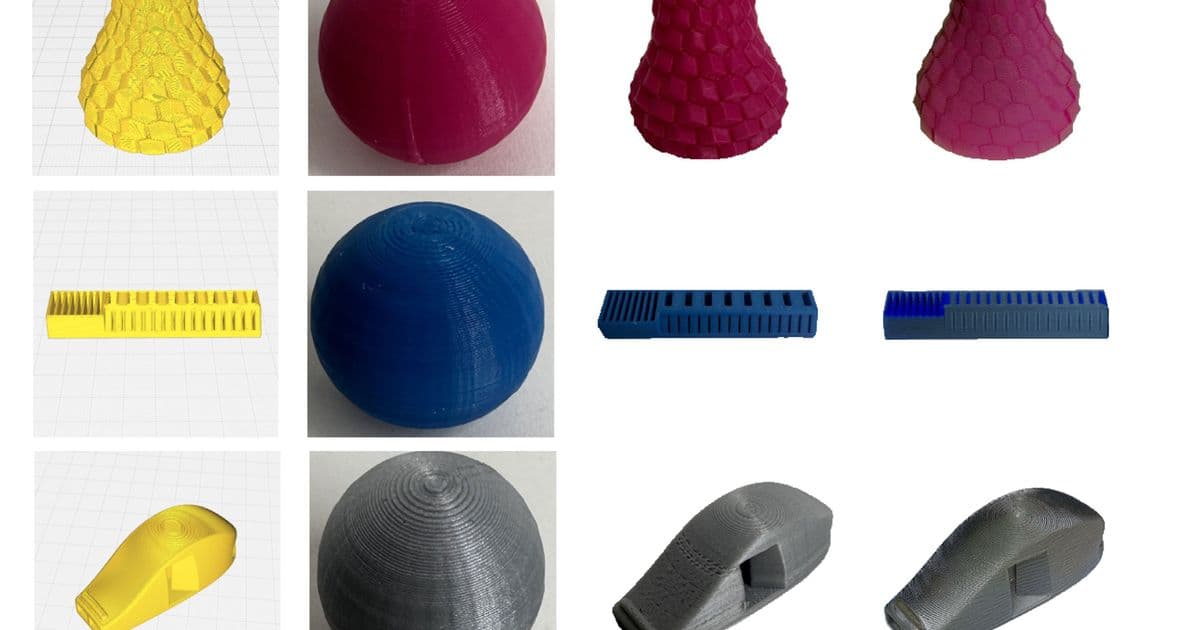
MIT researchers have developed VisiPrint, an AI system that generates accurate aesthetic previews of 3D-printed objects by analyzing material samples and digital designs, potentially reducing waste and reprints by up to 33%.
Designers, makers, and engineers who rely on 3D printing for rapid prototyping often face a frustrating reality: the final printed object rarely matches their expectations. A medical device prototype might have unexpected color variations, an architectural model could display inconsistent textures, or a custom dental crown may not blend with surrounding teeth. These discrepancies force multiple reprints, wasting time, materials, and money.
A team from MIT and collaborating institutions has developed VisiPrint, an AI-powered tool that generates accurate, aesthetics-first previews of how 3D-printed objects will actually look before fabrication begins. The system could significantly reduce the waste associated with failed prototypes, addressing a problem where some studies estimate up to one-third of 3D printing material ends up in landfills.
The Problem with Traditional 3D Printing Previews
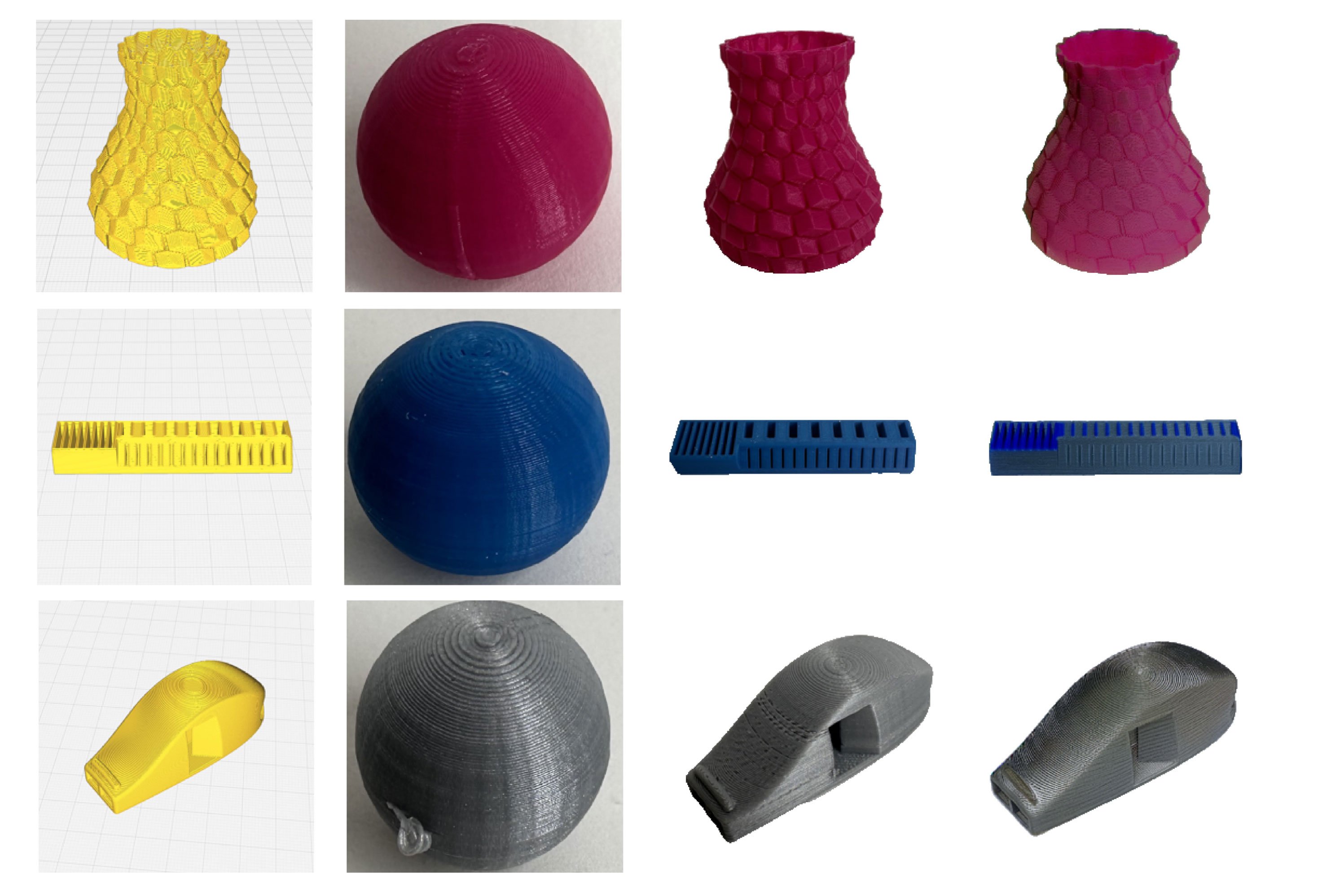
Most 3D printing software focuses primarily on functional aspects like structural integrity and printability. These tools generate previews that show the basic geometry and dimensions of an object but fail to accurately represent how it will appear when printed. The gap between digital preview and physical reality stems from several factors:
- Material behavior: Fused deposition modeling (FDM) melts and extrudes thermoplastic filament, which can alter a material's color and finish
- Layer effects: The height of each deposited layer affects surface texture and light reflection
- Nozzle path: The specific pattern the printer nozzle follows during fabrication influences the final appearance
- Material properties: Gloss, translucency, and surface characteristics vary significantly between materials
These variables make it nearly impossible to predict the final appearance using traditional rendering techniques, leading to multiple iterations and wasted resources.
How VisiPrint Works
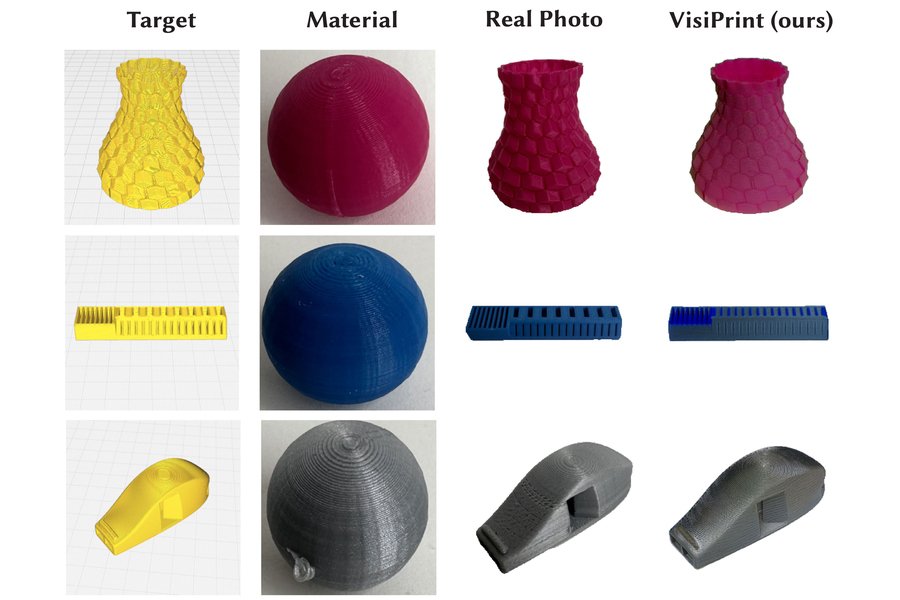
VisiPrint takes a fundamentally different approach by combining computer vision and generative AI to create material-aware previews. The system requires only two inputs:
- A screenshot of the digital design from standard 3D printing software (slicer software)
- A single image of the print material, which can be sourced online or captured from a printed sample
From these inputs, VisiPrint employs two AI models that work in tandem:
Material Feature Extraction: A computer vision model analyzes the material sample image, identifying visual properties crucial to the final appearance. This goes beyond simple color matching to capture gloss levels, translucency, and surface texture nuances.
Generative Preview Generation: A generative AI model computes the object's geometry while incorporating the specific slicing pattern the printer nozzle will follow. This ensures the preview accounts for how the fabrication process itself affects appearance.
The key innovation lies in VisiPrint's special conditioning method. This technique carefully adjusts the model's internal parameters to ensure it follows the actual slicing pattern and respects the physical constraints of 3D printing. The conditioning process utilizes two critical components:
- Depth maps: Preserve the object's shape and shading characteristics
- Edge maps: Reflect internal contours and structural boundaries
The researchers discovered that balancing these two elements was crucial. Too much emphasis on depth maps could result in incorrect slicing patterns, while over-reliance on edge maps might produce poor geometry.
User-Friendly Interface and Advanced Controls
Beyond the core AI technology, the team developed an intuitive interface that makes VisiPrint accessible to both novice and experienced users. The interface allows users to:
- Upload the required images easily
- Evaluate the generated preview alongside their original design
- Adjust advanced settings for experienced makers, including the influence of specific colors on the final appearance
Importantly, VisiPrint is designed to complement rather than replace existing 3D printing software. It focuses exclusively on aesthetic accuracy while leaving functional assessments like printability, mechanical feasibility, and failure likelihood to traditional slicer software.
Performance and Real-World Impact
The researchers evaluated VisiPrint through comprehensive user studies comparing it to existing preview methods. The results were compelling:
- Superior appearance accuracy: Nearly all participants reported better overall appearance compared to competing approaches
- Enhanced textural similarity: Users noted significantly improved texture matching with actual printed objects
- Faster processing: The preview generation process took approximately one minute on average, more than twice as fast as alternative methods
- Material versatility: The system successfully handled a wide range of materials and printing scenarios
Participants particularly appreciated how VisiPrint avoided common AI pitfalls. Unlike general-purpose AI models that might randomly alter object shapes or use incorrect slicing patterns, VisiPrint's conditioning method ensures the preview accurately reflects the intended design and fabrication process.
Applications Across Industries
VisiPrint's material-aware preview capability has significant implications across multiple sectors:
Healthcare and Dentistry: Clinicians can ensure temporary crowns and bridges match patients' natural teeth in color, translucency, and texture, reducing the need for multiple fittings and adjustments.
Architecture and Construction: Designers can accurately assess the visual impact of scale models, ensuring materials and finishes translate correctly from digital designs to physical prototypes.
Product Design and Manufacturing: Companies can reduce prototyping cycles by eliminating the guesswork in material selection and design refinement.
Education and Research: Academic institutions can teach design principles more effectively by providing students with accurate previews of their creations.
Sustainable Manufacturing: By reducing failed prints and material waste, VisiPrint supports more environmentally responsible production practices.
Technical Innovation and Future Directions
The research team, led by Maxine Perroni-Scharf and including collaborators from MIT, Princeton University, and the Gwangju Institute of Science and Technology, presented their work at the ACM CHI Conference on Human Factors in Computing Systems.
Looking ahead, the researchers aim to address current limitations and expand VisiPrint's capabilities:
- Fine detail artifacts: Improving handling of extremely detailed models where current previews may show artifacts
- Process optimization: Adding features to optimize aspects of the printing process beyond material color
- Expanded material library: Incorporating support for an even wider range of printing materials and techniques
- Integration with other fabrication methods: Adapting the technology for use with different 3D printing technologies beyond FDM
The Broader Context: AI Meets Physical Fabrication
VisiPrint represents a significant step toward bridging the gap between digital design and physical manufacturing. As Stefanie Mueller, the senior author and associate professor at MIT, notes, this work exemplifies the exciting potential of combining AI with physical making processes.
Patrick Baudisch, a computer science professor at the Hasso Plattner Institute who was not involved in the research, emphasizes the significance of this development: "'What you see is what you get' has been the main thing that made desktop publishing 'happen' in the 1980s, as it allowed users to get what they wanted at first try. It is time to get WYSIWYG for 3D printing as well. VisiPrint is a great step in this direction."
The research received funding from an MIT Morningside Academy for Design Fellowship and an MIT MathWorks Fellowship, highlighting the institutional support for innovations that combine design, engineering, and sustainability.
The development of VisiPrint addresses a fundamental challenge in digital fabrication: the disconnect between what designers see on screen and what emerges from the printer. By providing accurate, material-aware previews, this technology could transform 3D printing from a trial-and-error process into a predictable, efficient manufacturing tool. As 3D printing continues to expand across industries, tools like VisiPrint will be essential for making the technology more accessible, sustainable, and effective.
Comments
Please log in or register to join the discussion