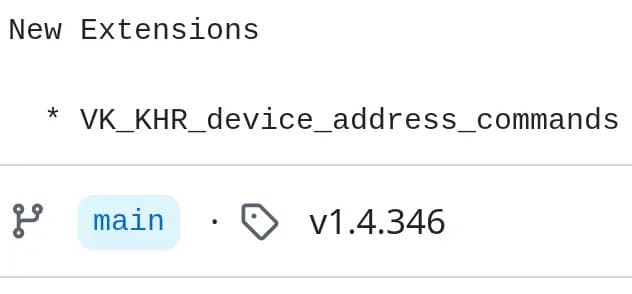
Vulkan 1.4.346 introduces the VK_KHR_device_address_commands extension, eliminating the need to pass both buffer handles and device addresses.
The Khronos Group has released Vulkan 1.4.346, a specification update that brings a significant new extension to the graphics API ecosystem. The headline feature is VK_KHR_device_address_commands, a collaborative effort from industry giants including AMD, Valve, NVIDIA, Collabora, Intel, and LunarG.

The Problem VK_KHR_device_address_commands Solves
Since Vulkan 1.2 introduced VK_KHR_buffer_device_address, developers have had the ability to obtain device addresses for buffers. However, this created an awkward situation where applications needed to juggle both buffer handles and device addresses for different API calls.
This dual-handling requirement was particularly painful for game engines and high-performance applications that wanted to leverage the benefits of device addresses while still using traditional buffer objects. The API had a fundamental gap where certain operations required one format while others required the other.
How VK_KHR_device_address_commands Works
With this new extension, developers can now use device addresses in place of buffer objects for most Vulkan functionality. The extension adds new versions of existing functions that accept device addresses directly, eliminating the need to maintain both representations.
This change streamlines the API surface and reduces the cognitive load on developers. Instead of constantly converting between buffer handles and device addresses or maintaining parallel data structures, applications can work with a single, unified addressing scheme.
Industry Adoption Already Underway
The extension's importance is evident from the rapid industry response. Within hours of the Vulkan 1.4.346 specification being published, Mesa merge requests appeared for both the RADV driver (AMD) and Intel's ANV driver to implement support for VK_KHR_device_address_commands.
This quick turnaround demonstrates the extension's practical value and the readiness of the open-source graphics stack to adopt these improvements. The collaboration between hardware vendors, middleware developers, and the open-source community shows how Vulkan continues to evolve through collective effort.
Beyond the Headline Feature
While VK_KHR_device_address_commands dominates the changelog, Vulkan 1.4.346 also includes various minor issue corrections. The full details are available in the Vulkan-Docs commit, though the device address commands extension clearly represents the most significant enhancement in this release.
Performance and Development Implications
For developers, this extension means cleaner code and potentially better performance. Device addresses provide a more direct way to reference memory, which can be particularly beneficial for compute workloads and advanced rendering techniques that need fine-grained memory access.
Game engines and high-performance applications that have been working around this limitation will find their codebases simplified. The reduction in API complexity could also lead to fewer bugs and easier maintenance over time.
Looking Forward
Vulkan continues its steady evolution, with each specification update addressing pain points identified by the developer community. The VK_KHR_device_address_commands extension represents the kind of practical improvement that makes the API more attractive for demanding applications.
The rapid implementation in Mesa drivers suggests we'll see this functionality available to Linux users very soon, continuing Vulkan's strong position in the open-source graphics ecosystem.
Comments
Please log in or register to join the discussion