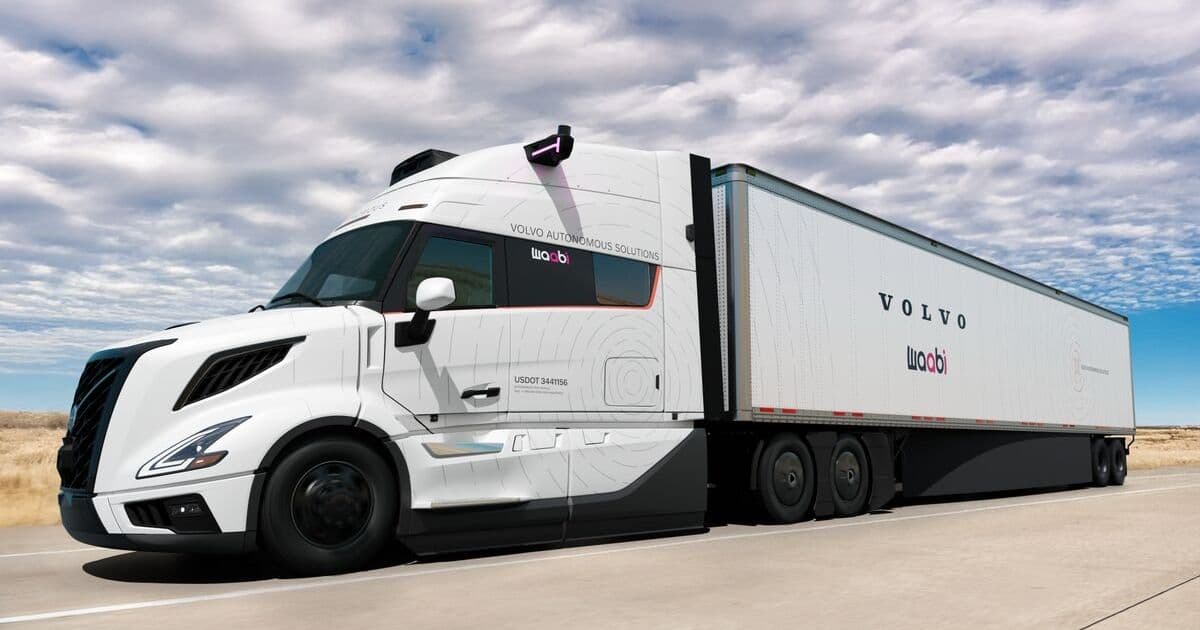
Toronto-based autonomous trucking startup Waabi has secured $750 million in Series C funding led by Khosla Ventures and G2 Venture Partners, with Uber gaining the option to invest an additional $250 million based on performance milestones.
Waabi, a Toronto-based startup developing autonomous driving technology for commercial trucks, has raised $750 million in a Series C funding round led by Khosla Ventures and G2 Venture Partners. The round also includes participation from Uber, which has secured the right to invest an additional $250 million based on performance milestones.
The substantial funding round values Waabi at over $4 billion, according to sources familiar with the matter. This represents one of the largest investments in the autonomous vehicle sector in recent years, highlighting continued investor confidence in the commercial trucking applications of self-driving technology.
Waabi's Technology and Approach
Founded in 2021 by Raquel Urtasun, a former Uber ATG chief scientist and University of Toronto professor, Waabi has taken a distinctive approach to autonomous vehicle development. The company's Waabi Driver system uses a combination of simulation-based training and real-world testing to develop its self-driving capabilities.
Unlike some competitors that rely heavily on extensive on-road testing, Waabi emphasizes its AI-powered simulation platform, which it claims can generate billions of driving scenarios to train its autonomous systems more efficiently. The company's technology is designed to handle the unique challenges of long-haul trucking, including highway driving, complex traffic situations, and varying weather conditions.
Strategic Partnership with Uber
The partnership with Uber represents a significant strategic move for both companies. For Waabi, it provides access to Uber's extensive logistics network and potential deployment opportunities. For Uber, it offers a pathway to expand its freight and logistics capabilities through autonomous technology.
The performance-based investment structure suggests Uber will evaluate Waabi's technology and commercial progress before committing the additional $250 million. This approach aligns incentives and provides Uber with options as the autonomous trucking market evolves.
Market Context and Competition
The autonomous trucking sector has seen significant activity in recent years, with companies like TuSimple, Kodiak Robotics, Aurora, and Embark competing for market share. However, the path to commercialization has proven challenging, with regulatory hurdles, technical complexities, and economic considerations all playing roles.
Waabi's substantial funding and strategic partnership position it as a strong contender in this competitive landscape. The company has already begun testing its technology on public roads in Texas and has announced plans for commercial deployment in the coming years.
Industry Implications
The investment in Waabi reflects broader trends in the autonomous vehicle industry, where commercial applications like trucking are seen as more immediately viable than passenger services. The economics of long-haul trucking, with its repetitive routes and potential for cost savings through automation, make it an attractive target for autonomous technology deployment.
The partnership with Uber also highlights the increasing convergence between autonomous vehicle technology companies and established logistics and transportation providers. As the technology matures, successful deployment will likely require both technical capability and operational expertise.
Future Outlook
With this new funding, Waabi plans to accelerate its technology development, expand its testing programs, and move closer to commercial deployment. The company has stated its goal of achieving fully driverless operation, which would represent a significant milestone in the autonomous trucking industry.
The performance-based investment from Uber suggests a pragmatic approach to scaling autonomous trucking technology, with commercial viability and operational success being key factors in future investment decisions.
As the autonomous vehicle industry continues to evolve, Waabi's progress will be closely watched as an indicator of the commercial potential for self-driving trucks and the broader autonomous transportation ecosystem.
Comments
Please log in or register to join the discussion