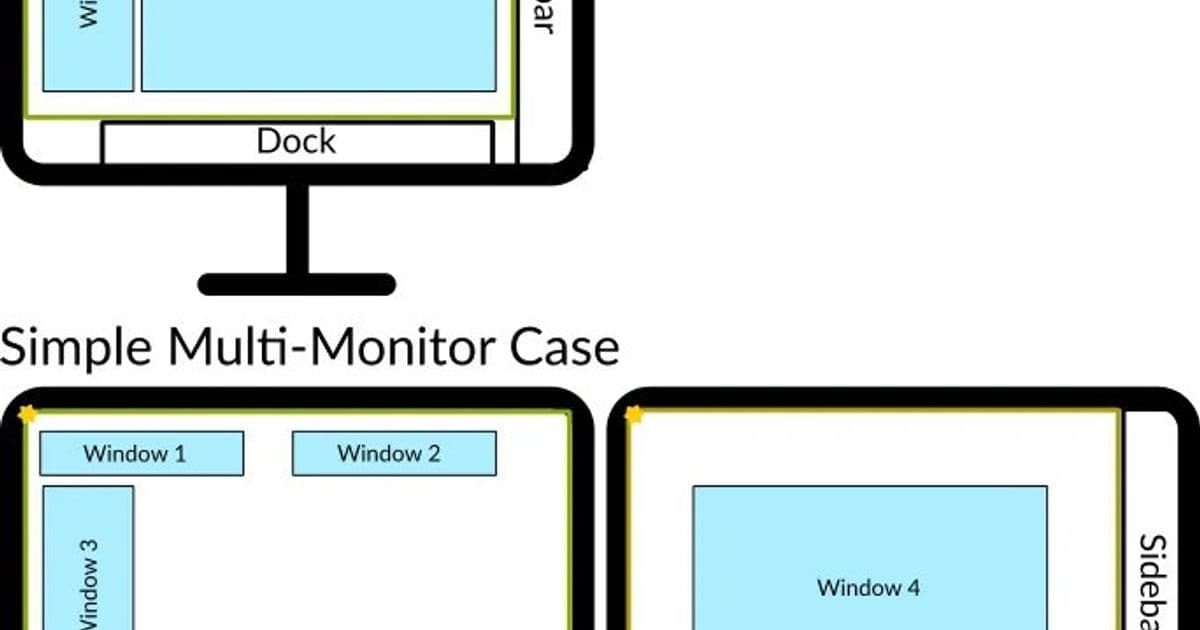
The experimental Zones protocol for area-limited window positioning has finally merged into Wayland after 628 comments and two years of development, promising new possibilities for multi-window applications.
After more than two years of development and over 620 comments on the merge request, the experimental Zones protocol has finally been merged into Wayland Protocols. This significant addition to the Wayland ecosystem promises to address long-standing challenges faced by multi-window applications on the Linux display server.
The Problem Zones Solves
Multi-window applications on Wayland have historically struggled with window positioning and layering. Applications like office suites, creative tools, and development environments often need to coordinate multiple windows that should maintain specific spatial relationships and layering orders. The Zones protocol introduces a new concept to solve these issues.
How Zones Work
The protocol introduces the concept of a "zone" - a per-client local coordinate system provided by the compositor and attached to one output. Within this zone, applications can place their windows with precise control over positioning and layering. Key features include:
- Fixed or infinite dimensions: Zones can be defined rectangles with specific dimensions or infinite spaces without limits
- Dynamic reshaping: Compositors can reshape zones at any time
- Window ejection: Compositors can "eject" windows from zones when needed
- Process sharing: Clients can share zones with trusted other processes by exchanging handles
- Resolution-independent coordinates: Zones use the same coordinate system as application windows
Technical Implementation
The protocol allows applications to create windows relative to other windows by sharing the same coordinate system. This is particularly useful for scenarios where external processes contribute windows that need to maintain specific relationships with the primary application's windows.
Matthias Klumpp, who spearheaded the work, explains that a zone is a per-client entity and clients must not assume it reflects any real object like monitor geometry. This abstraction provides flexibility for compositors while giving applications the control they need.
Other Recent Merges
Alongside the Zones protocol, the experimental Cutouts protocol was also merged this past week. The Cutouts protocol allows compositors to send information about cut-out display areas to clients, including:
- Display notices
- Waterfall areas
- Low-resolution regions
- Other display limitations
The Cutouts work was led by Phosh developers, bringing enhanced display awareness to mobile and embedded Wayland implementations.
Impact on the Wayland Ecosystem
The Zones protocol opens up interesting possibilities for application developers. Office suites could ensure that toolbars and document windows maintain proper relationships, creative applications could coordinate palettes and canvases, and development environments could manage multiple panels and editors more effectively.
The protocol's experimental status means it will undergo real-world testing before potentially becoming a stable part of the Wayland specification. This careful approach ensures that the solution meets the needs of both application developers and compositor implementers.
With these protocols merged, the Wayland ecosystem continues to mature, addressing complex use cases that were previously challenging on the display server. The two-year development period and extensive community feedback demonstrate the careful consideration given to ensure the protocol meets real-world needs while maintaining Wayland's design principles.
Comments
Please log in or register to join the discussion