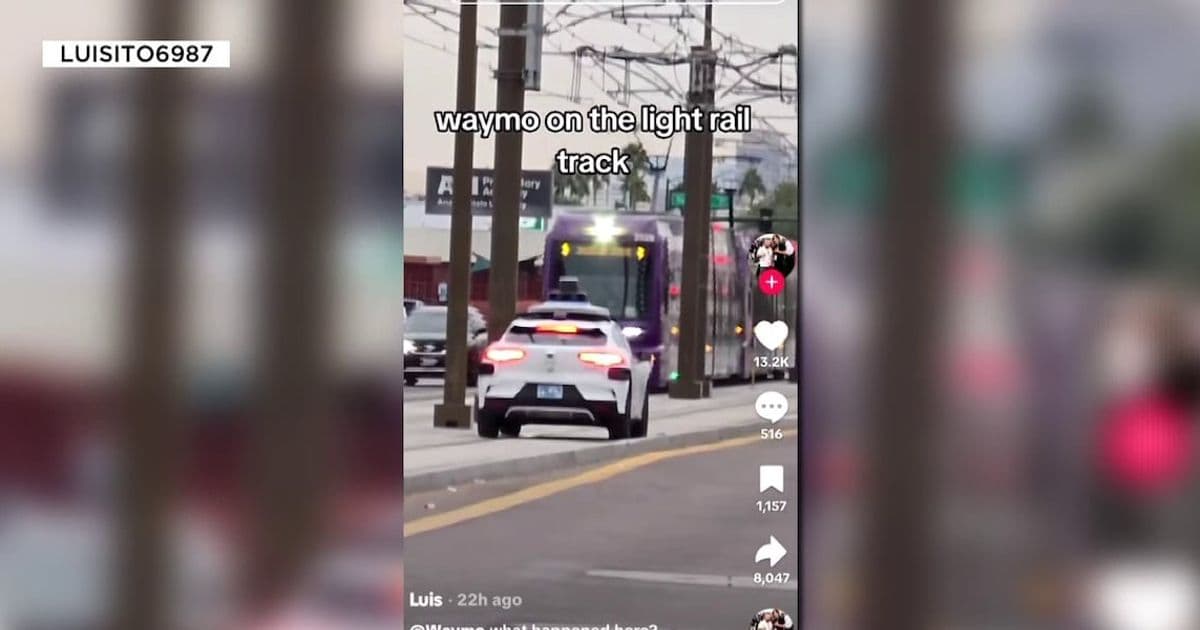
A Waymo autonomous vehicle entered Phoenix light rail tracks this week, forcing a passenger to flee as the car continued toward an oncoming train. The incident highlights the persistent challenge of edge cases in self-driving systems, particularly around recently modified infrastructure.
A Waymo vehicle made an unusual detour onto Phoenix light rail tracks this week, creating a tense situation where a passenger had to exit the car while it continued moving along the rails near an approaching train. Bystander video captured the vehicle stopping on the tracks just before a light rail train approached, showing the passenger running from the car as it continued down the tracks toward another train.
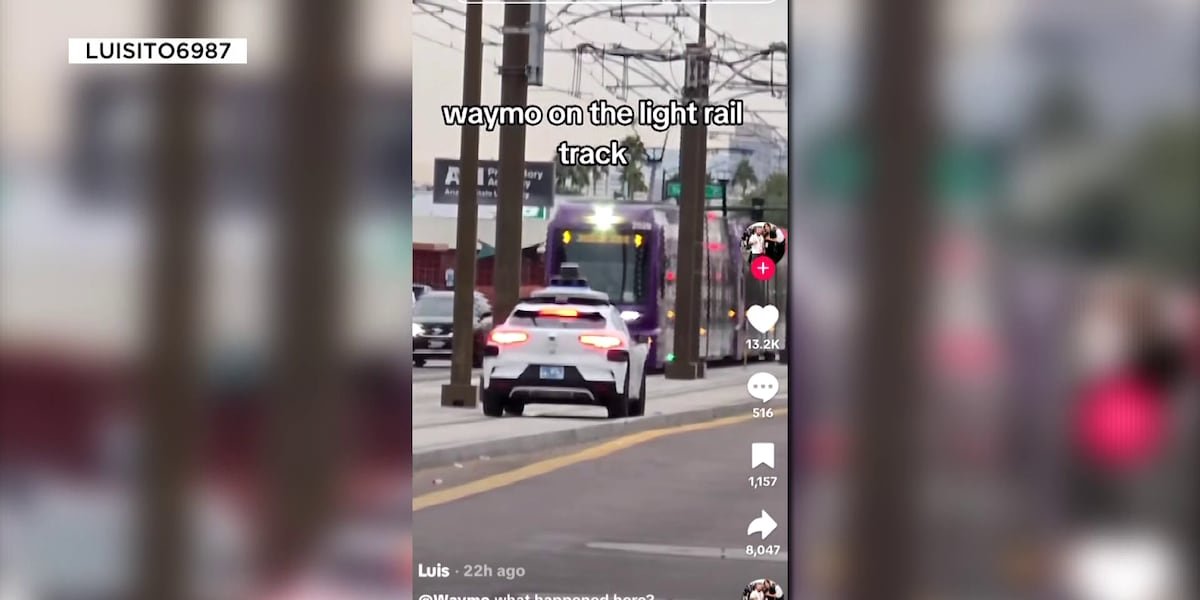
The incident occurred near Central and Southern avenues in Phoenix, an area that has undergone recent infrastructure changes. According to Andrew Maynard, an emerging and transformative technology professor at Arizona State University, this represents a classic edge case scenario—unexpected situations where autonomous systems behave more like machines than human drivers would.
"I actually felt a little sorry for the car. It obviously made a bad decision and got itself in a difficult place," Maynard said. He explained that while such incidents remain rare, they expose fundamental challenges in how self-driving systems interpret and respond to evolving urban environments.
The timing appears significant. The area where the incident happened had active construction, and the light rail extension was added within the past year. Waymo vehicles rely on extensive sensor arrays—29 cameras in current models—and receive weekly updates to their routing and systems. However, the lag between infrastructure changes and system updates can create dangerous gaps.
"I think Waymo has a challenge because no matter what they do with their system, there are always going to be unexpected circumstances where they have to learn from them," Maynard noted. This learning process involves continuous data collection, analysis, and system refinement, but the real-world consequences of these learning moments remain concerning.
Valley Metro's response was swift. A transit employee spotted the Waymo on northbound tracks around 9 a.m. Wednesday, prompting immediate notification to operations control. Light rail staff reversed train directions to maintain service while Waymo was contacted. The scene cleared by 9:15 a.m. with no significant delays, but the incident raises questions about coordination between autonomous vehicle companies and municipal transit systems.
Despite such incidents, Maynard maintains that autonomous vehicles likely remain safer than human drivers overall. "These cars, in many circumstances, are safer than human drivers because they don't have distractions, like a human driver does," he said. This perspective reflects a broader debate in the industry: whether the statistical safety improvements of autonomous systems outweigh the unpredictable nature of their rare but potentially catastrophic failures.
The Phoenix incident illustrates a critical tension in autonomous vehicle development. Systems excel at routine navigation but struggle with infrastructure changes that human drivers would intuitively recognize. A human driver seeing light rail tracks would likely recognize them as incompatible with road travel, even if they hadn't been there yesterday. Current autonomous systems, trained on historical map data and regular updates, may not handle such temporal gaps gracefully.
Waymo's weekly system updates suggest a responsive approach to infrastructure changes, but the construction zone and recent rail addition created a scenario that likely fell outside the system's current operational domain. The company's 29-camera array provides comprehensive visual coverage, but interpreting novel infrastructure configurations requires more than just seeing them—it demands contextual understanding that remains challenging for AI systems.
This incident adds to a growing pattern of edge cases that autonomous vehicle developers must address. From construction zones to temporary road modifications, the real world constantly presents scenarios that don't match training data. Each incident provides valuable learning data, but the transition from problem identification to reliable solution remains the industry's central challenge.
For Phoenix residents and potential Waymo passengers, the incident serves as a reminder that autonomous vehicles, while increasingly sophisticated, still operate within defined parameters that occasionally fail to account for urban flux. The technology continues to advance, but so does the complexity of the environments it must navigate.
Comments
Please log in or register to join the discussion