A seemingly random case-sensitivity bug in HCP Terraform's Azure provider handling caused configuration failures, only to resolve itself without any changes. This incident highlights the hidden complexities and potential fragility in multi-cloud infrastructure management.
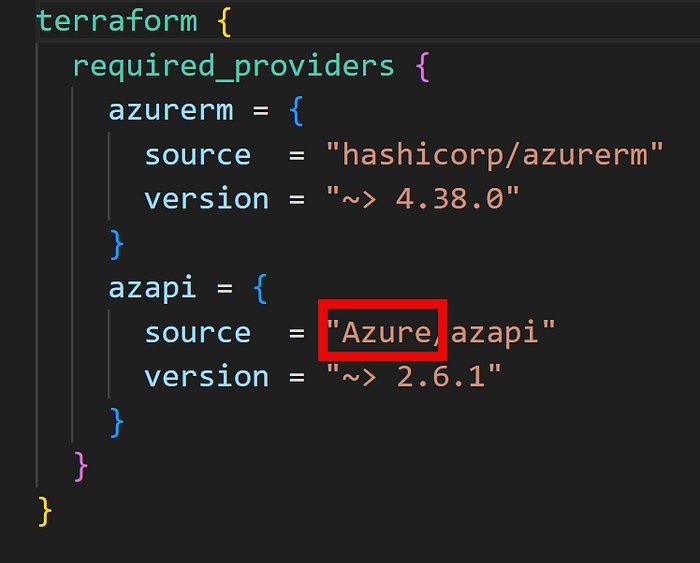
It started with a configuration that had been working perfectly for weeks. While managing infrastructure with HCP Terraform and the Azure provider, I encountered an error that made no immediate sense. My Terraform configuration, which explicitly referenced "Azure/azapi" as the provider source, suddenly began failing. The error message insisted that Terraform couldn't find "azure/azapi"—a subtle but critical difference in casing.
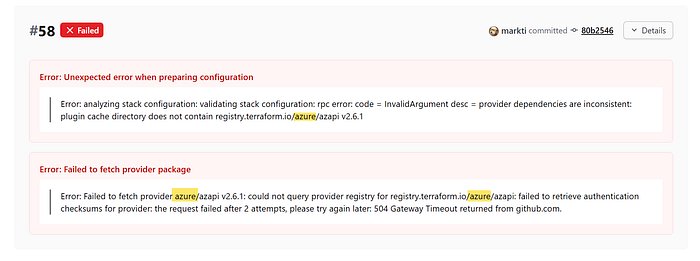
This was particularly puzzling because the Terraform Registry clearly lists the provider with a capital "A" in Azure/azapi. My local code hadn't changed, and the registry entry remained consistent. Yet, HCP Terraform's backend seemed to be applying a toLower operation somewhere in its processing pipeline, transforming the provider source name to lowercase and creating a mismatch that broke the configuration entirely.
The Mechanics of Provider Resolution
To understand why this case sensitivity matters, we need to look at how Terraform handles providers. When you specify a provider in your configuration, Terraform follows a specific resolution process:
- Source Declaration: You declare the provider with its full source address, like
"Azure/azapi" - Registry Lookup: Terraform queries the official registry to find the provider
- Version Selection: Based on your version constraint, it selects the appropriate version
- Binary Download: The provider binary is downloaded and cached
- Initialization: The provider is initialized for use in your configuration
The problem emerged somewhere between steps 2 and 4. The registry correctly returned the provider with its proper casing, but HCP Terraform's internal processing appeared to normalize the source string to lowercase before performing subsequent operations. This created a situation where the provider couldn't be properly identified and initialized.
The Multi-Cloud Complexity Factor
This incident underscores a broader challenge in multi-cloud infrastructure management: the hidden dependencies and assumptions baked into cloud provider tooling. When working with multiple cloud providers—Azure, AWS, Google Cloud, and others—each has its own naming conventions, API structures, and tooling behaviors.
Azure's naming conventions, for instance, often use mixed case in official documentation and registry entries. The Azure/azapi provider follows this pattern. However, different tools in the ecosystem might handle these names differently:
- Terraform Registry: Maintains the original casing as published by the provider author
- HCP Terraform: May apply normalization rules for internal processing
- Local Terraform CLI: Might handle casing differently than the managed service
- Provider Binaries: Could have their own casing expectations
This creates a scenario where the same configuration can behave differently depending on where and how it's executed.
The Resolution Mystery
Perhaps the most frustrating aspect of this incident was its eventual resolution. After several hours of debugging—checking configuration files, verifying registry entries, and testing different provider source formats—the error simply disappeared. No changes were made to the configuration, no updates were applied to HCP Terraform, and no modifications were made to the local environment.
This suggests the issue was likely an upstream problem within HCP Terraform's infrastructure. Possible explanations include:
- Caching Issues: A cached provider resolution that became stale and was eventually refreshed
- Service Updates: A silent update to HCP Terraform's backend that corrected the casing handling
- Registry Synchronization: A delay in registry data propagation that resolved itself
- Transient Service Issues: Temporary problems in HashiCorp's managed service infrastructure
Without visibility into HCP Terraform's internal operations, the exact cause remains speculative. This lack of transparency is a common challenge with managed services—when the platform behaves unexpectedly, debugging often requires educated guesses rather than definitive answers.
Lessons for Multi-Cloud Strategy
This case sensitivity bug, while seemingly minor, reveals several important considerations for cloud infrastructure strategy:
1. Provider Source Consistency
Always verify the exact provider source string from the official Terraform Registry. Different providers may have different casing conventions, and these must match precisely in your configuration.
2. Environment Parity
Test configurations in multiple environments (local, CI/CD, managed platforms) to catch environment-specific behaviors. What works locally might fail in HCP Terraform, and vice versa.
3. Provider Version Pinning
Explicitly pin provider versions in your configuration to avoid unexpected changes. Use version constraints like ~> 4.0 rather than latest to maintain control over updates.
4. Documentation and Communication
When encountering provider-specific issues, document the exact error messages and configuration snippets. This information is invaluable for troubleshooting and for communicating with cloud provider support teams.
5. Fallback Strategies
Consider maintaining alternative deployment methods for critical infrastructure. If HCP Terraform experiences issues, having a local Terraform CLI workflow as a backup can prevent operational disruptions.
The Broader Pattern
This incident isn't isolated. Similar case-sensitivity issues have appeared across the cloud ecosystem:
- AWS Resource Naming: Some AWS services require lowercase resource names, while others accept mixed case
- Azure Resource Manager: API requests often require specific casing for resource types
- Google Cloud IAM: Role names follow strict casing conventions
The pattern reveals a fundamental tension in cloud infrastructure: the need for consistent, predictable behavior across diverse platforms and tools. Each cloud provider brings its own conventions, and the tools that manage them must navigate these differences.
Practical Recommendations
For teams managing multi-cloud infrastructure with Terraform, consider these practices:
- Provider Testing: Create a test configuration that validates provider initialization for each cloud platform you use
- Error Pattern Recognition: Document common error patterns and their resolutions in a team knowledge base
- Provider Version Audits: Regularly review and update provider versions, testing changes in non-production environments first
- Cross-Platform Validation: When possible, test the same configuration against multiple Terraform execution environments
- Community Engagement: Monitor provider repositories and community forums for similar issues—your problem may have already been solved
Conclusion
The case sensitivity bug in HCP Terraform's Azure provider handling serves as a reminder that even mature, widely-used infrastructure tools can exhibit unexpected behaviors. In multi-cloud environments, where multiple providers and tools interact, these edge cases become more common and more impactful.
While the issue resolved itself without intervention, the experience highlights the importance of maintaining flexibility in infrastructure management approaches. Relying solely on a single platform or toolchain can create single points of failure, both technically and operationally.
For cloud consultants and infrastructure teams, this incident reinforces the value of understanding not just how tools work when they function correctly, but also how they fail—and what recovery options exist when they do. In the complex ecosystem of multi-cloud infrastructure, resilience often comes from anticipating these unexpected interactions and building workflows that can adapt when the tools themselves behave unpredictably.
The mystery of "Azure" becoming "azure" may have been temporary, but its lessons for infrastructure management strategy are permanent.
Comments
Please log in or register to join the discussion