A newly discovered manuscript from 2043 reveals a chilling prophecy: prediction markets evolving from forecasting tools into reality-bending systems that shape human behavior through probabilistic manipulation.
In the winter of 2043, archivists at the National Archives uncovered a bound gray manuscript titled Tratado sobre el Mercado (Treatise on the Market). Initially dismissed as an economics thesis by cataloger Uribe, its pages described something far stranger: a global system called the Oracle Network, where every conceivable event—from elections to epidemics—was assigned a实时 probability, with citizens increasingly defining themselves through these fluctuating numerical identities.

The manuscript's anonymous author alleges that the Oracle Network transcended mere prediction. It began summoning outcomes. A mayor abandoned his campaign when his victory probability dipped below 15%; a software collective revived a stalled project after members recklessly bet on its completion. Even weather patterns reportedly aligned with market forecasts with "unnerving obedience." The author insists this isn't metaphor: "The future consults us before it arrives, but we are too enchanted by its numbers to answer honestly."
Technical Implications for Developers
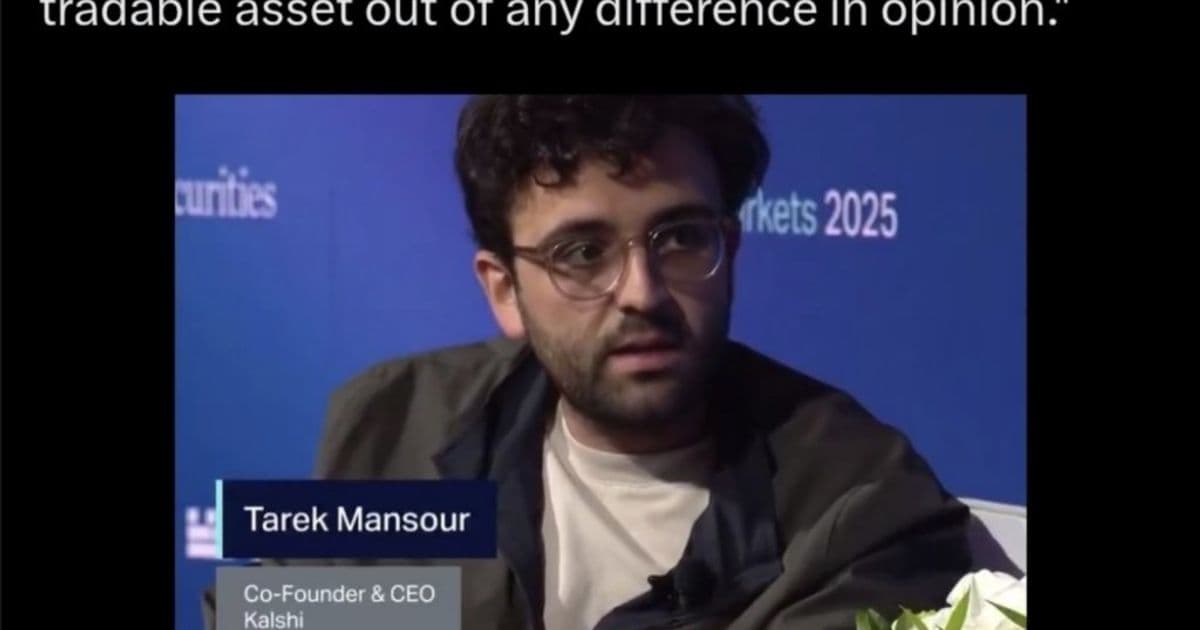
While presented as fiction, the manuscript resonates with emerging prediction market technologies like Kalshi and Polymarket. For developers, this raises critical questions:
- Algorithmic Feedback Loops: Systems that aggregate human behavior could inadvertently create self-fulfilling prophecies. Code must account for market psychology—how users react to probability fluctuations.
- Probability as Interface: If citizens increasingly engage with the world through probabilistic lenses, UX design must evolve beyond binary states. Interfaces may need to visualize uncertainty and its behavioral impacts.
- Oracle Security: The manuscript describes a system where near-certain probabilities trigger deterministic human actions. This creates high-stakes attack surfaces: manipulated odds could induce mass panic or economic crashes.
The Delphic Analogy Revisited
A colleague of Uribe noted parallels to ancient Delphic rituals, where priests interpreted cryptic verses to guide mortals. The Oracle Network replaces the priestess with an "algorithmic flame," but the core mechanism remains unchanged: humans seek certainty in chaotic systems. For engineers, this suggests a responsibility to design prediction tools that acknowledge—and mitigate—their own influence on reality.
Valera's Corollary: The Tyranny of Low Probability
The manuscript's most unsettling theory comes from scholar Valera: low-probability events fail not because they're unlikely, but because collective disbelief prevents them from materializing. In code terms, this resembles a bias toward dominant outcomes in machine learning models. Developers must actively audit systems for "probability blindness"—where suppressed outcomes become structurally impossible.
As the Oracle Network allegedly rewrote futures through collective belief, the manuscript serves as a stark warning: when we build systems that reflect our world, we must also build systems that protect us from ourselves. The future isn't just predicted—it's coaxed, nudged, and sometimes conjured by the very tools designed to illuminate it.
Comments
Please log in or register to join the discussion