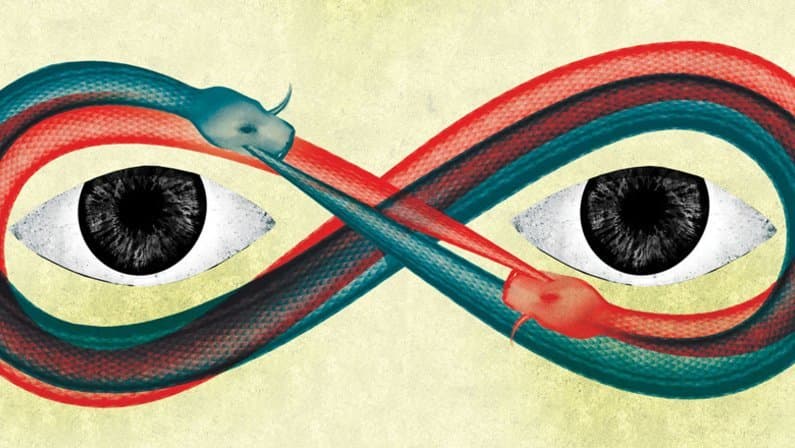
For three decades the NSA has quietly nudged the cryptographic standards that underpin everyday digital life, a tug‑of‑war that began with the 1970s DES controversy and continues to shape how private and public sectors protect data. The story traces how a Stanford professor’s research clashed with government secrecy, the lasting implications for privacy and security, and the fragile trust that still defines the relationship between academia and intelligence agencies.
When Secrets Become National Security: The NSA’s Quiet Hand in Shaping Cryptography
 )
)
In 1977, a Stanford professor and his graduate students were caught in a diplomatic storm when their pioneering work on public‑key cryptography was deemed a threat to national security. The National Security Agency (NSA), still guarding the secrets of encryption, feared that publicizing these techniques would erode its ability to eavesdrop on foreign communications. The conflict foreshadowed a decades‑long tug‑of‑war between privacy‑conscious technologists and security‑focused government officials.
The 1970s DES Controversy
The Data Encryption Standard (DES), a 64‑bit block cipher designed by IBM and adopted as an NBS (now NIST) standard, became the first battlefield. In an attempt to keep the U.S. intelligence community ahead, the NSA persuaded the bureau to reduce DES’s key size from 64 to 48 bits—a move that would make brute‑force attacks more feasible. The compromise eventually settled on a 56‑bit key, a decision that would later be criticized as a weakness in the system.
In a 1979 speech, NSA director Inman denied any influence over DES, calling allegations “totally false.”
Declassified documents now reveal that Inman’s statements were misleading.
The NSA’s strategy was twofold: weaken a widely used cipher and keep high‑grade cryptography out of the NBS/NIST standards. By doing so, the agency ensured that commercial systems would remain vulnerable, giving it a clearer window into foreign communications.
The Aftermath: Trust and Technology
Years later, the same NSA director, Inman, reflected that the agency’s fears had not materialized as expected. He noted a lack of demand for strong encryption outside government, and that even those who adopted cryptographic tools often made mistakes that rendered them ineffective. Meanwhile, Martin Hellman, one of the architects of public‑key cryptography, warned that weak non‑government encryption could become an “economic and privacy threat” in a computerized economy.
Hellman’s own experience illustrates the ethical dilemma researchers face when their discoveries intersect with national security. He admits that ego, rather than a sober assessment of impact, drove his early decisions. Watching the documentary Day After Trinity shocked him into realizing the gravity of unchecked scientific ambition.
“I vowed I would never do that again,” Hellman said. “Thinking it through even now, I still would have done most of what I did. But it could have been something as bad as inventing nuclear weapons, and so I vowed I would never do that again.”
The relationship between academia and the NSA remains strained. Inman acknowledges the challenge of re‑establishing trust with the new NSA director, while experts like Aftergood emphasize the need for internal restraint and mutual trust in future debates over secrecy.
Why It Matters Today
The legacy of the DES controversy lives on in how we evaluate cryptographic standards. Modern algorithms—such as AES and elliptic‑curve cryptography—are vetted through open, peer‑reviewed processes, but the shadow of government influence lingers. The NSA’s historical role in shaping standards reminds us that the balance between privacy and national security is fragile and constantly renegotiated.
As we move deeper into an era of ubiquitous encryption, the lessons from the 1970s serve as a cautionary tale: the decisions made by a few can have lasting consequences for billions of users, and the trust between researchers and intelligence agencies must be earned, not assumed.
*Source: Henry Corrigan‑Gibbs, “Keeping Secrets,” Stanford Magazine, 2024. https://stanfordmag.org/contents/keeping-secrets
Comments
Please log in or register to join the discussion