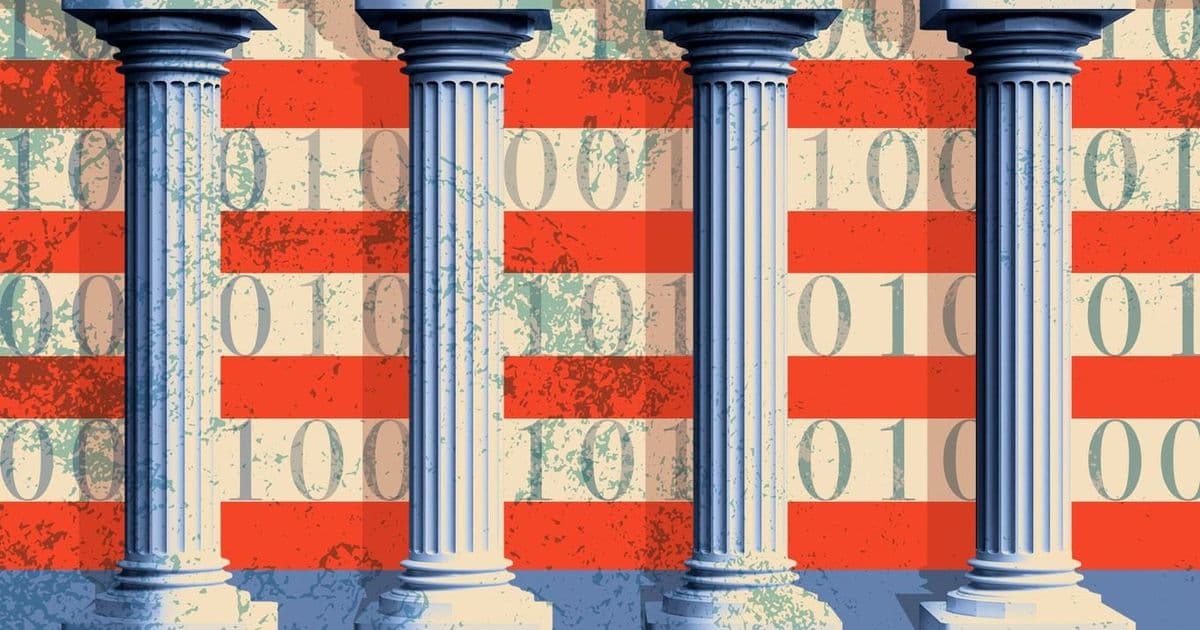
A proposed executive order to tighten AI model licensing and data‑use rules has stalled as the White House Office of Science and Technology Policy and the Department of Commerce clash over jurisdiction and enforcement mechanisms, delaying a timeline that could have reshaped the U.S. AI market by the end of 2025.
Executive action on AI stalls amid White House infighting
The Biden administration announced plans in February to issue an executive order that would require developers of advanced foundation models to obtain a federal license before commercial deployment. The draft, circulated among senior officials, called for a risk‑based tiered licensing system, mandatory transparency reports, and a new “AI safety audit” conducted by the National Institute of Standards and Technology (NIST).
Market context
If enacted, the order would affect roughly $120 billion in projected U.S. AI revenues for 2025, according to a recent IDC forecast. The rule would target models with more than 100 billion parameters—currently the domain of OpenAI’s GPT‑4, Anthropic’s Claude 2, and Google’s Gemini. Analysts estimate that about 30 percent of the AI‑related venture capital funding in 2024 is tied to startups building or fine‑tuning such models. A licensing regime could therefore reshape fundraising patterns, pushing capital toward firms that can demonstrate compliance early.
The proposed framework also promised to create a “trusted AI” label for licensed models, a credential that could become a market differentiator in sectors like finance, healthcare, and defense where regulators already demand rigorous risk assessments. Early adopters of the label could command premium pricing; a McKinsey study suggests a 5‑10 percent price premium for AI services that meet verified safety standards.
Why the order is stuck
Two senior White House offices are at odds over the order’s scope:
- Office of Science and Technology Policy (OSTP) – led by Dr. Arati Prabhakar, OSTP argues that the licensing authority should rest with the Department of Commerce’s Bureau of Industry and Security (BIS), leveraging its existing export‑control infrastructure.
- Department of Commerce (DoC) – the BIS leadership contends that the Federal Trade Commission (FTC), not the DoC, should enforce consumer‑impact provisions because they align more closely with the FTC’s unfair‑practice mandate.
The disagreement has manifested in a series of internal memos and a delayed public comment period. Sources familiar with the process say the OSTP draft originally slated a July 15 release, but the DoC’s push for a separate rulemaking on “AI data‑privacy safeguards” has pushed the timeline back indefinitely.
Strategic implications
- For U.S. AI firms – the uncertainty prolongs the status‑quo, allowing companies to continue scaling large models without a clear compliance cost. Smaller players, however, remain wary of a future “license‑first” regime that could raise entry barriers.
- For foreign competitors – delays give Chinese and European firms additional runway to solidify their own regulatory frameworks. The EU’s AI Act, which will be fully applicable by early 2025, already imposes conformity‑assessment procedures that could become a competitive advantage for European vendors.
- For investors – venture capitalists are recalibrating risk models. A PitchBook analysis shows a 12‑percentage‑point dip in AI‑focused fund commitments in Q2 2024, attributed partly to regulatory uncertainty.
- For policymakers – the infighting highlights a broader governance challenge: aligning export‑control, consumer‑protection, and national‑security objectives under a single executive instrument. Failure to resolve the jurisdictional split could prompt Congress to draft its own AI legislation, potentially superseding the executive order.
What’s next?
Industry groups, including the TechNet AI Coalition, have scheduled a lobbying round in Washington next week, urging a unified approach that places licensing authority with the BIS while assigning enforcement to the FTC. Meanwhile, the White House is expected to issue a revised draft in late September, incorporating feedback from both agencies and the public comment window that is now slated for a 60‑day period.
If the order finally clears the inter‑agency hurdle, the U.S. could see its first federal AI safety certification by early 2026, a milestone that would likely reshape market dynamics and set a benchmark for other economies.
For further reading on the proposed licensing framework, see the draft policy brief released by OSTP here.
Comments
Please log in or register to join the discussion