Louisiana's Senate has advanced a new congressional map that reduces Black voting power, following recent Supreme Court rulings on redistricting.
Louisiana's Senate has advanced a new congressional map that reduces Black representation in the state's congressional delegation, despite ongoing legal challenges and recent Supreme Court rulings on redistricting.
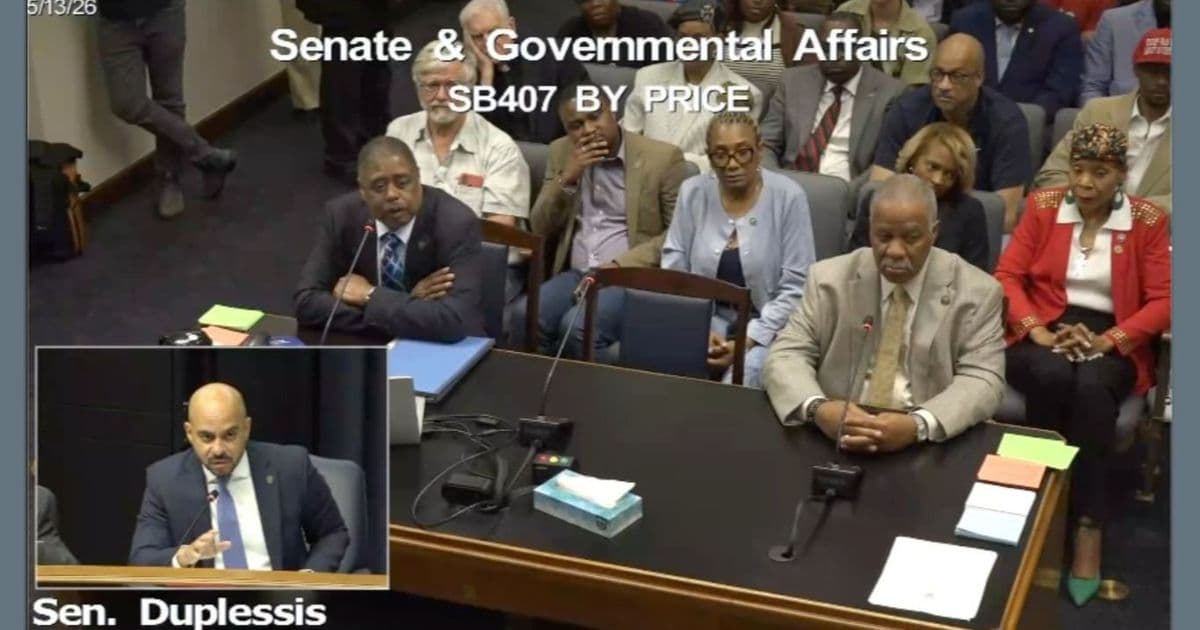
The map, proposed by Sen. Ed Price during a Senate committee meeting early Wednesday morning, creates a single majority-Black district instead of two, as ordered by a federal court last year. The proposal now moves to the full Senate for consideration.
The development comes weeks after the U.S. Supreme Court ruled 5-4 to allow Louisiana's congressional map to be used for the 2024 elections despite its reduction of Black voting power. The Court's conservative majority, in an opinion by Justice Samuel Alito, stayed a lower court order that had required the state to create a second majority-Black district.
"This map fails to comply with the Voting Rights Act," said Voting Rights expert Dr. Justin Levitt. "The Department of Justice has consistently argued that Louisiana's Black population is large enough and compact enough to support two majority-Black districts, but the state legislature continues to advance maps that dilute Black voting power."
The new congressional map would divide Louisiana's Black population across multiple districts, preventing them from electing their preferred candidates in at least one district. This practice, known as "cracking," has been a common tactic in redistricting cases across the South.
Louisiana's Black population constitutes approximately 33% of the state's total population, according to U.S. Census data. Under the new map, only one of the state's six congressional districts would have a Black majority, despite the Voting Rights Act's requirement that districts be drawn to provide minority groups an equal opportunity to elect their preferred candidates.
The map's advancement comes as part of a broader national trend of states reducing minority voting power following the Supreme Court's 2013 decision in Shelby County v. Holder, which gutted key provisions of the Voting Rights Act. Since then, numerous states with histories of discrimination have implemented redistricting plans that reduce minority representation.
Legal experts predict the new map will face immediate legal challenges. The NAACP Legal Defense Fund and the ACLU have already signaled their intention to challenge any map that reduces Black voting power.
"The Supreme Court's stay was temporary, not permanent," said Voting Rights attorney Allison Riggs. "We fully expect to return to court and argue that this map violates both the Voting Rights Act and the Constitution."
The political implications of the new map are significant. Louisiana's current congressional delegation includes one Black representative, Rep. Troy Carter. Under the new map, it's unlikely that a second Black representative would be elected, potentially shifting the state's congressional delegation further to the right.
The map's advancement also comes as Louisiana prepares for the 2026 elections, with the state's House elections already in limbo following the Supreme Court's map ruling earlier this month.
Louisiana's redistricting process has been contentious since the 2020 census revealed that the state's population growth had been concentrated among Black residents. Despite this growth, the legislature has repeatedly failed to create a second majority-Black district, leading to the current legal battles.
The state's Republican leadership has defended the new map, arguing that it follows traditional redistricting principles such as compactness and respecting municipal boundaries.
"Our map is fair and follows the law," said Senate President Page Cortez. "We've considered all relevant factors and believe this configuration best represents Louisiana's diverse communities."
However, critics point out that the map's configuration clearly isolates Black voters to prevent them from forming effective voting blocs in multiple districts.
The debate over Louisiana's congressional map reflects a broader national struggle over voting rights and representation. As states redraw their districts following each census, the balance between traditional redistricting principles and the requirements of the Voting Rights Act continues to be tested in courts across the country.
The outcome of the legal challenges to Louisiana's new map could have significant implications for redistricting practices not just in Louisiana, but in other states with similar demographic compositions and histories of discrimination.
Comments
Please log in or register to join the discussion