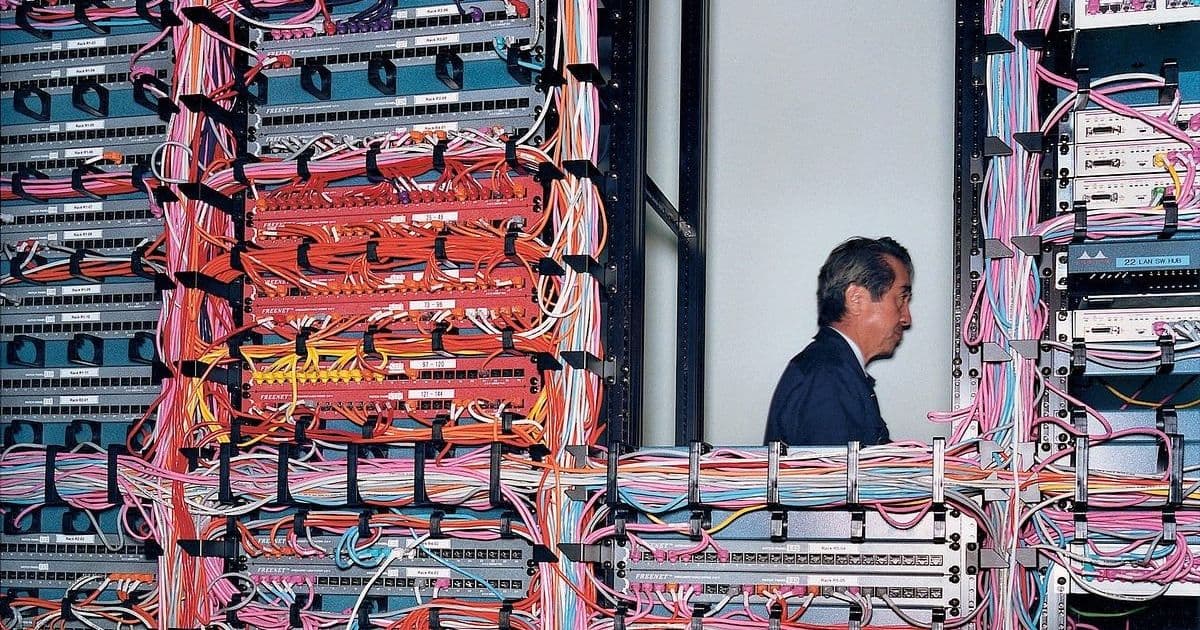
Japanese firms combine lifetime employment, horizontal coordination, and patient capital into a distinctive corporate bundle that fuels diversification into unrelated high‑precision markets—from toilets to semiconductor components—while maintaining quality and resilience.
Why Japanese Companies Do So Many Different Things
 Featured image
The internal logic of the world’s strangest corporations is often hidden behind the products we see every day. Take Toto, the Japanese firm whose branded toilets dominate bathrooms in Japan and are steadily winning over American consumers with bidet‑toilet hybrids. In the first quarter of 2026 Toto’s net profit surged 230 % YoY, and its shares have jumped 60 % year‑to‑date. The headline numbers look like a classic bathroom‑fixture success story, but the real driver of the recent boom is something you would never expect to find in a bathroom‑ware catalog: memory‑chip manufacturing equipment.
The surprising profit engine
Since 1988 Toto’s advanced ceramics division has produced electrostatic chucks (e‑chucks) – high‑precision ceramic plates that hold silicon wafers flat during plasma etching. An e‑chuck must be polished to sub‑micron flatness and generate virtually no particles, a set of specifications that only a handful of Japanese firms can meet (Shinko Electric, NGK, Kyocera, Sumitomo Osaka Cement, Niterra, and Toto). For decades the division was a tiny line item, but the explosion of AI‑driven data‑centers has created a massive demand for high‑bandwidth memory, which in turn has driven up orders for e‑chucks. Toto’s leadership announced a multi‑hundred‑million‑dollar investment to double production capacity, turning a modest ceramics unit into the company’s primary profit source.
Diversification is the norm, not the exception
Toto is hardly unique. Kyocera, founded in 1959 making ceramic insulators for CRTs, now sells:
- Industrial ceramics and cutting tools
- Printers, smartphones, and kitchen knives
- Solar PV modules, lens components, and automotive camera modules
- Medical implants, UV‑LED curing systems, and even lab‑grown gemstones
Sumitomo Osaka Cement sells cement and ready‑mixed concrete, yet also produces optical components, measuring instruments, artificial marine reefs, cosmetics, and nanoparticle materials. Yamaha makes pianos, motorcycles, guitars, boats, snowmobiles, golf clubs, home appliances, specialty metals, semiconductor‑bonding equipment, and industrial robots. Hitachi spans nuclear reactors, power grids, railways, elevators, medical imaging, data storage, IT consulting, and industrial machinery. Even Oji, Japan’s largest paper producer, has moved into disposable diapers, functional films, cellulose nanofibers, EUV photoresists, a hotel, an airport‑catering business, a concert hall, and an insurance agency.
These examples illustrate a pattern: Japanese firms routinely operate in multiple, seemingly unrelated sectors and, crucially, they do so well. High‑precision components like e‑chucks, advanced ceramics, and optical lenses are produced almost exclusively by Japanese firms, a contrast to the more focused U.S. model where a toilet maker would never touch semiconductors.
The corporate bundle that makes it possible
The key is not diversification per se, but a bundle of organizational practices that reinforce each other. Economist Masahiko Aoki calls this the “J‑firm” model, as opposed to the shareholder‑centric “H‑firm” model common in the West. Core elements include:
- Lifetime employment – hiring fresh graduates en masse, promoting by seniority, and avoiding layoffs. This creates a stable, highly skilled workforce willing to learn many jobs.
- Horizontal coordination – practices like the Toyota andon cord let any worker stop the line to fix a defect, spreading authority laterally rather than up a hierarchy.
- Broad training and job rotation – employees understand multiple parts of the production process, enabling rapid problem‑solving across product lines.
- Insider‑dominated governance – boards are filled with senior managers, cross‑shareholdings tie firms together, and a main bank provides patient capital.
- Low dividend payout – earnings are reinvested, allowing firms to fund new divisions without external pressure.
These practices are complementary: a stable, long‑term workforce makes broad training worthwhile; broad training makes horizontal problem‑solving feasible; horizontal coordination reduces the need for tight top‑down control, which in turn supports the lifetime‑employment contract. Changing one element without the others would break the bundle and hurt performance.
Historical roots
The bundle emerged from Japan’s wartime “1940 system.” During World War II the state directed capital through banks, prioritized employee stability over shareholder returns, and standardized wages to keep labor costs predictable. After the war, the U.S. occupation initially tried to dismantle this structure, but the onset of the Cold War led to a “Reverse Course” that preserved the system. The resulting firms were perfectly suited for the post‑war catch‑up growth era: they could marshal patient capital, iterate slowly on processes, and keep large workforces employed while mastering high‑precision manufacturing.
Strengths and limits
The J‑firm excels at incremental refinement – perfecting existing technologies through continuous, small‑scale adjustments. This explains Japanese dominance in automotive manufacturing, machine tools, industrial robotics, optics, and precision ceramics. However, the same structure is ill‑suited for radical innovation that requires swift, top‑down re‑allocation of resources and a single visionary leader. Sony’s failure to dominate smartphones despite owning the best components, and the broader Japanese lag in software, AI, and electric‑vehicle platforms, illustrate this weakness.
Why diversification matters for survival
When a core market contracts, the J‑firm’s commitment to keeping workers employed pushes firms to create new jobs internally. Fujifilm, after the collapse of film, leveraged its chemical‑coating expertise to launch cosmetics, pharmaceuticals, LCD films, and semiconductor process materials. Nintendo evolved from playing cards to video games after experimenting with taxi services and instant rice. The diversification is less a strategic choice and more a survival mechanism embedded in the corporate DNA.
Lessons for investors and policymakers
- Investors should view Japanese conglomerates not as chaotic conglomerates but as deeply integrated ecosystems where cash flow from mature lines (e.g., toilets) funds high‑margin, niche B2B businesses (e.g., e‑chucks). Tracking segment earnings can reveal hidden growth drivers.
- Policymakers aiming to boost industrial resilience might consider fostering horizontal coordination practices and longer‑term employment contracts, rather than solely focusing on shareholder returns.
- Western firms looking to emulate Japanese quality should recognize that copying a single tool (like the andon cord) without the surrounding bundle will yield limited results.
The future of the J‑firm
Japan’s “lost decades” exposed the fragility of a system that struggles with sharp, disruptive change. Yet the same bundle continues to generate unmatched process expertise in sectors where precision matters. As the global semiconductor supply chain seeks reliable e‑chuck suppliers, firms like Toto and Kyocera stand to benefit from their entrenched capabilities.
The takeaway is simple: Japanese companies do many different things because their corporate architecture makes it possible, not because they chase diversification for its own sake. Their ability to keep a workforce employed, rotate talent across functions, and reinvest profits into new high‑precision domains creates a resilient, if sometimes opaque, engine of growth.
For further reading:
- Aoki, Masahiko. “The Japanese Firm: The Structure of Corporate Governance and Its Implications.” Stanford University Press, 2001.
- Milgrom, Paul, and John Roberts. “The Economics of Modern Manufacturing.” American Economic Review, 1990.
- Toto’s latest earnings release: Toto Corp Investor Relations
- Kyocera corporate overview: Kyocera Official Site
Comments
Please log in or register to join the discussion