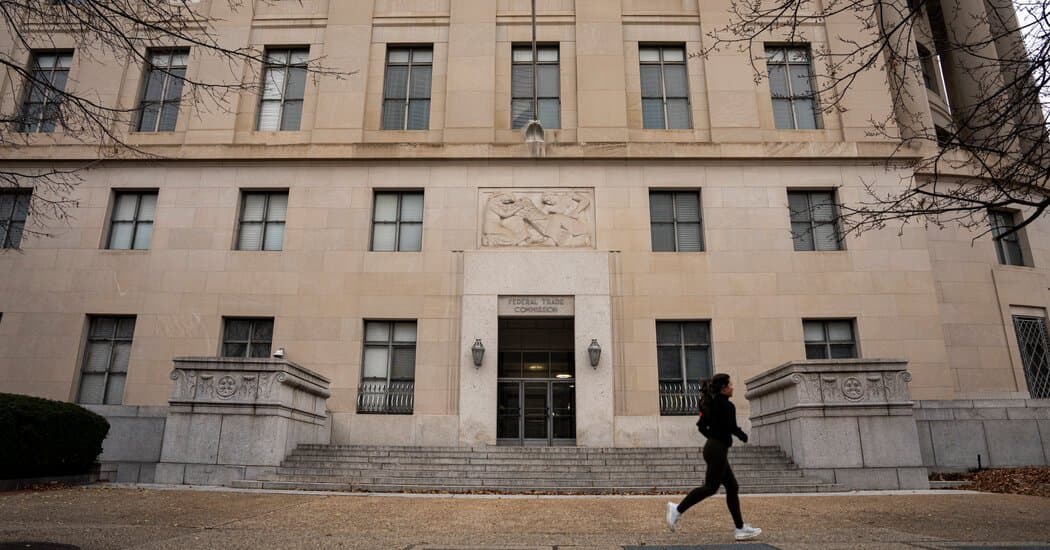
Three major advertising holding companies have agreed to settle Federal Trade Commission allegations that they colluded on misinformation policies that effectively denied advertising revenue to conservative publishers, marking a significant development in the intersection of media, politics, and antitrust enforcement.
The Federal Trade Commission has announced settlements with three of the world's largest advertising holding companies over allegations that they colluded on misinformation policies that resulted in conservative publishers being denied advertising revenue. WPP, Dentsu, and Publicis have agreed to settle the FTC's claims, which center on coordinated efforts to combat misinformation that allegedly had discriminatory effects on right-leaning media outlets.
According to the FTC's complaint, the advertising giants worked together to develop and implement policies that would block ads from appearing on websites they deemed to be spreading misinformation. While the stated goal was to protect advertisers from association with false content, the agency alleges that the implementation of these policies disproportionately affected conservative publishers and news sites.
The settlements require the companies to cease their coordinated approach to misinformation policies and to implement measures ensuring that their advertising placement decisions are made independently and without discrimination based on political viewpoint. The FTC emphasized that while companies have the right to protect their brands from misinformation, they cannot do so through collusive arrangements that harm specific political perspectives.
This case represents a significant moment in the ongoing debate over content moderation, advertising practices, and political bias in the media industry. Conservative publishers have long complained about being demonetized or having advertising revenue cut off, often citing concerns about "brand safety" or misinformation as justification. The FTC's action suggests that such practices, when implemented through coordinated industry efforts, may violate antitrust laws.
The advertising holding companies have denied wrongdoing but agreed to the settlements to avoid protracted litigation. In statements, representatives from WPP, Dentsu, and Publicis maintained that their policies were designed to protect advertisers and consumers from harmful misinformation, not to discriminate against any political viewpoint. They characterized the settlements as a pragmatic resolution that allows them to move forward while maintaining their commitment to responsible advertising practices.
Industry analysts note that this case could have broader implications for how advertising networks and platforms approach content moderation and brand safety. The settlements may force companies to reconsider how they implement policies that could have disparate impacts on different types of publishers, particularly in an increasingly polarized media landscape.
The timing of the settlements is notable, coming amid heightened scrutiny of tech platforms and advertising networks over their role in shaping public discourse. Lawmakers from both parties have expressed concerns about the power of major advertising companies to influence which voices are amplified or silenced in the digital ecosystem. This FTC action adds to the growing regulatory pressure on the advertising industry to ensure fair treatment of all publishers regardless of political orientation.
For conservative publishers who have long felt marginalized by advertising networks, the settlements represent a partial victory, though questions remain about how effectively the new requirements will be enforced and whether they will lead to meaningful changes in advertising practices. Some industry observers suggest that the underlying tensions between brand safety concerns and fair treatment of diverse viewpoints will continue to challenge the advertising industry in the years ahead.
The case also highlights the complex relationship between advertising, content moderation, and free speech in the digital age. As major platforms and advertising networks increasingly serve as gatekeepers for online content, their policies and practices have significant implications for which voices can be heard and which perspectives can sustain themselves financially. The FTC's intervention in this case suggests that regulators are paying closer attention to how these gatekeeping functions are exercised, particularly when they may have discriminatory effects.
Looking forward, the advertising industry will likely need to develop more nuanced approaches to brand safety that can address legitimate concerns about misinformation without disproportionately affecting certain types of publishers. This may involve more granular content categorization, greater transparency about advertising placement decisions, and more robust appeals processes for publishers who believe they have been unfairly excluded from advertising programs.
The settlements with WPP, Dentsu, and Publicis serve as a reminder that even well-intentioned efforts to combat misinformation can have unintended consequences when implemented through coordinated industry action. As the advertising industry continues to grapple with these challenges, the FTC's enforcement action provides a framework for ensuring that brand safety efforts do not come at the expense of viewpoint diversity and fair competition in the media marketplace.
This development is likely to be closely watched by other major advertising companies, content platforms, and publishers as they navigate the increasingly complex intersection of advertising, content moderation, and political speech in the digital ecosystem.
Comments
Please log in or register to join the discussion