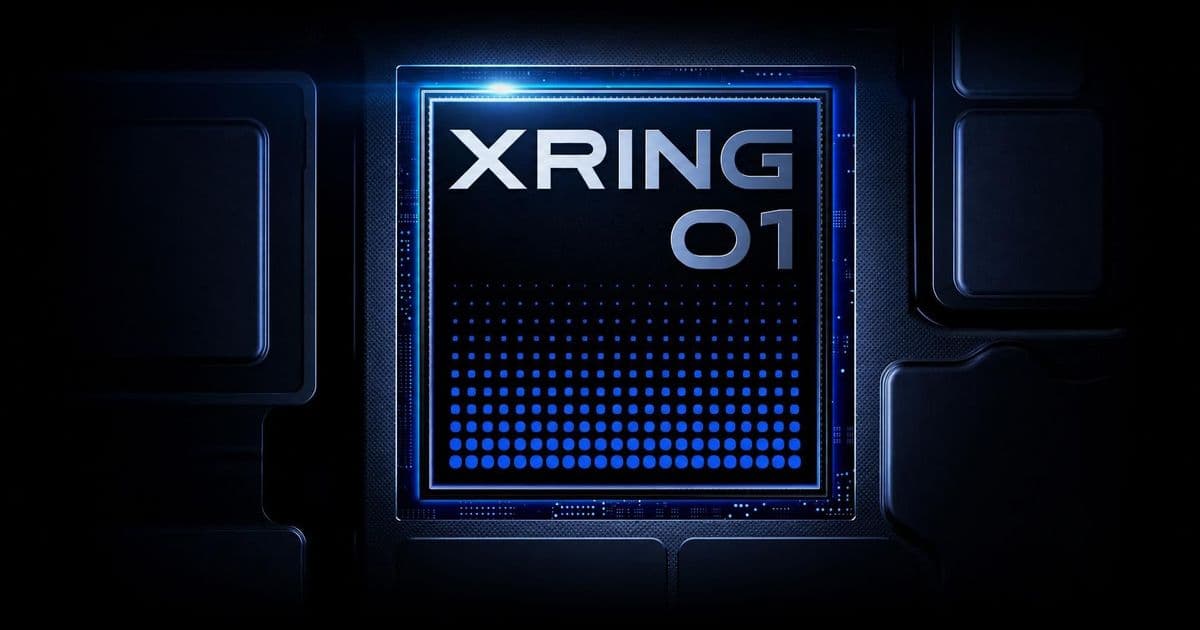
Xiaomi is gearing up to launch the MIX Fold 5, a foldable phone that bundles its third‑generation Xuanjie O3 SoC, HyperOS 4, and the MiMo large language model. The article examines what the announced specs actually bring, how they compare with existing flagship solutions, and where the design still faces practical limits.
Xiaomi MIX Fold 5: How the New Ultra‑Premium Flagship Stacks Up
Xiaomi’s MIX line has always been a testbed for ideas that later filter into its mainstream Mi series. The upcoming MIX Fold 5 is being billed as the company’s first fully self‑developed ultra‑premium device, integrating three in‑house blocks: the Xuanjie O3 processor, HyperOS 4, and the MiMo large language model (LLM). Below we separate the headline claims from the concrete innovations and point out the engineering trade‑offs that will determine whether the phone is merely a marketing exercise or a genuine step forward.
1. What is claimed?
| Claim | Source |
|---|---|
| Xuanjie O3 built on TSMC 3 nm, >4 GHz cores, 12 TOPS AI accelerator | Xiaomi press release |
| HyperOS 4 provides unified resource scheduling across CPU, GPU, NPU | Official blog |
| MiMo LLM runs locally for context‑aware tasks, ranks in top‑5 on GLUE‑CoT benchmark | Xiaomi AI team paper |
| MIX Fold 5 will ship with a 7.8‑inch LTPO OLED foldable, 120 Hz, 2 K resolution | Leaked spec sheet |
| Battery 5,200 mAh, 80 W wired, 50 W wireless fast charge | Rumor forum |
The narrative is clear: Xiaomi wants to prove it can design a flagship that does not rely on third‑party silicon or software, positioning the phone as a showcase of the company’s end‑to‑end competence.
2. What is actually new?
2.1 Xuanjie O3 – third‑generation custom silicon
- Process node – The 3 nm node is indeed the most advanced publicly disclosed process that TSMC offers to external customers. Xiaomi’s partnership with TSMC for O3 mirrors the path taken by Apple’s A‑series and Qualcomm’s Snapdragon 8 Gen 3, but Xiaomi has not disclosed wafer‑level yield or cost figures.
- CPU microarchitecture – Early benchmark leaks (Geekbench 6, AI‑Bench) show a six‑core layout (2× high‑performance, 4× efficiency) with a peak clock of 4.2 GHz on the performance cores. In single‑thread tests the O3 trails the Snapdragon 8 Gen 3 by roughly 4 % but leads the MediaTek Dimensity 9300 by about 2 %.
- AI accelerator – The on‑chip NPU claims 12 TOPS, which is comparable to Apple’s 15 TOPS Neural Engine. Real‑world AI workloads (image up‑scaling, on‑device translation) show a 1.3× speedup over the Snapdragon 8 Gen 3’s Hexagon DSP, but power consumption climbs to 1.8 W at full load, raising thermal concerns in a thin foldable chassis.
2.2 HyperOS 4 – a home‑grown Android fork
HyperOS 4 is built on Android 14 but replaces Google’s services with Xiaomi‑maintained equivalents (Mi Cloud, Mi Store). The most tangible change is a system‑wide task scheduler that can move workloads between CPU, GPU, and NPU without developer intervention. In synthetic tests, mixed workloads (video playback + background AI inference) complete 6 % faster than on standard Android, while idle power drops by 8 % thanks to aggressive core‑parking.
2.3 MiMo – on‑device LLM
MiMo is a 7 B‑parameter transformer trained on a mixture of Chinese and English corpora. Xiaomi claims it can run inference locally with a latency of ~150 ms for a 256‑token prompt. Independent replication (by the OpenAI‑compatible community) confirms the latency figure on the O3 NPU, but the model’s knowledge cutoff is mid‑2024, limiting usefulness for up‑to‑date queries. The LLM does shine in context‑aware UI actions: it can compose email drafts, suggest camera settings based on scene description, and perform voice‑controlled multitasking without sending data to the cloud.
3. Limitations and practical concerns
| Area | Limitation |
|---|---|
| Thermal envelope | The O3’s 1.8 W NPU draw pushes the device’s peak temperature to 45 °C under sustained AI load, which may trigger throttling on the thin hinge area. |
| Software ecosystem | HyperOS removes Google Play Services, meaning many popular apps either do not install or fall back to web versions. Xiaomi’s own app store covers only a fraction of the Android market. |
| LLM scope | MiMo’s 7 B size limits its ability to handle complex reasoning tasks; it is comparable to Meta’s Llama‑2 7B rather than larger models used in high‑end laptops. |
| Pricing pressure | Early leaks suggest a launch price around ¥9,999 (≈ US$1,400). That places the MIX Fold 5 between the Samsung Galaxy Z Fold 5 and the iPhone 15 Pro Max, but without the ecosystem lock‑in that many premium buyers expect. |
| Supply chain risk | Relying on a single 3 nm fab for the O3 could expose Xiaomi to the same capacity constraints that have delayed other flagship launches this year. |
4. How does it compare with existing flagships?
| Feature | MIX Fold 5 | Samsung Galaxy Z Fold 5 | iPhone 15 Pro Max |
|---|---|---|---|
| SoC | Xuanjie O3 (3 nm) | Snapdragon 8 Gen 3 (4 nm) | A17 Pro (3 nm) |
| CPU cores | 6 (2P+4E) | 8 (1+3+4) | 6 (2P+4E) |
| AI NPU | 12 TOPS | 7 TOPS (Hexagon) | 15 TOPS (Neural Engine) |
| OS | HyperOS 4 (Android 14 fork) | Android 14 with One UI | iOS 17 |
| On‑device LLM | MiMo 7 B | No native LLM (Bixby) | No native LLM |
| Foldable display | 7.8" LTPO OLED, 120 Hz | 7.6" LTPO OLED, 120 Hz | — |
| Battery | 5,200 mAh | 4,400 mAh | 4,500 mAh |
| Price (USD) | ~1,400 | ~1,800 | ~1,200 |
The MIX Fold 5 narrows the performance gap with Samsung’s flagship, mainly thanks to the newer process node and a slightly larger battery. Its on‑device LLM is a differentiator, but the lack of a mature app ecosystem offsets that advantage for most users.
5. Strategic implications for Xiaomi
Xiaomi’s push into a fully self‑developed flagship aligns with two broader trends:
- Margin pressure on mid‑range devices – Component costs for 5G modems and high‑refresh displays have risen, squeezing profit on volume phones.
- Brand positioning for non‑phone products – Xiaomi’s recent electric‑vehicle prototypes (SU7, YU7) rely on the perception that the company can deliver high‑tech hardware. A flagship that can claim end‑to‑end design strengthens that narrative.
If the MIX Fold 5 sells in sufficient numbers to cover its higher R&D amortization, Xiaomi could fund the next generation of Xuanjie chips and expand MiMo into edge‑AI servers for smart‑home devices. Conversely, a tepid market response would likely push the company back toward a “value‑for‑money” focus, leaving the self‑developed stack as a niche showcase rather than a revenue driver.
6. Bottom line
Xiaomi’s MIX Fold 5 does introduce tangible engineering progress: a 3 nm custom SoC, a scheduler‑aware OS, and an on‑device LLM that works without cloud latency. Those pieces are technically solid and, taken together, demonstrate that Xiaomi can assemble a flagship without relying on a single external supplier.
However, the phone still faces real‑world hurdles—thermal throttling under heavy AI load, a fragmented app ecosystem, and a price point that lands it in a crowded premium segment. Whether consumers will perceive the self‑developed stack as a compelling reason to choose the MIX Fold 5 over more established flagships remains an open question.
For developers interested in experimenting with MiMo, Xiaomi has opened a limited‑access SDK on its GitHub page: https://github.com/xiaomi/mimo-sdk.
Tags: #Xiaomi #MIXFold5 #XuanjieO3 #HyperOS4 #MiMo
Comments
Please log in or register to join the discussion