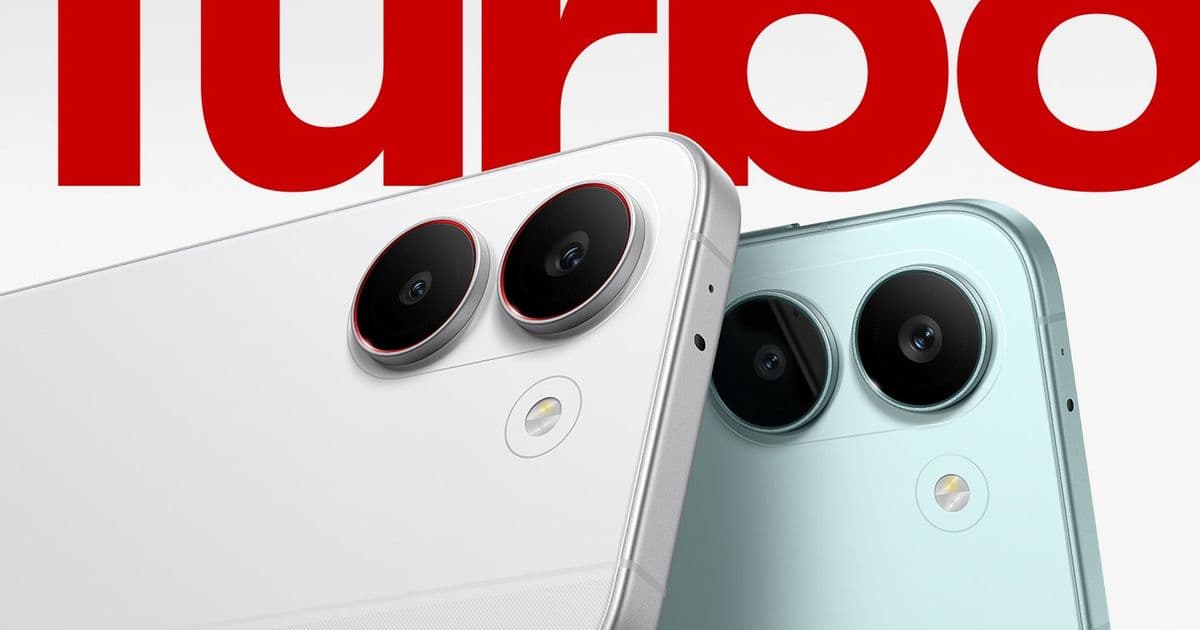
Xiaomi's upcoming mid-range contender packs a 3,500-nit display and desktop-sized battery while challenging performance expectations with its Dimensity 8500-Ultra configuration.

Xiaomi has fully unveiled the Redmi Turbo 5's technical specifications ahead of its January 29 launch, positioning this CNY 2,000 (~$288) device as a potential benchmark for mid-range smartphones. While retaining the core DNA of its predecessor, the Turbo 5 introduces several meaningful upgrades that warrant close examination from value-conscious buyers.
Performance Configuration: Dimensity 8500-Ultra with Premium Memory
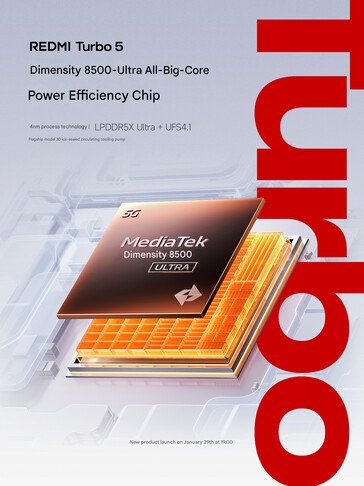
The MediaTek Dimensity 8500-Ultra sits at the heart of the Redmi Turbo 5, paired with LPDDR5X RAM and UFS 4.1 storage - a combination typically reserved for flagship devices. Xiaomi claims this setup delivers 25% better GPU performance than previous generation mid-range chipsets, though independent benchmarks suggest more modest gains. The company's "3D" vapor chamber cooling system aims to sustain peak performance during extended gaming sessions, addressing a common pain point in this price segment.
Compared to the Turbo 4 Pro's Dimensity 8200, the new SoC offers:
- 12% higher CPU clock speeds (3.35GHz vs 3.0GHz)
- Support for faster LPDDR5X-8533 memory
- Improved AI processing capabilities
Display and Battery: Extreme Brightness Meets Marathon Endurance
The 6.59-inch display matches its Turbo 5 Max sibling with a 3,500-nit peak brightness rating - surpassing many current flagships. This specification proves particularly valuable for outdoor readability, effectively eliminating screen washout in direct sunlight.
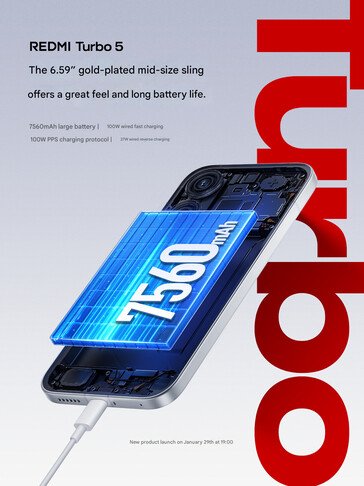
Powering the device is a 7,560mAh battery, representing a 6% capacity increase over the Turbo 4 Pro's 7,120mAh unit. When combined with 100W wired charging (full charge in approximately 29 minutes) and 27W reverse charging capabilities, the Turbo 5 establishes itself as a leader in power management. The inclusion of PPS (Programmable Power Supply) support ensures compatibility with third-party GaN chargers for flexible power solutions.
Durability and Design: Industrial-Grade Protection
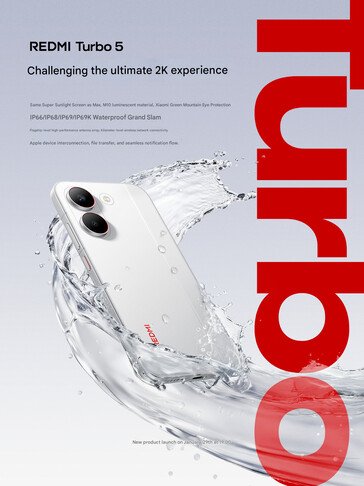
Xiaomi has certified the Redmi Turbo 5 with IP66/IP68/IP69/IP69K ratings - an unusual combination that suggests exceptional resistance to both water immersion (up to 1.5 meters for 30 minutes) and high-pressure water jets. This level of protection exceeds typical mid-range offerings and approaches industrial-grade durability standards.
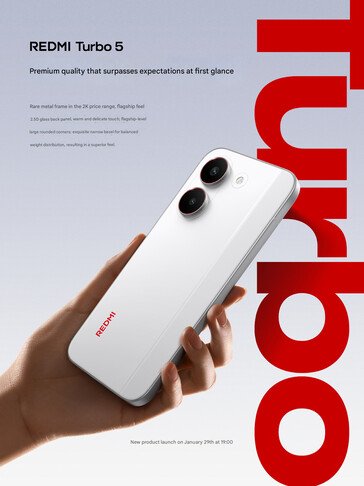
The back panel design continues Redmi's recent aesthetic language with subtle texturing and a prominent camera module. While materials haven't been officially confirmed, teaser images suggest a polycarbonate construction with anti-fingerprint coating.
Pricing and Target Audience
Positioned in the CNY 2,000 ($287-$300) range, the Redmi Turbo 5 appears targeted at:
- Mobile gamers needing sustained performance
- Outdoor workers/users requiring maximum display visibility
- Travelers prioritizing battery life over ultra-portability
- Budget-conscious buyers seeking near-flagship specifications
When compared to competitors like the Realme GT Neo 6 and Poco X6 Pro, the Turbo 5's combination of extreme brightness, massive battery, and ingress protection gives it a distinct advantage for specific use cases. However, performance-focused users may want to wait for independent benchmarks verifying Xiaomi's thermal management claims before committing.
The Redmi Turbo 5 launches in China on January 29, 2026, with global availability yet to be confirmed. Given its specifications sheet, this device could reshape expectations for sub-$300 smartphones if Xiaomi delivers on its performance promises.
Comments
Please log in or register to join the discussion