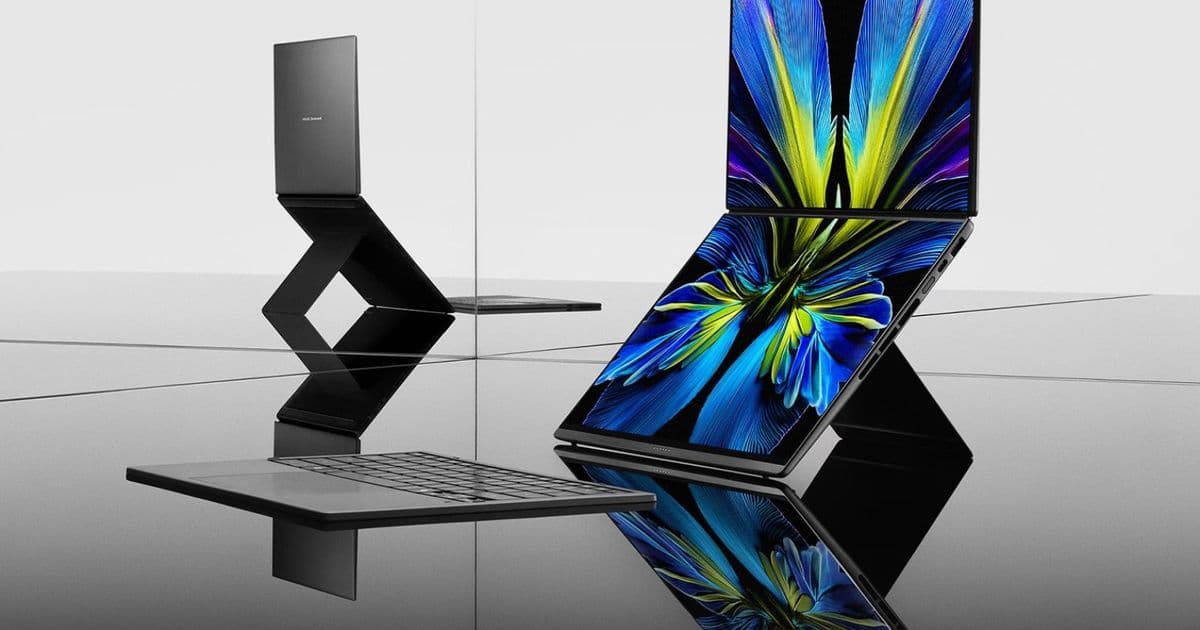
Asus has launched the 2026 Zenbook Duo featuring dual 1,000-nit OLED displays, Intel Panther Lake processors, a 99Wh battery, and redesigned detachable keyboard, with prices starting at £2,299 in the UK.
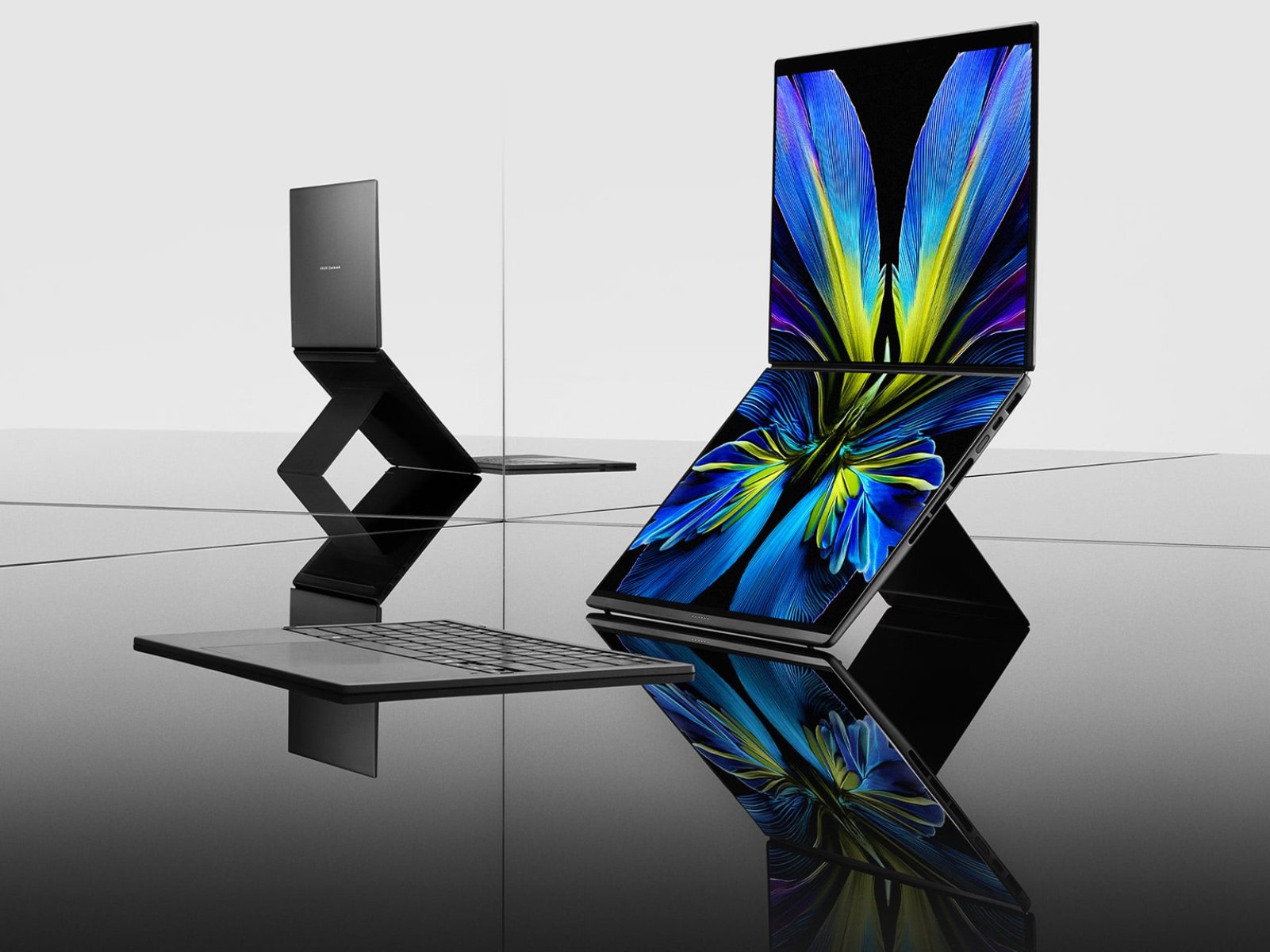
Asus has officially rolled out its redesigned Zenbook Duo (2026) following its CES debut, introducing substantial hardware improvements over its predecessor. The dual-screen laptop now features brighter displays, next-generation processors, and a significantly larger battery, positioning it as a productivity powerhouse for creative professionals and multitaskers.
The most notable upgrade comes in the display department. Both 14-inch OLED panels now reach 1,000 nits peak brightness, a substantial increase over previous models. This enhancement makes the device viable for outdoor use and HDR content creation. The displays remain touch-enabled and support stylus input, maintaining the Zenbook Duo's signature functionality.
Powering the system are Intel's newly released Panther Lake processors. Top configurations feature the Core Ultra X9 388H with Intel's Arc B390 integrated graphics (12 Xe cores), while entry models utilize the Core Ultra 9 386H with a 4-core Xe3 iGPU. Both variants represent a generational leap in CPU and graphics performance from 2025 models.

The chassis sees meaningful refinements with a new "ceraluminium" hybrid construction that reduces weight while maintaining structural rigidity. Crucially, the hinge mechanism has been reengineered to allow the device to lie completely flat—a design limitation in earlier iterations. This flexibility enables unconventional workspace configurations, particularly useful for collaborative sessions or presentations.
Battery capacity jumps dramatically from 75Wh in the 2025 model to 99Wh, addressing a key limitation of dual-screen laptops. Asus claims this provides sufficient endurance for full-day productivity despite the power demands of twin OLED panels. The accompanying detachable keyboard has also been upgraded with improved key travel and enhanced Bluetooth connectivity reliability.
Comparing configurations reveals significant performance differences between models. The Core Ultra X9 388H variant doubles the graphics cores of the Core Ultra 9 386H model, making it substantially better suited for GPU-accelerated tasks like video rendering or 3D modeling. Both ship with 32GB of RAM as standard, but storage options range from 1TB to 2TB.
UK pricing starts at £2,299 ($3,095) for the Core Ultra 9 386H model with 1TB storage. The higher-end Core Ultra X9 388H configuration with 2TB storage commands £2,499 ($3,365) at Currys UK. European buyers can find the flagship model for approximately €2,600 (~$3,035) including VAT. These prices represent a premium over the previous generation but align with the substantial hardware improvements.
This iteration makes the Zenbook Duo particularly compelling for mobile professionals who prioritize screen real estate—developers needing multiple code windows, financial analysts tracking live data streams, or content creators editing across timelines and preview panes. The high-brightness OLEDs also cater to photographers and videographers requiring accurate color reproduction in various lighting conditions.
While dual-screen laptops remain niche products, Asus' refinements address practical concerns that hampered earlier models. The combination of brighter displays, all-day battery life, and versatile form factor positions the Zenbook Duo 2026 as perhaps the most convincing implementation of the dual-screen concept to date.
Comments
Please log in or register to join the discussion