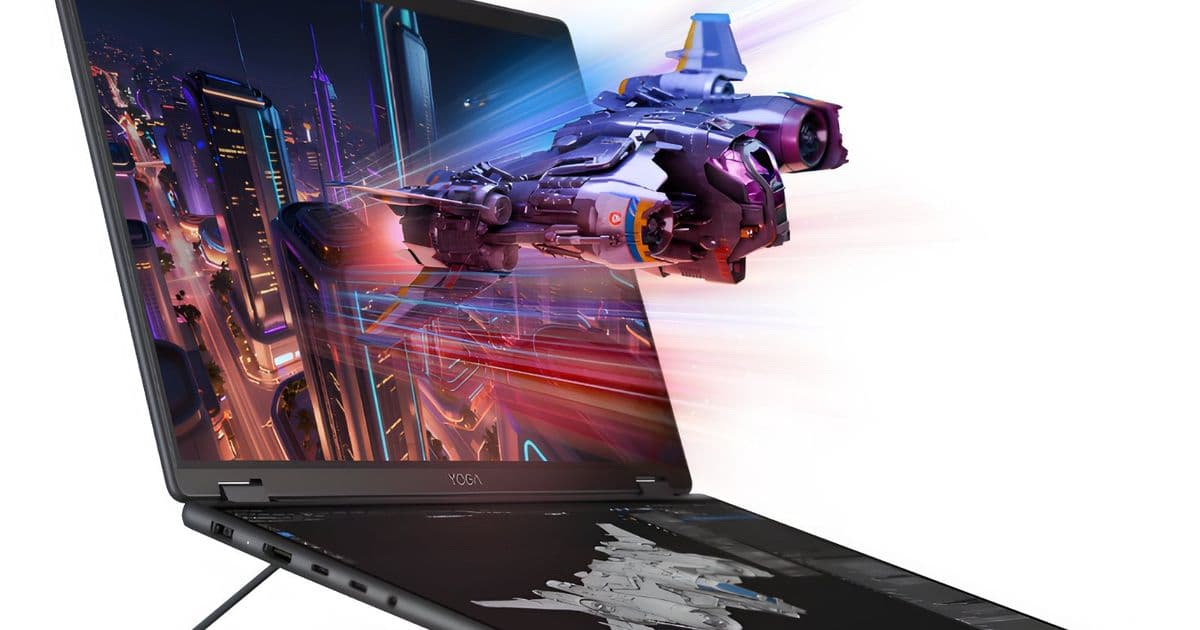
Lenovo is set to unveil the Yoga Book Pro 3D at Mobile World Congress, featuring stereoscopic 3D displays that work without glasses, dual screens, and a built-in stand in a concept device that follows the company's experimental Yoga Book lineage.
Lenovo is preparing to showcase an intriguing new concept device at Mobile World Congress 2026, following in the footsteps of its experimental Yoga Book series. According to prominent leaker Evan Blass, the company will unveil the Yoga Book Pro 3D, a dual-screen laptop that promises glasses-free 3D viewing across both displays.
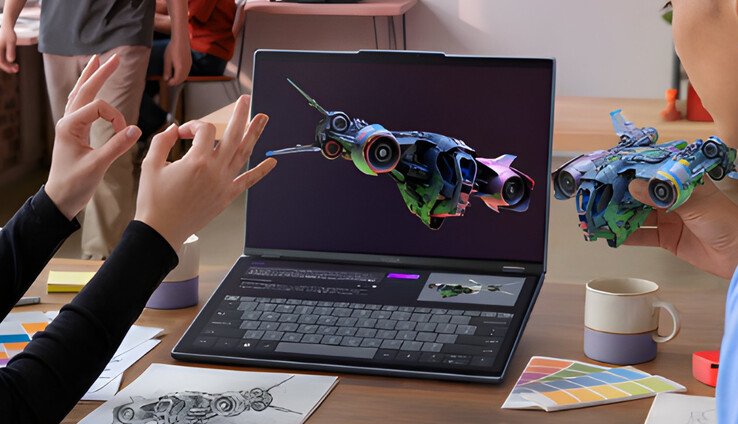
An AI-generated representation of the Yoga Book Pro 3D.
The device appears to be Lenovo's answer to the growing interest in stereoscopic 3D technology for consumer devices. Unlike traditional 3D implementations that require special glasses, the Yoga Book Pro 3D aims to deliver a glasses-free experience, similar to what we've seen in devices like the Abxylute 3D One gaming handheld.
Design and Display Features
The promotional images reveal several interesting design choices. The Yoga Book Pro 3D features dual displays, continuing Lenovo's exploration of multi-screen form factors that began with the Yoga Book 9i. The stereoscopic 3D implementation suggests that both screens will support depth perception without requiring viewers to wear special glasses - a technology that has historically been challenging to implement effectively in larger displays.
The device includes a built-in stand, though it appears simpler and wider than the sophisticated hinge mechanism used on ASUS's Zenbook Duo. This suggests Lenovo is prioritizing stability and ease of use over mechanical complexity, which could be a practical choice for a concept device.
Connectivity and Power
From the leaked images, we can see the Yoga Book Pro 3D includes a Slim Tip power connection, indicating this is likely a relatively high-performance device that requires more than standard USB-C power delivery. The presence of dual USB Type-C ports and an HDMI port on the left side suggests Lenovo is targeting users who need versatile connectivity options, possibly for content creators or professionals who might benefit from stereoscopic 3D capabilities.
Context in Lenovo's Product Line
The Yoga Book Pro 3D continues Lenovo's tradition of experimental devices that push the boundaries of traditional laptop design. The company has previously released the Yoga Book 9i, which featured dual OLED displays and a unique software experience optimized for dual-screen use. This new concept appears to build on that foundation while adding the complexity of stereoscopic 3D technology.
What We Don't Know
As with most leaks, several key details remain unknown. The specifications of the displays, including resolution, refresh rate, and the specific stereoscopic 3D technology being used, haven't been revealed. The internal hardware, including the processor, RAM, and storage options, also remains a mystery. Additionally, it's unclear whether this is purely a concept device or if Lenovo plans to bring it to market as a consumer product.
Industry Context
The timing of this announcement is interesting, as interest in 3D technology has been cyclical in the consumer electronics industry. While 3D TVs failed to gain mainstream adoption a decade ago, newer implementations like glasses-free 3D on smartphones and handheld gaming devices have shown more promise. Lenovo's approach of combining stereoscopic 3D with dual screens could offer unique use cases for creative professionals or entertainment applications.
The Mobile World Congress has become an increasingly important venue for laptop and PC announcements in recent years, with manufacturers using the event to showcase their most innovative concepts alongside their mainstream product lines. The Yoga Book Pro 3D appears to be Lenovo's most ambitious concept for this year's show.
We'll likely learn more about the Yoga Book Pro 3D when Lenovo officially unveils it at MWC 2026, which runs from March 2-5 in Barcelona. Given the company's history with the Yoga Book line, this concept could provide a glimpse into the future of laptop design, even if the specific implementation doesn't make it to market in its current form.
Comments
Please log in or register to join the discussion