Paul Krugman examines how political affiliation shapes economic sentiment, challenging Trump administration claims that negative economic perceptions stem from 'Trump derangement syndrome' rather than actual economic conditions.
Political polarization has created a stark divide in how Americans perceive economic conditions, with partisan loyalty often overriding objective economic data. This phenomenon, highlighted in Paul Krugman's recent analysis, raises important questions about the relationship between political identity and economic reality.
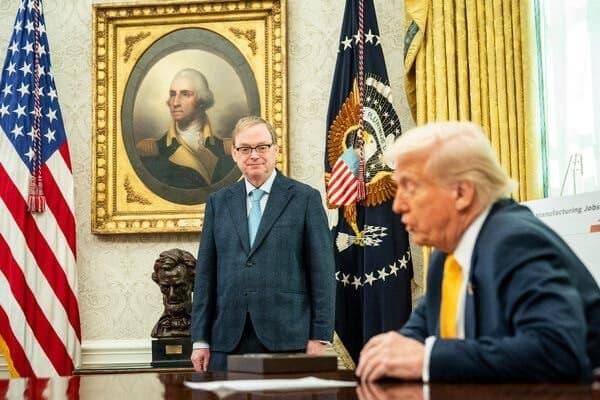
The debate began when Kevin Hassett, director of the National Economic Council, appeared on Fox News to discuss the Michigan index of consumer sentiment, which had reached its lowest level ever. Rather than addressing the economic concerns driving these negative perceptions, Hassett attributed the poor ratings to Democrats suffering from 'Trump derangement syndrome.' This explanation, while politically convenient, fails to withstand scrutiny when examining the actual data.
Krugman presents evidence from the Michigan survey, which tracks respondents by political affiliation. The data reveals that while political affiliation does influence economic perceptions, the current situation defies simple partisan explanations. Notably, independent voters' views of the economy align closely with Democrats, while Republican optimism stands in stark contrast to the broader population's sentiment.
Further analysis from YouGov's surveys, which subdivide Republicans into MAGA and non-MAGA supporters, reveals even more compelling data. A remarkable 65% of non-MAGA Republicans report believing the economy is getting worse, compared to only 11% who see it improving. This suggests that economic pessimism extends far beyond Democratic voters, encompassing most Americans who don't identify as strong Trump supporters.
When visualized, the data shows that nearly all Americans except MAGA Republicans cluster in the pessimistic quadrant regarding economic outlook. Only 19% of Americans overall believe the economy is good, while 81% consider it very bad.
These negative perceptions have real economic foundations. Krugman points to rising inflation resulting from Trump's tariffs and military actions against Iran, which have led to a sharp decline in real personal income. These measurable economic changes provide rational explanations for the negative consumer sentiment that the administration dismisses as politically motivated.
From a counter-perspective, Trump supporters might argue that traditional economic indicators fail to capture the strength of the economy under Trump's policies. They might point to stock market performance, unemployment rates, or other positive metrics that appear strong on paper. However, this perspective struggles to reconcile with the lived experiences of most Americans, particularly those facing higher prices for everyday goods and services.
The broader implications of this divide extend beyond economic policy to the very nature of objective assessment in a polarized environment. When economic perceptions become so thoroughly filtered through political identity, it becomes increasingly difficult to establish a shared understanding of reality. This polarization poses significant challenges for democratic governance, as policy debates become less about evidence-based solutions and more about reinforcing partisan identities.
Krugman's analysis ultimately suggests that the group with more distorted economic perceptions may be the 19% of Americans who maintain positive views despite objectively negative economic indicators. This small but politically powerful segment of the population appears disconnected from the economic reality experienced by the vast majority of their fellow citizens.
The question of 'who's deranged, exactly?' serves as a provocative entry point into a larger discussion about the relationship between political identity and economic reality in an increasingly polarized society. As economic data continues to diverge from public sentiment, bridging this divide may require more than just improved communication—it may demand a reexamination of how economic information is framed and understood across the political spectrum.
Comments
Please log in or register to join the discussion