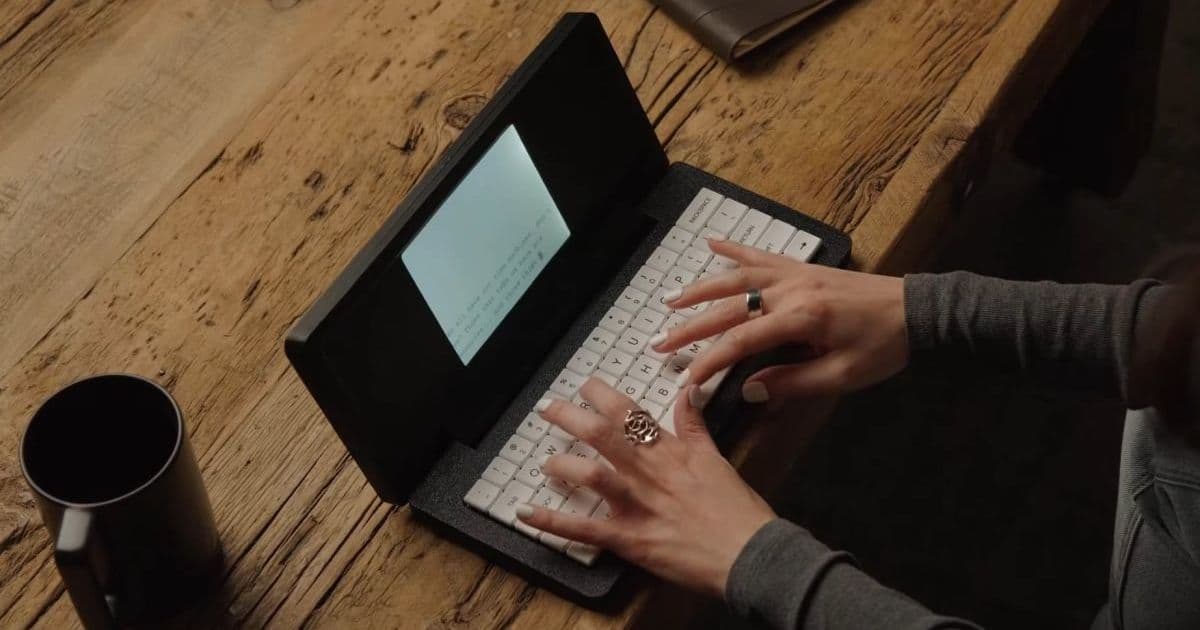
The new Zerowriter Fold adds a hinge, a larger front‑lit E‑Ink screen and a hot‑swappable mechanical keyboard to the distraction‑free writer, targeting a $260 Kickstarter price and a March 2027 launch.
A clamshell upgrade for the Zerowriter line
After the original Zerowriter Ink shipped in early 2024, users praised its low‑power E‑Ink display and tactile keyboard but complained about the flat‑panel layout that forced an uncomfortable neck angle. The follow‑up Kickstarter, Zerowriter Fold, answers that criticism with a laptop‑like hinge, a bigger screen and a few performance tweaks.
What’s new?
| Feature | Zerowriter Ink | Zerowriter Fold |
|---|---|---|
| Screen size | 5 in E‑Ink, no tilt | 6 in E‑Ink, adjustable front light, forward‑tilt hinge |
| Processor | Low‑end MCU | Faster MCU (exact model TBD) |
| USB | Basic charging | Stronger USB‑C with data transfer |
| Keyboard | 60% layout, fixed switches | 60% layout, 61 Kailh Choc Pro Red switches, hot‑swappable |
| Battery life | 30‑50 h (typical) | 50‑100 h (writing‑only) |
| Dimensions | 11 × 5 × 0.9 in | 12 × 5 × 1.25 in |
| Weight | ~1.8 lb | <2 lb |
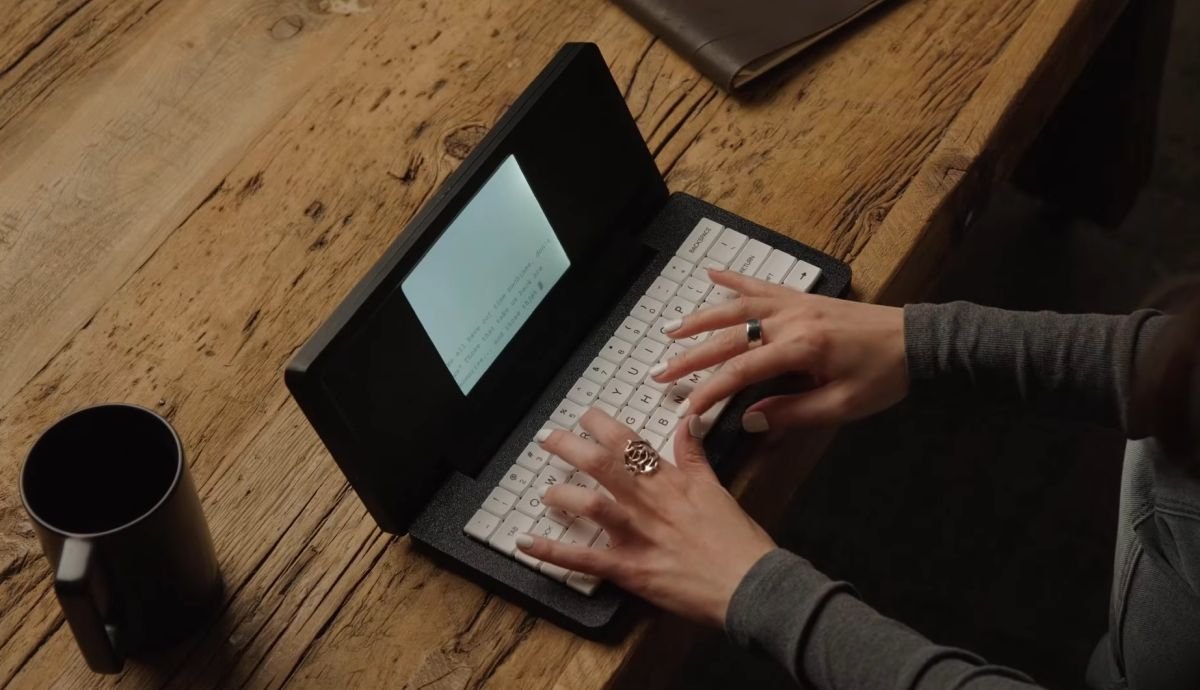
The most visible change is the hinge that lets the screen tilt forward for comfortable typing or fold flat over the keyboard for storage. Existing Ink owners can buy an optional conversion kit for about $30 once it ships, turning their flat device into a clamshell without gaining a larger screen or faster CPU.
Operating system and workflow
Zerowriter Fold runs a custom Linux‑based OS called Zerowriter Core. It offers two dedicated modes:
- Drafting mode – minimal UI, instant key response, ideal for rapid note taking.
- Word‑Processing mode – line‑spacing controls, custom fonts, live word count, and basic clipboard actions (cut, copy, paste).
The OS stores documents on a micro‑SD card as plain .txt or .md files. Users can move files via the card slot or a USB‑C connection. A future desktop companion app will enable optional cloud sync (Google Drive, Dropbox) even though the device itself lacks Wi‑Fi.
Developers interested in the platform can watch for the open‑source repository that Zerowriter promises to publish on their GitHub page in the coming weeks. The code base is expected to be lightweight, making it a good sandbox for hobbyists who want to experiment with custom keyboards or alternative input methods.
Battery and ergonomics
Because the hardware is purpose‑built for text, power draw stays low: the front‑light can be disabled for maximum endurance, and the MCU sleeps when no keys are pressed. In real‑world tests the device lasted between 50 and 100 hours of continuous typing, depending on how often the backlight was used and the speed of keystrokes.
The 61‑key Kailh Choc Pro Red switches are hot‑swappable, so users can replace them with tactile or silent variants without soldering. This flexibility is rare in ultra‑portable writers and adds a level of personalization usually reserved for full‑size mechanical keyboards.
Pricing, timeline and competition
The Kickstarter campaign targets $260 per unit, with early‑bird discounts that bring the price down to $230. Estimated shipping is March 2027. At under two pounds, the Fold is lighter than most 13‑inch ultrabooks and far more compact than a typical 12‑inch laptop.
The device sits in a niche that includes the Pomera DM250, the Freewrite Traveler, and a growing list of DIY writer‑deck kits. Compared with those, Zerowriter Fold offers a more affordable price point, a hot‑swappable keyboard and an open‑source OS, making it one of the more versatile options for writers who want a distraction‑free, always‑on writing surface.
What this means for developers
If you maintain a cross‑platform writing app, the Fold presents a new target for native builds. The device runs a stripped‑down Linux kernel, so any toolchain that can produce an ARM‑v7 or ARM64 binary (GCC, Clang, Rust) will work. Because the OS is minimal, you’ll need to bundle any UI libraries you depend on; static linking with SDL2 or egui is a common approach for low‑resource devices.
The presence of a USB‑C data port means you can implement a simple file‑transfer protocol (MTP or a custom bulk‑transfer) to push and pull markdown files from a desktop client. For cloud sync, a small background daemon could watch the SD card for changes and invoke the companion sync app on the host computer.
Bottom line
Zerowriter Fold addresses the ergonomic shortcomings of its predecessor while keeping the core appeal of an E‑Ink, distraction‑free writing surface. Its open hardware philosophy, hot‑swappable keyboard and modest price make it a compelling option for writers and developers who want a dedicated, low‑power text editor that feels like a laptop without the bloat.
Comments
Please log in or register to join the discussion