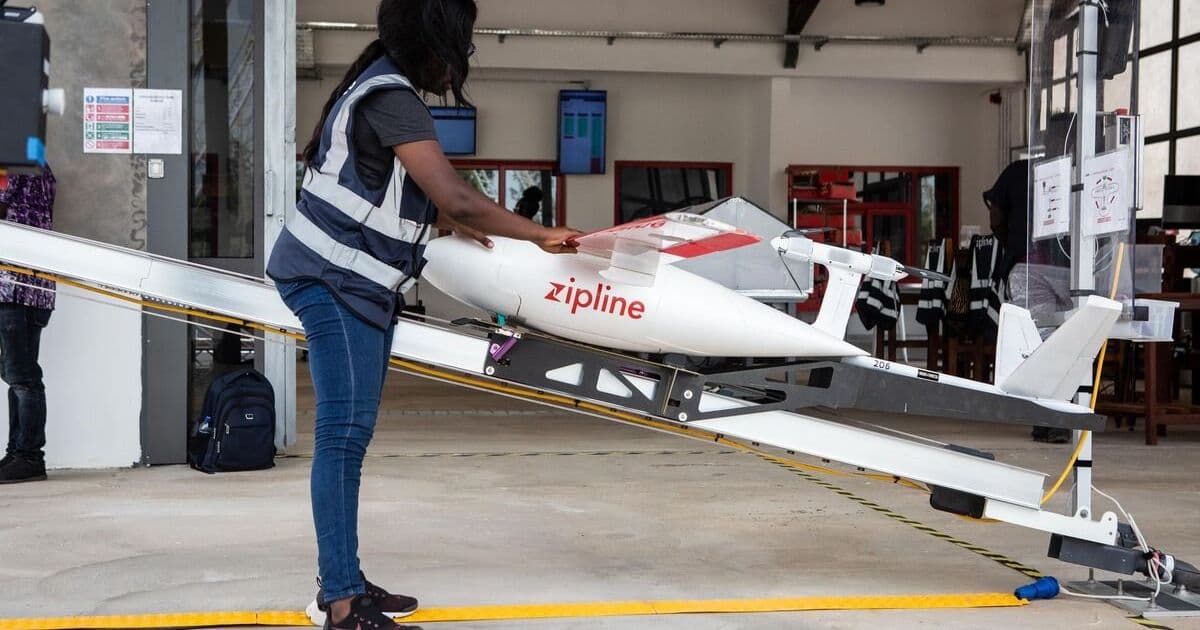
Drone logistics provider Zipline has raised over $600 million in new funding, increasing its valuation to $7.6 billion while announcing completion of 2 million commercial deliveries transporting over 20 million items.
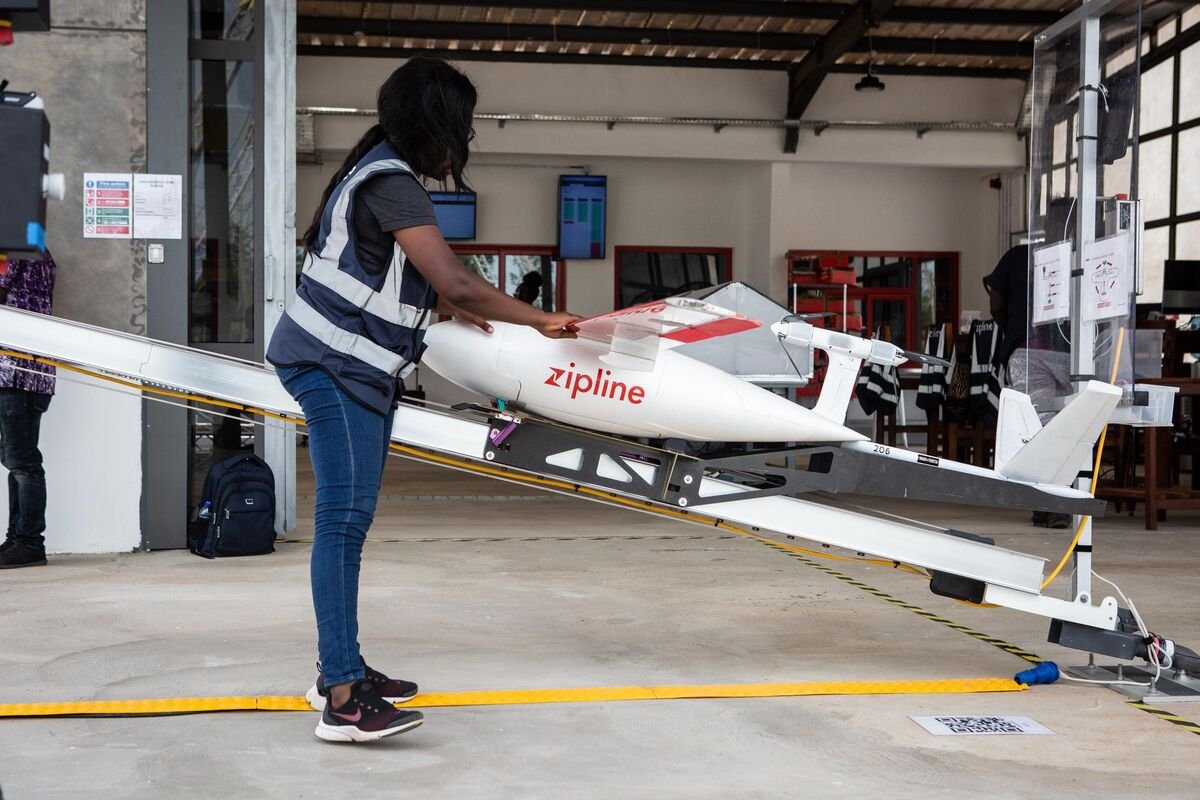
Drone delivery pioneer Zipline has secured more than $600 million in new funding, pushing its valuation to $7.6 billion according to Bloomberg reports. The funding round coincides with the company announcing it has completed over 2 million commercial deliveries, transporting more than 20 million individual items through its autonomous logistics network.
Zipline's platform utilizes autonomous electric drones capable of carrying payloads up to 4 pounds (1.8 kg) across distances of 50-100 miles (80-160 km). The system employs proprietary acoustic detection technology for precision package delivery via parachute drop, eliminating the need for landing infrastructure at destination sites. This approach has proven particularly effective for medical supply deliveries in remote areas, which constitute approximately 70% of Zipline's operations across Africa and Rwanda specifically.
While the funding represents significant investor confidence, drone delivery faces substantial technical and regulatory challenges. Current limitations include strict weather operation constraints (drones cannot operate in heavy rain or winds above 25 mph), payload capacity restrictions compared to ground vehicles, and complex airspace integration requirements. Zipline's expansion into suburban markets like Salt Lake City has also revealed infrastructure demands, including specialized fulfillment centers costing approximately $1.5 million each.
Regulatory progress remains fragmented globally. Rwanda and Ghana maintain the most permissive frameworks, while U.S. FAA Part 135 certification requires case-by-case approvals for beyond-visual-line-of-sight operations. The company's reported $7.6 billion valuation contrasts with competitors like Amazon's Prime Air (operating in limited U.S. markets) and Alphabet's Wing (active in Finland and Australia), neither of which disclose comparable delivery volume metrics.
Zipline's milestone of 2 million deliveries represents significant scale, though the economics of drone logistics remain challenging. Industry estimates suggest current costs per delivery range from $10-15 for medical applications to $25-40 for commercial goods—substantially higher than traditional last-mile options. The company's pivot toward higher-value deliveries (pharmaceuticals, lab samples, emergency supplies) reflects this economic reality.
With this new capital, Zipline plans expansion into Southeast Asia and continued development of its Platform 2 system featuring dockless drones capable of both parachute drops and rooftop landings. However, scaling faces persistent hurdles including battery energy density limitations (current flight times max at 90 minutes), air traffic control integration complexities, and cultural resistance in densely populated areas.
For further technical details, visit Zipline's technology page.
Comments
Please log in or register to join the discussion