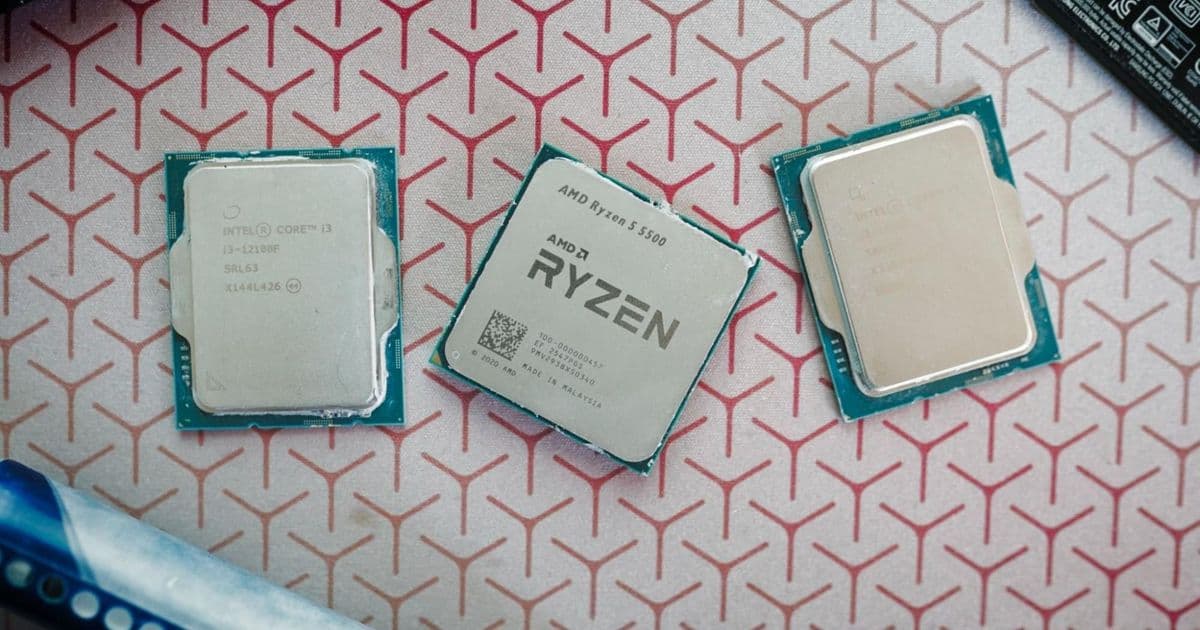
Tom’s Hardware tested three sub‑$100 CPUs – AMD’s Ryzen 5 5500, Intel’s Core i3‑12100F and the newer Core i3‑14100F – on a common DDR4 platform. The Intel Raptor Lake refresh chip wins on single‑threaded gaming and efficiency, while the AMD six‑core part leads multi‑threaded workloads and offers the cheapest overall platform.
$100 CPU Shootout – Announcement
If you have exactly $100 to spend on a brand‑new processor in 2026, the market still offers three viable DDR4‑only options: AMD’s Ryzen 5 5500 (often found for $80), Intel’s Core i3‑12100F ($90) and the newer Core i3‑14100F ($100). All three sit on mature sockets (AM4 for AMD, LGA 1700 for Intel) and support the inexpensive DDR4‑3200 memory that dominates the budget‑builder market today.
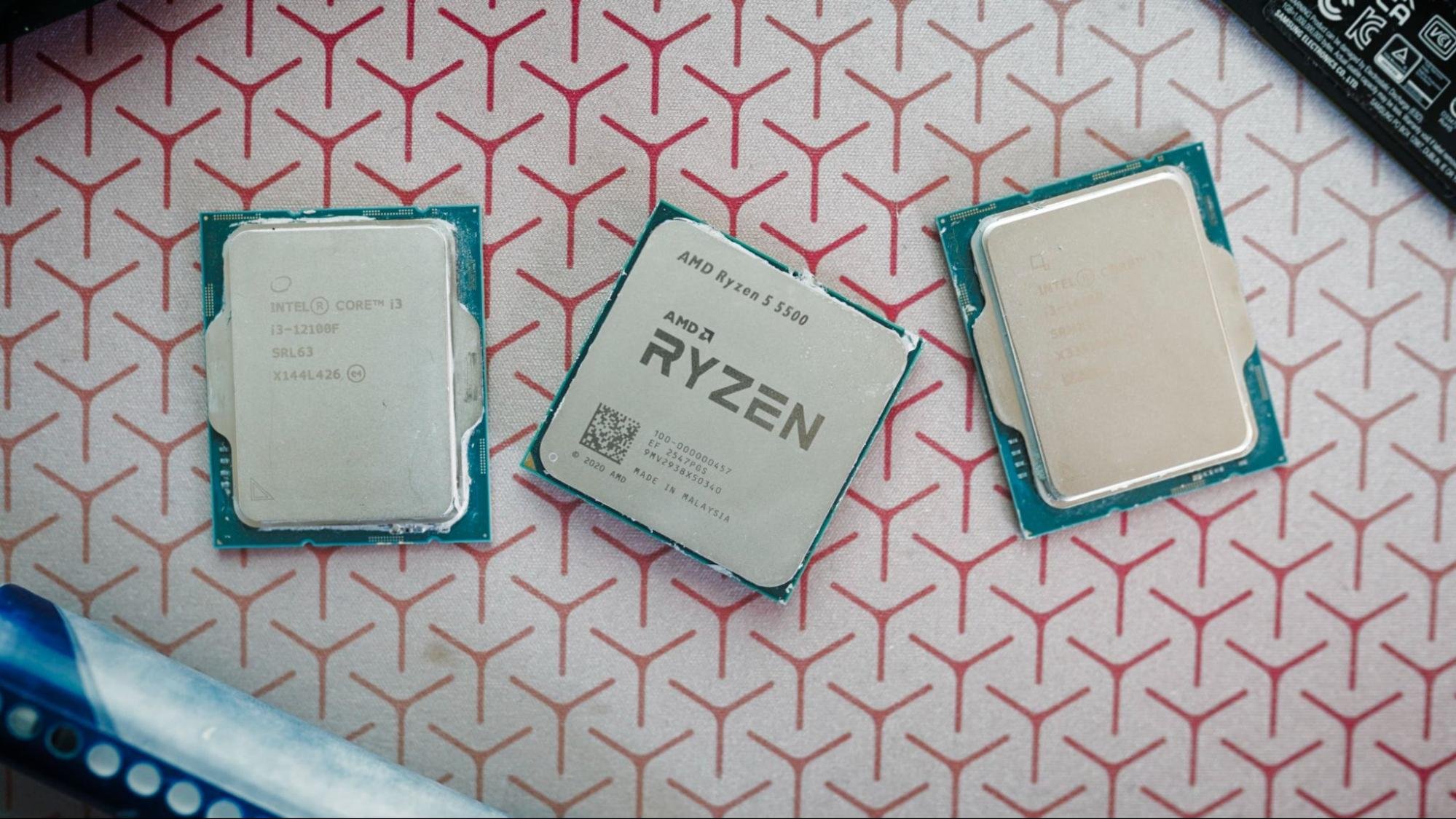
Technical specifications – a side‑by‑side look
| CPU | Architecture | Cores / Threads | Base – Boost (GHz) | L2 / L3 Cache | TDP (W) | Max DDR4 Speed |
|---|---|---|---|---|---|---|
| Ryzen 5 5500 | Zen 3 (Cezanne) | 6 / 12 | 3.6 – 4.2 | 512 KB per core / 16 MB | 65 W (PPT 88 W) | 3200 MT/s |
| Core i3‑12100F | Alder Lake | 4 / 8 | 3.3 – 4.3 | 1.25 MB per core / 12 MB | 58 W (PPT 89 W) | 3200 MT/s (DDR5‑4800 optional) |
| Core i3‑14100F | Raptor Lake Refresh (H0 stepping) | 4 / 8 | 3.5 – 4.7 | 1.25 MB per core / 12 MB | 58 W (MTP 110 W) | 3200 MT/s (DDR5‑4800 optional) |
All three CPUs ship with a stock cooler (Wraith Stealth for AMD, Intel Laminar RM1 for the i3s) that is sufficient for the low‑power envelopes when paired with a modest air or 120 mm AIO cooler.
Architecture notes
- The Ryzen 5 5500 is a Zen 3 core derived from the Cezanne APU line; it lacks integrated graphics and is limited to PCIe 3.0. Its six cores give it a clear advantage in multi‑threaded workloads, but the 4.2 GHz boost ceiling is lower than the Intel parts.
- The Core i3‑12100F is a pure‑performance quad‑core (no E‑cores) from the 12th‑gen Alder Lake family. It runs on LGA 1700, supports both DDR4 and DDR5, and provides PCIe 4.0.
- The Core i3‑14100F is essentially the same silicon as the 12100F with a higher boost clock (4.7 GHz) and a more aggressive power limit. It retains the same 4‑core layout but extracts about 9 % more single‑threaded throughput.
Market implications – performance per dollar and platform cost
Gaming performance
- On a high‑end GPU (NVIDIA RTX 5090 FE) the i3‑14100F leads the pack by 3.8 % over the i3‑12100F and 11.8 % over the Ryzen 5 5500. The gap narrows on a more realistic RTX 4060 (8 GB VRAM) to ≈2 % between the two Intel chips and ≈10 % versus the Ryzen.
- Titles that are CPU‑bound at 1080p (e.g., Baldur’s Gate 3, Counter‑Strike 2) show the same ordering. In GPU‑bound games like Doom: The Dark Ages the three CPUs converge, but the Intel parts still edge ahead by 3‑5 %.
- The modest 5‑8 % uplift from DDR5 (when paired with the i3s) is outweighed by the roughly double price of a DDR5 kit versus a DDR4 kit, making DDR4 the sensible choice for a $100 build.
Productivity and content‑creation workloads
- Multi‑threaded benchmarks (Blender, Handbrake, V‑Ray) favor the Ryzen 5 5500 with a 13‑19 % advantage over the i3‑14100F, thanks to its two extra cores.
- Single‑threaded tests (Cinebench R23, POV‑Ray) flip the script: the i3‑14100F is 22 % faster than the Ryzen, while the i3‑12100F sits 12 % ahead.
- In mixed workloads (Adobe Photoshop, Premiere Pro) the differences shrink to 4‑9 %, indicating that neither platform dominates for casual creators; the choice will be driven by the primary workload type.
Power draw and efficiency
- Peak power stays below 80 W for all three chips, even under a full Blender render. The Ryzen 5 5500 consumes the least power in multi‑threaded runs, while the i3‑14100F draws up to 23 % more in the same scenario.
- Idle power is where Intel lags: both i3s consume roughly 10 W more than the Ryzen when the system is idle or playing back YouTube video. For a build that will sit idle for long periods, the Ryzen offers a small but measurable efficiency edge.
Platform cost breakdown (DDR4 baseline)
| Component | Approx. Cost (USD) | Notes |
|---|---|---|
| CPU | 80‑100 | Prices vary with sales; Ryzen 5 5500 often on sale at $80 |
| Motherboard | 60‑90 (AMD B550) / 90‑140 (Intel DDR4 B760) | AM4 boards are abundant; DDR4 LGA 1700 boards are scarcer and slightly pricier |
| DDR4‑3200 (16 GB) | 130‑210 | TeamGroup T‑Force Vulcan Z ($130) – Corsair Vengeance RGB Pro ($210) |
| Cooler | Included | Stock coolers adequate for sub‑80 W TDP |
| Total platform | ≈ $310 (Ryzen) / ≈ $370 (Intel) | Intel platform costs about 19 % more, mainly due to motherboard pricing. |
Upgrade path considerations
- Intel: LGA 1700 will continue to support 14th‑gen Raptor Lake and upcoming Meteor Lake CPUs, all of which can run on DDR4 boards (though DDR5 will become the norm). This gives a longer viable upgrade window without changing the socket.
- AMD: AM4 is at the end of its life cycle. The next step up would be a Zen 4 XT part that requires the new AM5 socket and DDR5 memory, forcing a full platform swap.
- For builders who value a future‑proof upgrade path while staying on DDR4, the i3‑14100F offers the best compromise.
Verdict – which $100 CPU should you buy?
The data points to a clear winner for pure gaming: Intel Core i3‑14100F. It delivers the highest single‑threaded performance, the best fps numbers on both high‑end and mid‑range GPUs, and a modest power envelope that still fits within the stock cooler’s capability.
If your primary workload is multi‑threaded content creation or you need the lowest idle power draw, the Ryzen 5 5500 edges ahead thanks to its six cores and lower baseline consumption.
Overall, for a typical budget‑gaming build that will pair the CPU with a mid‑range GPU (RTX 4060 or AMD RX 6600 XT) and a DDR4 kit, the i3‑14100F provides the best performance‑per‑dollar, even after accounting for the slightly higher motherboard cost. Builders focused on absolute platform longevity or who need extra cores for occasional rendering may still find the Ryzen 5 5500 the more sensible choice.
Jake Roach, Senior CPU Analyst – Tom’s Hardware
Comments
Please log in or register to join the discussion