From 2008's Core 2 Duo to 2025's Panther Lake, Phoronix benchmarks reveal massive performance gains across 150+ tests, with the latest 18A architecture delivering up to 95x the speed of Intel's Penryn era.
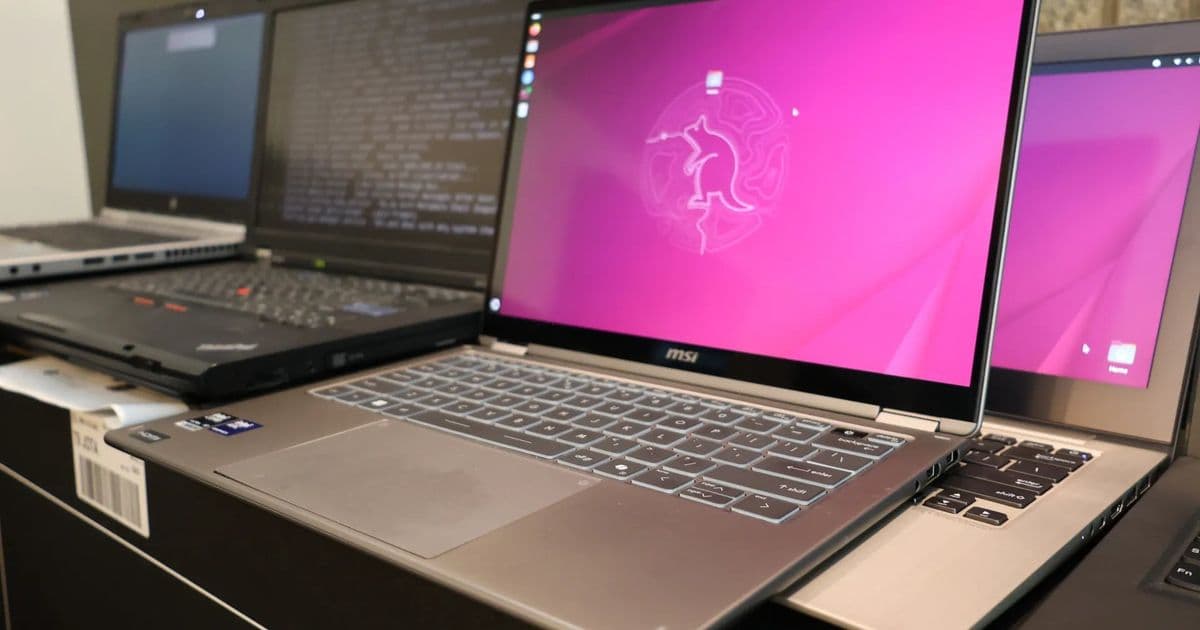
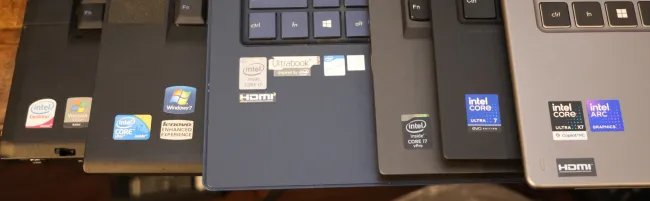
From the vintage ThinkPad T61 to the cutting-edge MSI Prestige 14 Flip AI, Phoronix has completed an exhaustive 18-year CPU comparison spanning Intel's laptop processor evolution. The comprehensive benchmarking effort tested 13 different laptops, from the 2008 Core 2 Duo T9300 "Penryn" all the way to Intel's latest 18A Panther Lake architecture, measuring performance across 150+ workloads while tracking power consumption where possible.
The most striking finding? On a geometric mean basis, Panther Lake delivers 21.5x the performance of Penryn across all tested scenarios. In specific workloads, the gap widens dramatically - reaching up to 95x faster in certain benchmarks when comparing Intel's 45nm Penryn to the cutting-edge 18A Panther Lake.
The Test Bed: 13 Laptops Spanning Nearly Two Decades
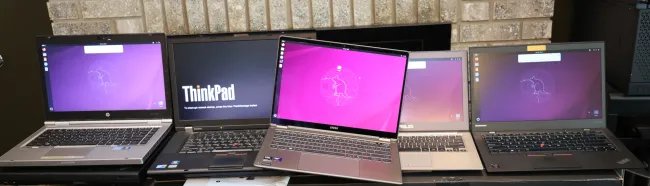
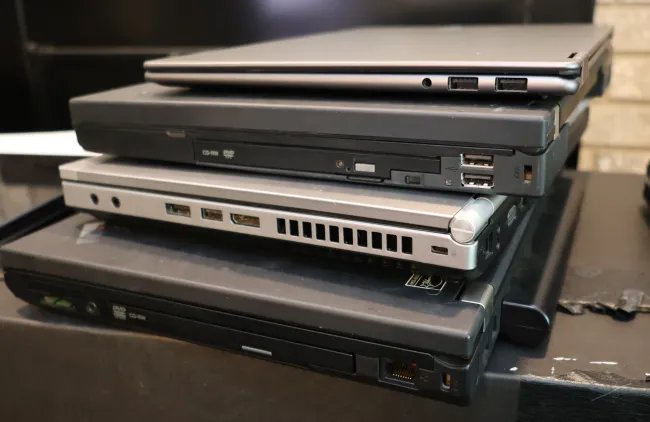
The testing methodology focused on laptops that could still boot and run modern Linux, creating a unique historical snapshot:
2008 - Core 2 Duo T9300 (Penryn)
- ThinkPad T61 with 2 physical cores, 2.5GHz, 35W TDP
- 4GB DDR2 memory
- Oldest system still operational for testing
2009 - Core i7 720QM (Clarksfield)
- ThinkPad W510 with 4 cores + HT, 2.8GHz, 45W TDP
- 4GB DDR3-1066 memory
2011 - Core i5 2520M (Sandy Bridge)
- HP EliteBook 8460p with 2 cores + HT, 2.5-3.2GHz, 35W TDP
- First CPU supporting RAPL for power monitoring
- 4GB DDR3-1333 memory
2012 - Core i7 3517U (Ivy Bridge)
- ASUS UX32VDA with 2 cores + HT, 1.9-3.0GHz, 17W TDP
- 4GB DDR3-1600 memory
2013 - Core i7 4558U (Haswell)
- ASUS UX301LAA with 2 cores + HT, 2.8-3.3GHz, 28W TDP
- 8GB DDR3-1600 memory
2015 - Core i7 5600U (Broadwell)
- ThinkPad X1 Carbon G3 with 2 cores + HT, 2.6-3.2GHz, 15W TDP
- 8GB DDR3-1600 memory
2018 - Core i7 8550U (Kaby Lake R)
- Dell XPS 13 9370 with 4 cores + HT, 1.8-4.0GHz, 15W TDP
- 8GB LPDDR3-1867 memory
2019 - Core i7 8565U (Whiskey Lake)
- Dell XPS 13 9380 with 4 cores + HT, 1.8-4.6GHz, 15W TDP
- 16GB LPDDR3-2133 memory
2020 - Core i7 1065G7 (Ice Lake)
- Dell XPS 13 7390 with 4 cores + HT, 1.3-3.9GHz, 15W TDP
- 16GB LPDDR4-3733 memory
2021 - Core i7 1165G7 (Tiger Lake)
- Dell XPS 13 9310 with 4 cores + HT, 3.0-4.8GHz, 28W TDP
- 16GB LPDDR4-4267 memory
2022 - Core i7 1280P (Alder Lake)
- MSI Prestige 14Evo with 6P+8E cores, 20 threads, 28W TDP
- 16GB LPDDR4-4267 memory
2023 - Core i5 1334U (Raptor Lake)
- Framework 12 with 2P+8E cores, 12 threads, 15W TDP
- Single channel DDR5-5200 memory
2024 - Core Ultra 7 155H (Meteor Lake)
- Acer Swift 14 with 6P+8E+2LPE cores, 22 threads, 28W TDP
- 16GB LPDDR5-6400 memory
2025 - Core Ultra 7 256V (Lunar Lake)
- ASUS Zenbook S14 with 4P+4LPE cores, 8 threads, 17W TDP
- 16GB LPDDR5-8533 memory
2025 - Core Ultra X7 358H (Panther Lake)
- MSI Prestige 14 Flip AI with 4P+8E+4LPE cores, 16 threads, 25W TDP
- 32GB LPDDR5-8533 memory
Testing Methodology and Modern Stack
All systems ran Ubuntu 26.04 development builds, ensuring a consistent modern software stack across the comparison. For Sandy Bridge and newer processors, RAPL/PowerCap interfaces enabled accurate CPU power monitoring, allowing for meaningful performance-per-watt comparisons.
The decision to exclude pre-Gen9 integrated graphics from direct comparison was pragmatic - those early IGPs were simply too slow and lacked reliable Vulkan support, making modern graphics comparisons impractical.
Performance Evolution: The Numbers Tell the Story
While the 21.5x geometric mean improvement sounds impressive, the real story lies in the workload-specific gains:
- 95x improvement: The extreme case comparing Penryn to Panther Lake in specific benchmarks
- Multi-threaded workloads: Showed the most dramatic improvements as core counts exploded from 2 to 18+ threads
- AI and HPC workloads: Benefited enormously from architectural improvements and specialized instructions
- Power efficiency: Modern CPUs deliver vastly more performance per watt than their predecessors
Why This Matters
This extensive benchmarking project provides concrete data on Intel's CPU evolution over nearly two decades. For developers, system builders, and technology enthusiasts, it quantifies the real-world impact of architectural improvements, process node shrinks, and feature additions.
The comparison also highlights Linux's remarkable compatibility - these aging laptops, many no longer supported on Windows, remain viable development machines under modern Linux distributions.
Looking Ahead
As Intel continues pushing into new process nodes with Panther Lake's 18A technology, this benchmark suite establishes a valuable baseline for measuring future improvements. The gap between 2008 and 2025 performance is staggering, but it also raises questions about what the next 18 years might bring.
For those interested in the complete data, the full benchmark results span 12 pages covering everything from web browser performance and code compilation to AI workloads and high-performance computing tests. The comprehensive nature of this comparison makes it an invaluable resource for understanding just how far mobile computing has come since the Penryn era.
Comments
Please log in or register to join the discussion