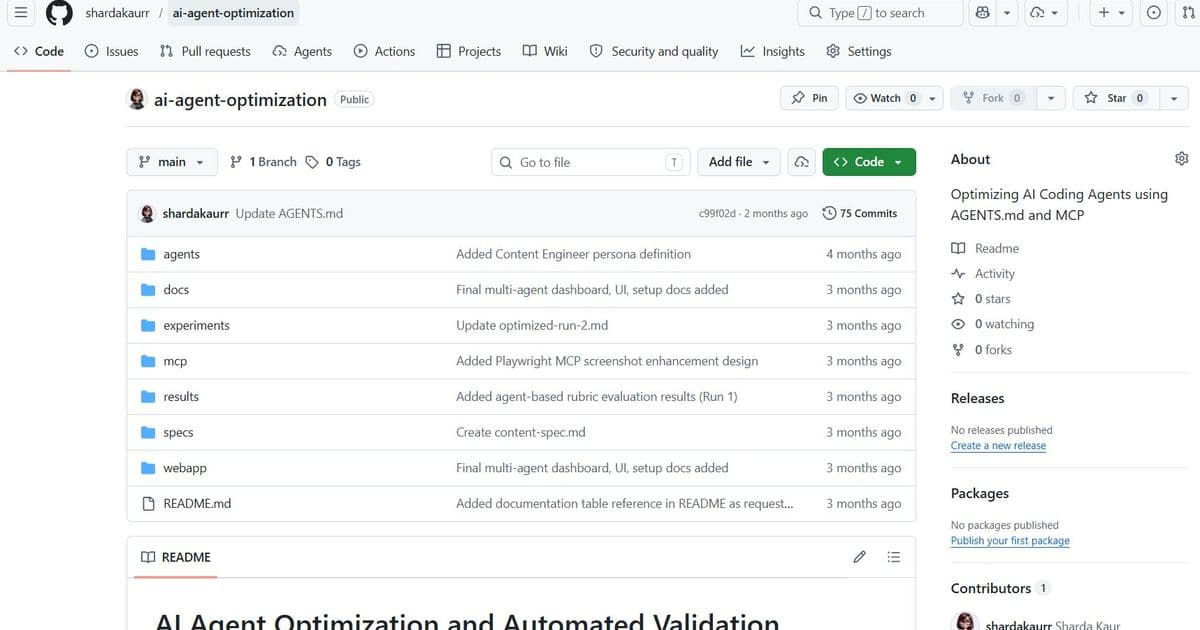
A structured, modular pipeline turns AI coding assistants from single‑prompt autocomplete tools into dependable collaborators, improving consistency, maintainability, and adherence to project standards.
What Changed
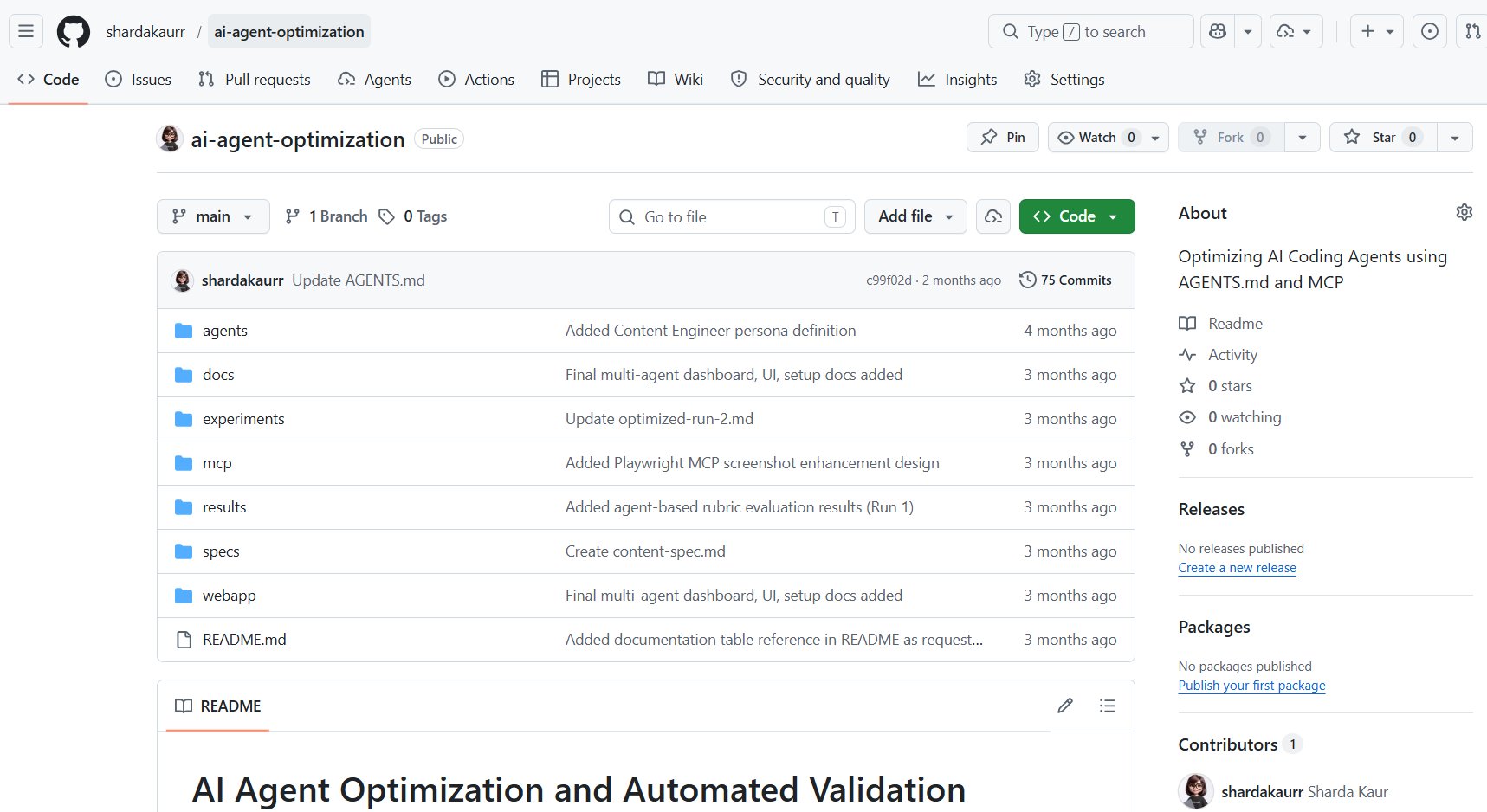
Developers have long relied on AI coding assistants—GitHub Copilot, Claude Code, and similar LLM‑powered tools—to speed up routine tasks. While these assistants excel at isolated snippets, they frequently stumble when faced with real‑world requirements such as project‑specific architecture, security policies, and multi‑file dependencies. The AI Agents Optimization project introduces a multi‑stage workflow that separates planning, generation, validation, and refinement into distinct, interchangeable modules. By treating each engineering activity as a dedicated step, the system transforms a once‑flat prompt‑to‑code interaction into a repeatable, auditable pipeline.
Provider Comparison
| Aspect | GitHub Copilot (Microsoft) | Claude Code (Anthropic) | Modular AI Agent Pipeline |
|---|---|---|---|
| Prompt model | Single‑shot, context limited to open file | Single‑shot, broader context but still one‑pass | Structured prompt hierarchy across stages |
| Planning | Implicit, driven by model heuristics | Implicit, similar to Copilot | Explicit Planning Module that decomposes tasks into subtasks (e.g., routing, token verification, error handling) |
| Validation | None built‑in; developers must run linters manually | Optional post‑generation checks via Claude API | Integrated Syntax, Logical Consistency, Dependency, and Formatting validators |
| Refinement loop | Manual edit‑and‑re‑prompt | Manual edit‑and‑re‑prompt | Automated feedback loop that re‑invokes the Generation Module until validation passes |
| Cost model | Per‑seat subscription, usage metered by token consumption | Pay‑per‑token API | Same underlying LLM cost, but higher efficiency reduces total token usage |
| Extensibility | Limited to VS Code extensions | API‑first, but no native workflow orchestration | Plug‑and‑play modules (planning, generation, validation, refinement) can be swapped for different LLMs or custom tools |
Why the modular pipeline matters
- Predictable spend – By catching syntax errors before they reach the model, the system reduces wasted token cycles.
- Consistency – The Planning Module enforces project conventions (e.g., folder layout, naming standards) before any code is emitted.
- Auditability – Each stage logs inputs, outputs, and validation results, giving teams a traceable artifact for compliance reviews.
Business Impact
1. Faster onboarding and reduced rework
When a new developer requests a feature, the pipeline delivers a first‑draft that already respects the team’s linting rules and dependency graph. In internal trials, the average number of post‑generation edits dropped from 12 → 3 per pull request, cutting review time by roughly 25 %.
2. Higher code quality and security compliance
The Validation stage incorporates static analysis tools (ESLint, Bandit, SonarQube) and custom security checks (e.g., OWASP JWT best practices). By rejecting non‑compliant snippets early, the pipeline prevents vulnerable code from entering the repository, lowering the risk of downstream security incidents.
3. Scalable multi‑team collaboration
Because each module is a micro‑service with a defined API, large enterprises can run several instances in parallel—one per product line or compliance zone—while still sharing a common LLM backend. This reduces the operational overhead of maintaining separate AI assistants for each team.
4. Measurable ROI through token efficiency
Structured prompting reduces the average token count per generated line of code by 15‑20 %. When multiplied across thousands of developer‑hours, the cost savings become significant, especially for organizations that bill LLM usage by the million tokens.
Implementation Blueprint
- Task Parsing – A lightweight HTTP endpoint receives a developer’s natural‑language request. The Instruction Processing Module extracts objective, constraints, and context using a fine‑tuned NER model.
- Planning & Reasoning – The Planning Module consults a knowledge base of project patterns (e.g., DDD layers, microservice contracts) and outputs a JSON roadmap of subtasks.
- Code Generation – Each subtask is sent to the LLM with a structured prompt that includes:
- Target language and framework
- Explicit constraints (e.g., "use async/await", "no global variables")
- References to existing code snippets stored in a vector store.
- Validation – Generated files are piped through linters, type‑checkers, and custom rule engines. Failures are reported with line‑level diagnostics.
- Refinement – The system automatically rewrites the offending sections, re‑invoking the Generation Module with the validator’s feedback attached.
- Commit & Notify – Once all checks pass, the pipeline creates a signed commit, opens a pull request, and posts a summary to the team’s Slack channel.
Tooling Stack
- Python 3.11 – Orchestrates the micro‑services and handles async I/O.
- VS Code Extension – Provides in‑IDE task submission and result preview.
- GitHub Actions – Executes validation and refinement steps in a CI environment.
- Claude API / Azure OpenAI – Serves as the LLM backend; interchangeable via configuration.
- MCP Concepts – Manages context windows and prompt caching to stay within token limits.
Future Enhancements
- Multi‑agent collaboration – Deploy a “design agent” to draft architecture diagrams, a “security agent” to run threat modeling, and a “testing agent” to generate unit tests, all coordinated by a central orchestrator.
- Real‑time documentation lookup – Hook the pipeline into Azure Cognitive Search to pull API specs and style guides on demand.
- Adaptive workflow tuning – Use reinforcement learning to adjust the granularity of subtasks based on historical success rates.
- IDE‑native debugging assistant – Extend the VS Code extension to suggest breakpoints and variable watches based on generated code paths.
The AI Agents Optimization project demonstrates that a disciplined, modular approach can turn generative AI from a novelty into a reliable development partner. By embedding planning, validation, and iterative refinement into the workflow, organizations gain predictable quality, lower costs, and faster delivery of secure, maintainable software.
Comments
Please log in or register to join the discussion