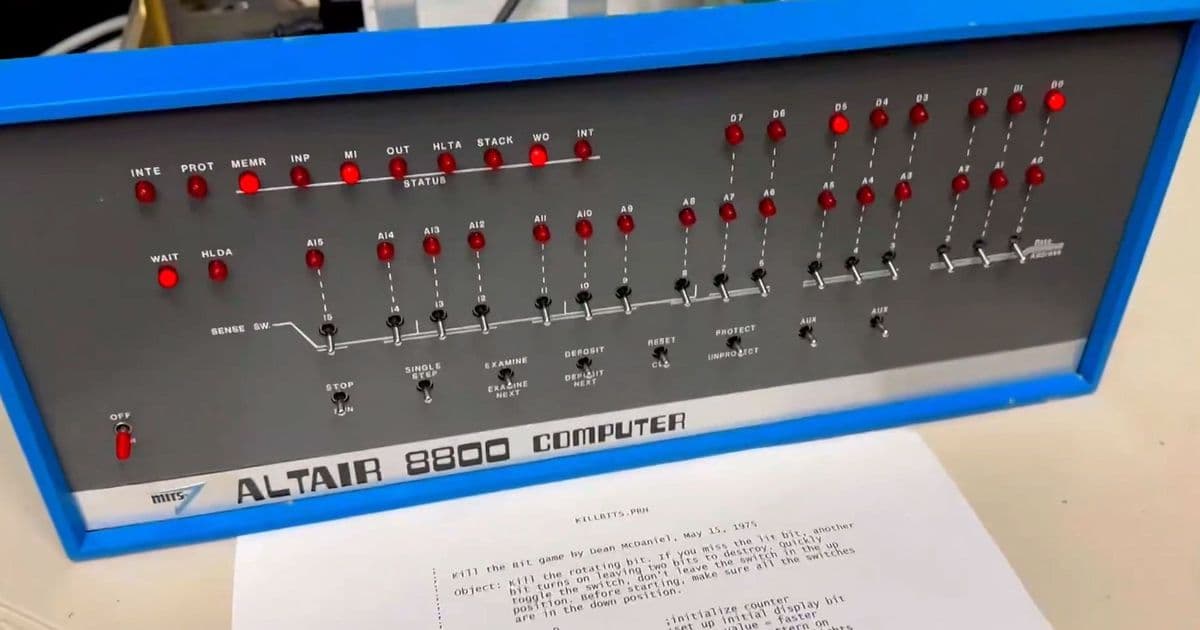
A computer historian successfully revived an unfinished 1974 Altair 8800 kit that sat dormant for decades, correcting assembly errors to run its first program - the 'Kill the Bit' game - in 2026.
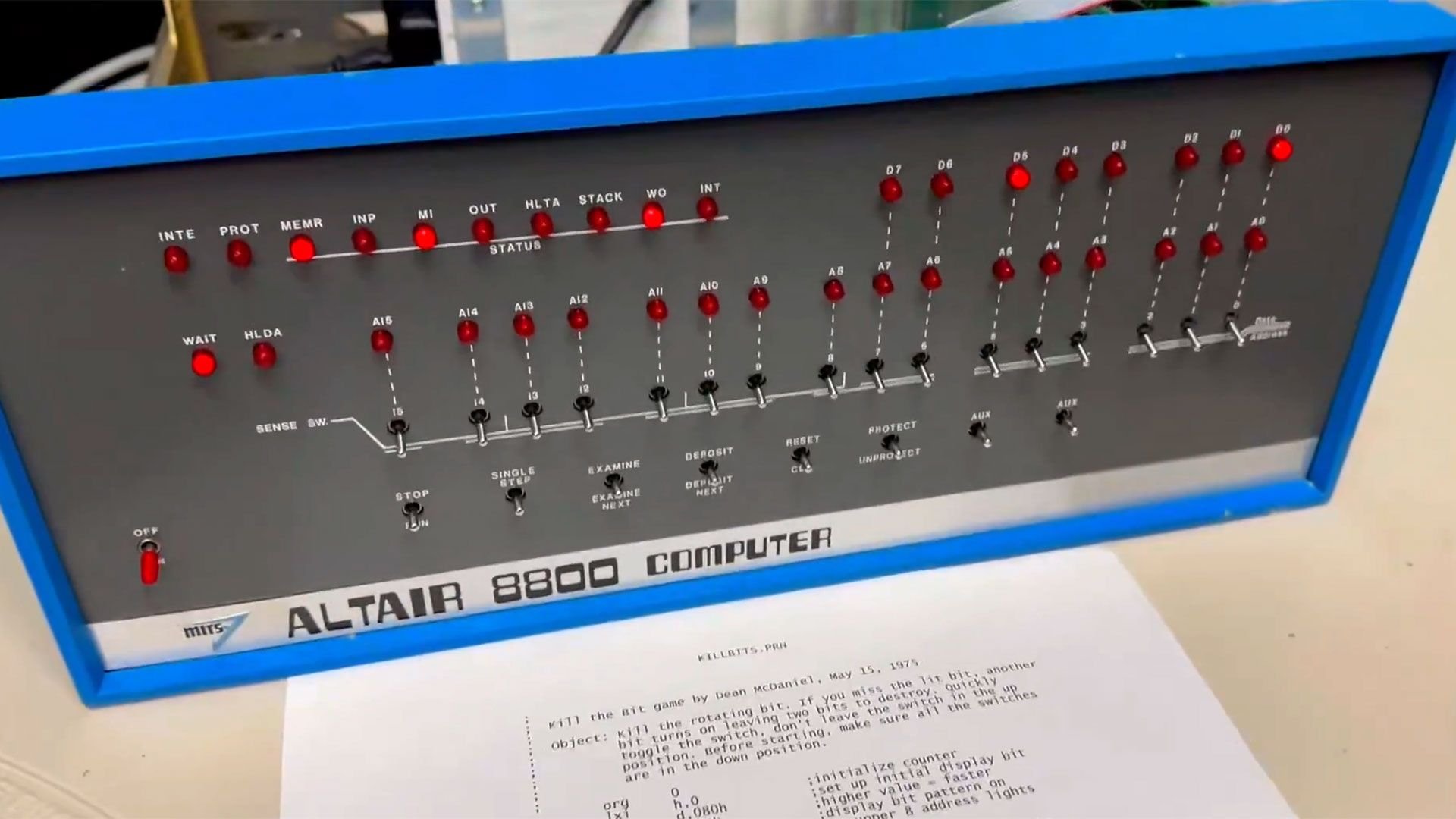
Computer history witnessed a remarkable moment when an unfinished Altair 8800 kit from 1974 finally executed its first program after 52 years of dormancy. The milestone was achieved by SDF from the Interim Computer Museum (ICM), who documented the revival on social media in early 2026.
This particular MITS Altair 8800 kit had remained incomplete since its original owner partially assembled it with several technical errors decades ago. According to ICM's report, the machine required both correction of these assembly mistakes and installation of a new power supply before it could function properly.
The Altair 8800 occupies a special position in computing history as one of the first commercially successful personal computers. Introduced in 1974 and sold primarily in kit form, it featured Intel's groundbreaking 8080 processor running at 2MHz. Unlike modern computers, the Altair operated without a screen or keyboard - programs were entered manually via front-panel switches while monitoring results through LED indicators.
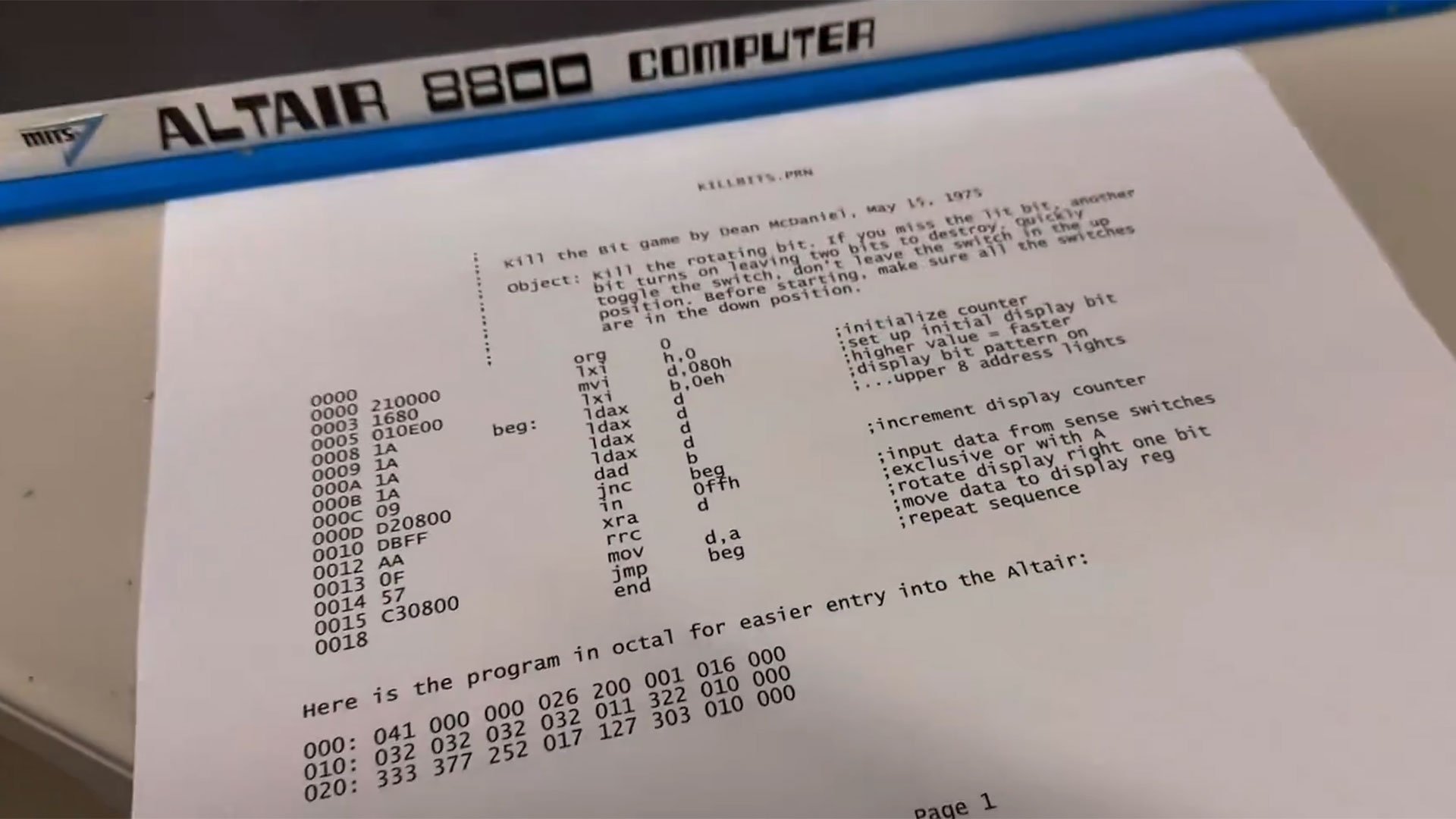
In the demonstration video, SDF inputs Dean McDaniel's "Kill the Bit" game (originally written in May 1975) directly using the front-panel switches. This rudimentary game represents one of the earliest software titles developed for personal computing platforms. The programming process highlights the physical interaction required with early computer systems, where users literally toggled machine code instructions bit by bit.
Historical pricing context reveals the Altair 8800 kit originally sold for $439 (approximately $2,500 when adjusted for inflation), while pre-assembled units cost $621 (around $3,500 today). The Intel 8080 processor at its core proved foundational for the industry - Federico Faggin's design team later created the Zilog Z80 processor, while AMD launched its CPU business with the reverse-engineered Am9080 clone.
This resurrection demonstrates how early computing pioneers operated at the hardware level and preserves crucial knowledge about the physical implementation of historic systems. The Interim Computer Museum continues documenting such milestones to maintain our understanding of computing's evolution.

Mark Tyson News Editor Mark Tyson covers semiconductor design and computing history at Tom's Hardware.
Comments
Please log in or register to join the discussion