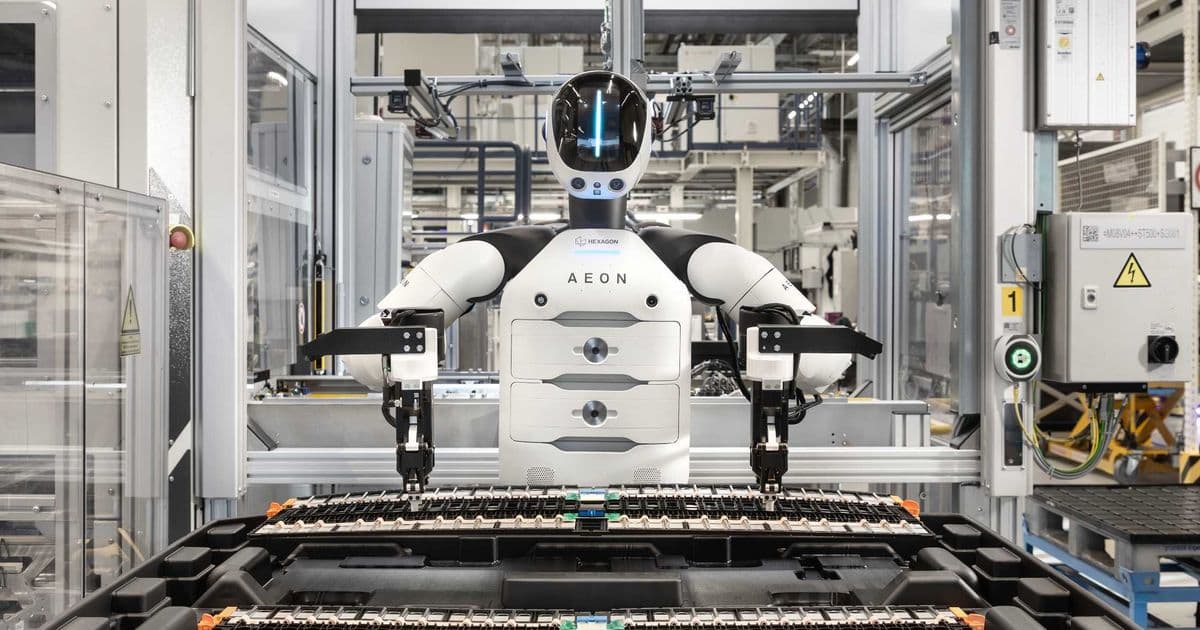
BMW Group launches first European humanoid robot deployment at Leipzig plant, building on successful US pilot to integrate Physical AI into automotive manufacturing.
The BMW Group is advancing its digital transformation with the deployment of humanoid robots in European production for the first time. The German automaker has launched a pilot project at its Leipzig plant, marking a significant step in integrating Physical AI into automotive manufacturing workflows.
Physical AI represents the convergence of digital artificial intelligence with real-world machines and robots, enabling intelligent systems to operate autonomously in complex production environments. This technology allows humanoid robots to perform tasks that combine precision, adaptability, and safety in ways that complement existing automation systems.
Building on US Success
The Leipzig initiative follows a successful pilot at BMW's Spartanburg plant in South Carolina, where humanoid robots worked alongside human employees for ten months in 2025. During this period, the Figure 02 robot supported the production of over 30,000 BMW X3 vehicles, handling the precise removal and positioning of sheet metal parts for welding processes.
The US deployment demonstrated that humanoid robots could safely perform repetitive, physically demanding tasks with millimeter-level precision. The robot moved more than 90,000 components and covered approximately 1.2 million steps across 1,250 operating hours, proving the technology's viability in real-world manufacturing conditions.
Leipzig Project Details
In collaboration with Hexagon Robotics, BMW is testing the AEON humanoid robot at the Leipzig facility. Hexagon, a long-standing BMW partner in sensor technology and software, introduced AEON in June 2025. The robot's human-like design allows for flexible attachment of various hand and gripper elements, making it suitable for diverse manufacturing tasks.
The Leipzig pilot focuses on two primary applications: assembly of high-voltage batteries and manufacturing of exterior components. Testing began with an initial deployment in December 2025, followed by further integration planned for April 2026, with the full pilot phase set to begin in summer 2026.
Strategic Infrastructure Foundation
BMW's ability to deploy AI and robotics at scale stems from its unified IT and data model across the production system. The company has transformed isolated data silos into a consistent, standardized platform that enables digital AI agents to operate autonomously in complex environments while continuously learning and adapting.
This infrastructure foundation allows BMW to evaluate technology partners systematically through defined maturity and industrialization criteria. Partners undergo theoretical assessment, laboratory testing with real use cases from BMW's production system, initial test deployment at a plant, and finally the pilot phase.
Center of Competence for Physical AI
To consolidate expertise and accelerate deployment, BMW has established a "Center of Competence for Physical AI in Production." This center pools knowledge across the organization and drives both in-house research and the gradual integration of AI into existing production systems.
The center's team in Munich is conducting robotics research while supporting and developing pilot projects at BMW plants worldwide. This centralized approach ensures that insights from individual deployments benefit the entire organization.
Human-Robot Collaboration
BMW views humanoid robotics as a value-adding complement to existing automation rather than a replacement. The technology shows particular promise for monotonous, ergonomically demanding, or safety-critical tasks that can be physically exhausting for human workers.
The goal is to relieve employees and improve working conditions while maintaining the high quality standards that characterize BMW production. Early communication with employees and integration into the existing BMW Smart Robotics ecosystem have been crucial for successful deployment.
Industry Implications
The Leipzig project represents a significant milestone for European manufacturing as it brings advanced robotics from laboratory settings into active production lines. As automotive manufacturing becomes increasingly electrified and automated, the ability to integrate flexible, learning systems alongside traditional automation will become a competitive advantage.
For the broader industry, BMW's systematic approach to Physical AI deployment provides a blueprint for how traditional manufacturers can adopt cutting-edge robotics technology while maintaining operational stability and workforce engagement.
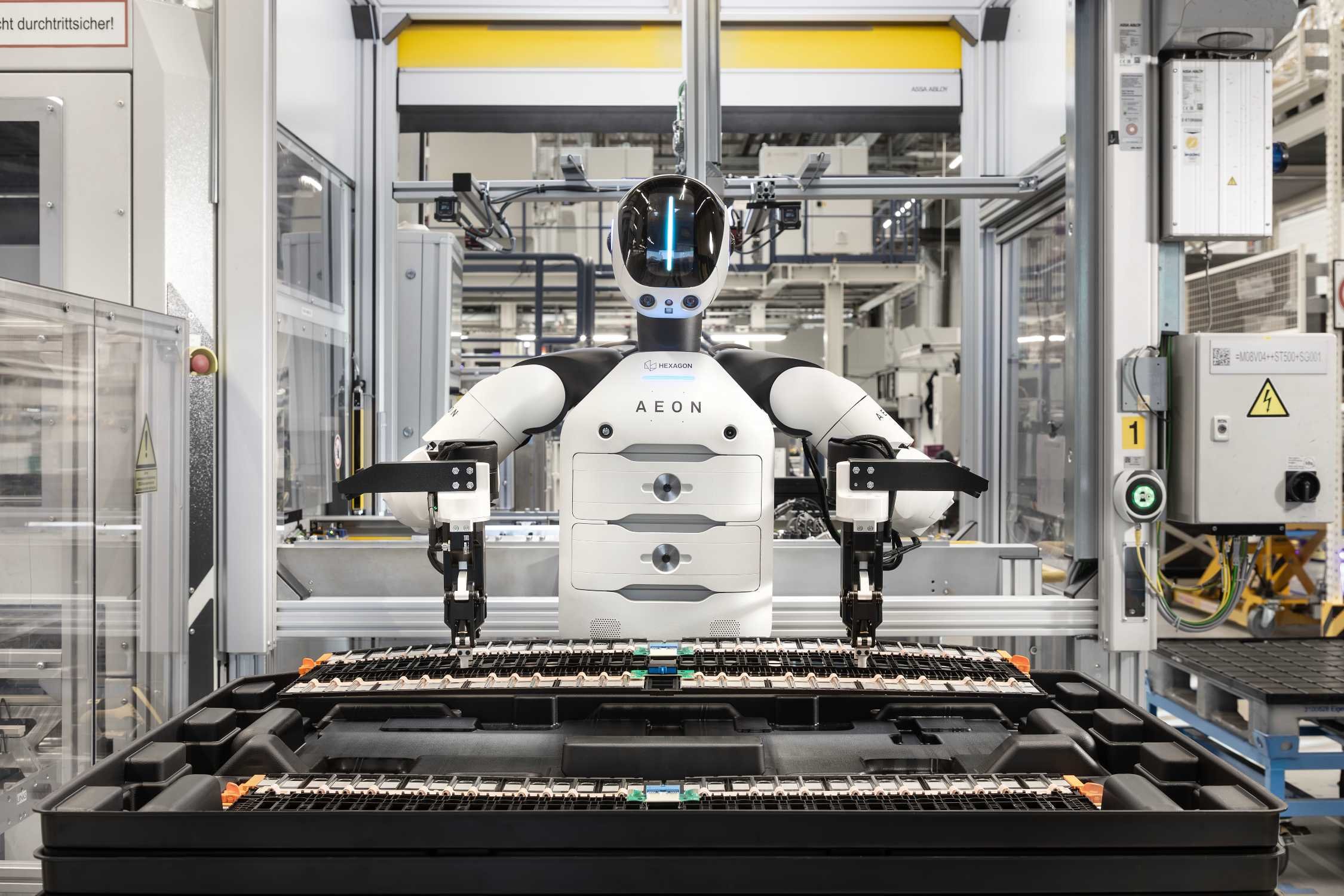
The deployment of humanoid robots at BMW Group Plant Leipzig marks the first use of this technology in European automotive production, building on successful US trials and establishing a foundation for future AI-driven manufacturing innovations.
Comments
Please log in or register to join the discussion