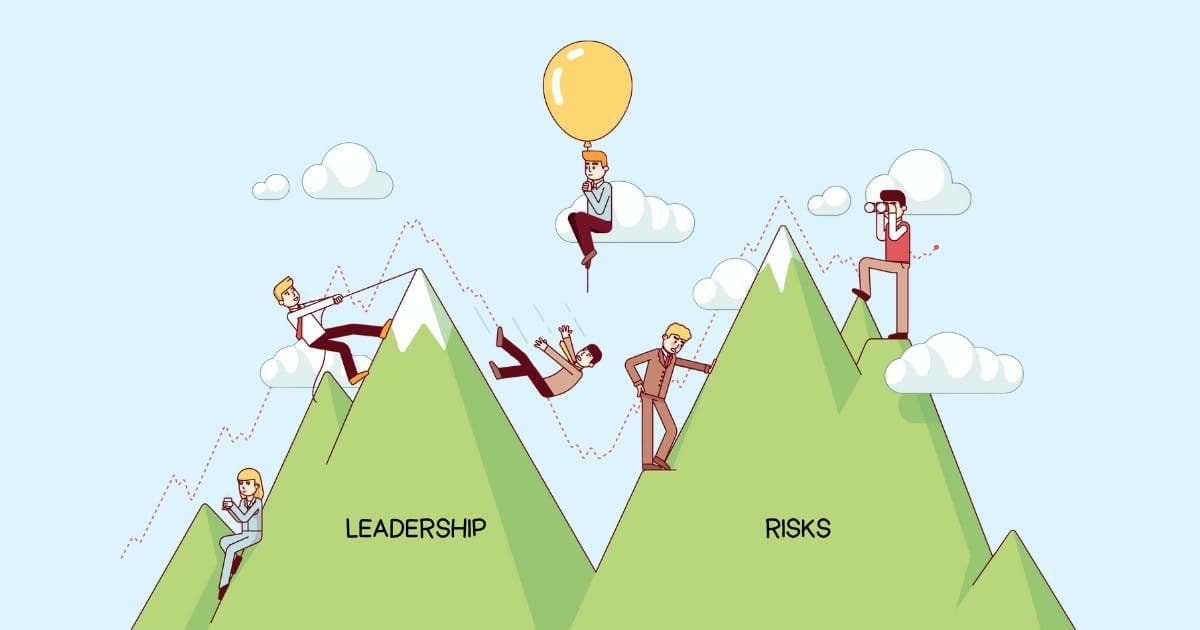
Leadership isn't about avoiding failure; it's about embracing the discomfort of growth. The biggest risk is playing it safe—prioritizing popularity over conviction, hiding vulnerabilities, avoiding hard truths, micromanaging teams, and saying yes to everything. True leadership requires taking calculated risks in how you lead, not just in business strategy.
The biggest risk a leader can take is to play it safe. It's the path of least resistance: going with popular decisions instead of pushing for unusual prospects, faking confidence instead of admitting limitations, saying yes to please everyone, staying silent to avoid conflict, maintaining the status quo out of fear, and holding tight control over every detail.
But this safety is an illusion. It's a slow erosion of potential—for the leader, the team, and the organization. Leadership is scarce precisely because few are willing to navigate the discomfort required to grow. As Seth Godin observed, "If you’re not uncomfortable in your work as a leader, it’s almost certain you’re not reaching your potential as a leader."
The risks leaders must take aren't just about bold business bets or aggressive targets. They're deeply personal, woven into the daily fabric of how we show up, make decisions, and empower others. These are the five critical risks every leader must embrace.
1. Making Unpopular Decisions
It's safe to nod along with the majority. Agreeing to a popular decision requires no courage, invites no immediate criticism, and carries no personal risk. But consensus is often the enemy of innovation.
Prioritizing popularity keeps better decisions out of reach. When you silence your opinion because it doesn't align with the group, you're not just avoiding conflict—you're abandoning your responsibility to provide a unique perspective. Challenging the status quo, voicing concerns, and sharing disruptive ideas will subject you to frowns, resistance, and even resentment.
Bill Taylor captures this essence: "The true mark of a leader is the willingness to stick with a bold course of action—an unconventional business strategy, a unique product-development roadmap, a controversial marketing campaign—even as the rest of the world wonders why you're not marching in step with the status quo. Real leaders are happy to zig while others zag."
The risk of standing alone is real. But the greater risk is the slow stagnation that comes from always choosing the safe path. To build this capacity, ask:
- Am I saying yes because I believe in it, or because it aligns with the majority?
- What would be a completely unique approach we haven't explored?
- What's the worst that could happen if this decision fails, and what's my plan B?
Avoiding new opportunities with fear of failure caps your team's potential. Have the courage to navigate uncharted territory.
2. Showing Vulnerability
We wear armor at work. We project confidence, hide gaps in knowledge, and mask true emotions. The risk feels enormous: What if people doubt your competence? What if they don't respect you? What if it makes you look weak?
But this facade prevents genuine connection. Leaders aren't expected to be perfect—they're required to be human. What builds respect isn't your successes, but how gracefully you handle failures. What develops connection isn't your imperfections, but the flaws you're willing to share.
Vulnerability isn't weakness. Admitting mistakes, not having all the answers, or saying "I don't know" doesn't hurt your credibility. It increases approachability, builds likability, and deepens respect. Pretending to know everything frustrates others—they can see the difference between genuine expertise and performance.
Laura Gagnon reminds us: "Authentic, transparent leaders encourage people to develop trust through their own honesty and vulnerability. They do not view transparency as weakness, but recognize it as a source of their virtue, power and anointing because power flows through humility."
The key is balance. Oversharing or using authenticity to justify reckless behavior burdens others. Define clear boundaries: What information do others need to know? How can you share struggles while modeling resilience? How can you express uncertainty without appearing indecisive?
3. Speaking Hard Truths
Difficult conversations are inherently risky. They involve emotional issues, sensitive subjects, and potential conflict. Staying silent feels safer than speaking up and risking disagreement.
But avoidance is a slow poison. An employee not performing, a high performer displaying toxic behavior, or stakeholders making unreasonable demands—these issues don't resolve themselves. They escalate. What was manageable becomes catastrophic. Trust erodes. Resentment builds.
Sakyong Mipham notes: "Beginning a conversation is an act of bravery. When you initiate a conversation, you fearlessly step into the unknown. Will the other person respond favorably or unfavorably? Will it be a friendly or hostile exchange? There is a feeling of being on the edge. That nanosecond of space and unknowing can be intimidating. It shows your vulnerability."
The risk of speaking hard truths is real—defensiveness, damaged relationships, even losing a team member. But the risk of silence is greater: a deteriorating culture, unresolved problems, and your own mental health toll.
To build this capacity, ask: How am I dealing with this situation—facing it head-on or avoiding it? What's the impact of not addressing it now? How can I communicate in a way that reduces defensiveness?
Stop playing silly games. Engage in healthy dialogue when you need it most.
4. Letting Go of Control
Micromanagement feels safer. Being involved in every decision, every detail, every communication minimizes the risk of things going wrong. Letting go triggers anxiety, insecurity, and helplessness.
But this control is a trap. If you do all the thinking, your team never develops creative skills. If you solve every problem, they never learn to navigate complexity. If you prevent all mistakes, they become reckless.
Nick Chellsen frames it simply: "Micromanagement happens when you keep power to yourself. Empowerment is when you give power to your team."
Empowerment is risky. People will make mistakes. Some decisions won't be yours. But it's the only way to develop future leaders. Without the freedom to own decisions, try different strategies, and learn from failures, your team remains dependent and unable to scale with business growth.
The balance is critical. Both freedom and control are necessary, but you must find the right equilibrium. Ask:
- Is my team clear on goals and expected outcomes?
- Do they have the skills to make their own decisions? What gaps exist?
- Have I set clear decision boundaries—what they can decide independently versus what requires your involvement?
- Do I hold them accountable while encouraging learning from mistakes?
Tight control delivers short-term wins but prevents long-term success. Coach, don't spoon-feed.
5. Saying No
Every "yes" feels safer. Agreeing to requests, opportunities, and changes reduces immediate conflict and avoids the discomfort of disappointing others. Saying no carries risk: What if they take it personally? What if you let go of a great opportunity?
But every "yes" has an opportunity cost. Committing more than you can handle or saying yes to inconsequential activities ultimately hurts your reputation when you fail to meet commitments.
William Ury's concept of the "Positive No" offers guidance: "The great art is to learn to integrate the two, to marry yes and no. That is the secret to standing up for yourself and what you need, without destroying valuable agreements and precious relationships."
Saying no doesn't require lengthy explanations. Be precise, straightforward, and concise. Build capacity by asking:
- What exactly is this request asking me to do?
- What's the cost in effort, time, and impact on existing priorities?
- How does it align with my team's current plans?
- What's the cost of not doing it?
No is risky, but so is yes. Every commitment comes at the cost of something else. Give yourself permission to say no. Protect your team's time and energy.
The Leadership Equation
As Sebastien Richard reminds us: "Leadership is all about making the jump, taking risks, and learning from your mistakes. It's about falling, dusting ourselves off, and getting back up again and again and again."
Leadership isn't about avoiding risk. It's about taking the right risks—the ones that push you, your team, and your organization toward growth. The discomfort you feel is the signal that you're in the right place, doing the necessary work.
The question isn't whether to take risks. It's which risks are worth taking, and how to take them with intention and balance. Your team is watching. They'll model what you demonstrate. If you play it safe, so will they. If you embrace the discomfort of growth, so will they.
That's the true risk—and the true reward—of leadership.
Comments
Please log in or register to join the discussion