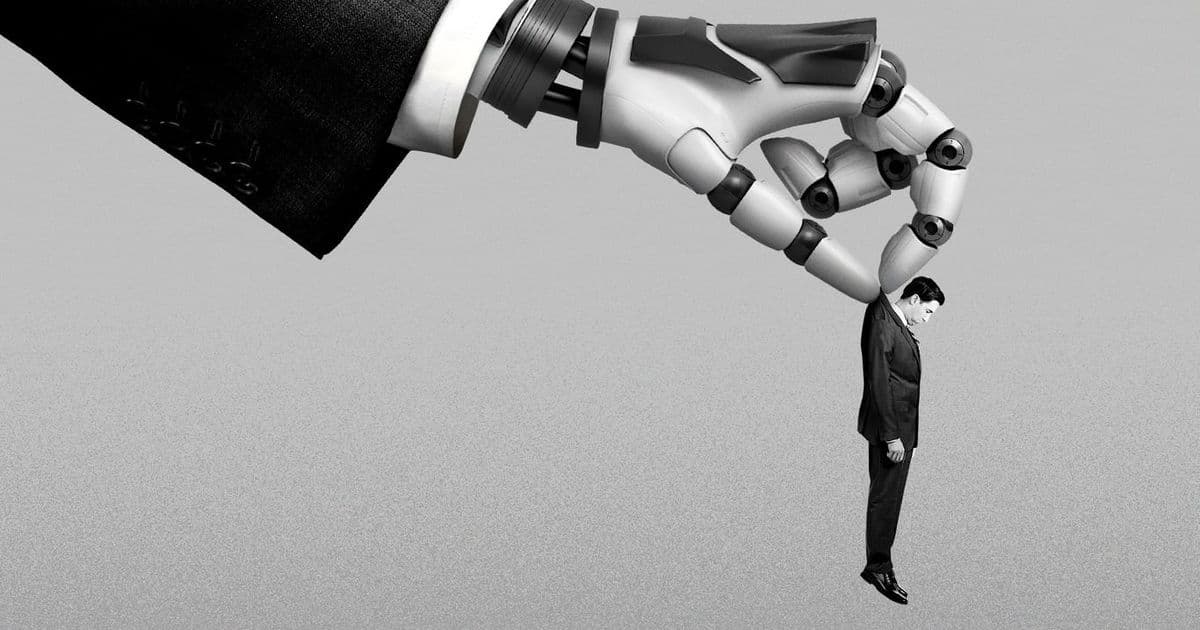
The AI job displacement narrative is shifting from theoretical forecasts to measurable market signals. Five concrete indicators suggest the automation wave is accelerating across key sectors, with financial data and corporate strategies revealing a structural shift in labor demand.
The conversation around AI and employment has long been dominated by hypotheticals and long-term projections. That phase is ending. A series of concrete market signals now points to a tangible acceleration in job displacement, moving the discussion from academic papers to quarterly earnings calls and labor statistics. The evidence is no longer speculative; it's embedded in corporate spending, hiring patterns, and the financial performance of companies building automation tools.
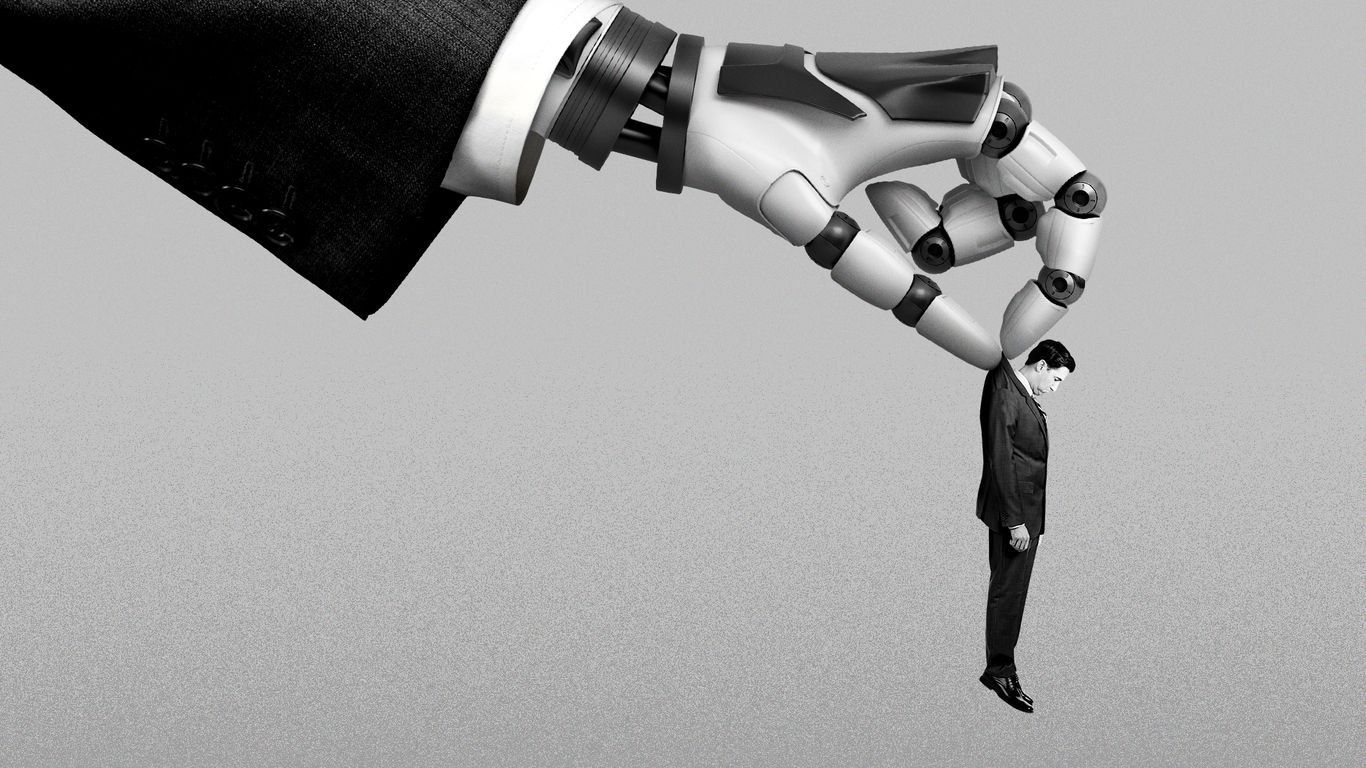
Five distinct indicators are converging to form a clear picture of this shift. Each one represents a different angle of the same structural change: the replacement of human labor with AI systems, driven by economic imperatives rather than technological curiosity alone.
1. The Enterprise AI Spending Surge
The most direct signal comes from corporate capital expenditure. In 2023, global enterprise spending on AI software, hardware, and services reached $154 billion, a 27% increase from the previous year, according to IDC. This isn't R&D budget for future exploration; it's operational expenditure aimed at immediate efficiency gains. Companies like JPMorgan Chase and Ford have publicly stated that AI investments are now a core part of their cost-reduction strategies, not just innovation projects. The financial commitment is substantial and targeted. JPMorgan alone plans to spend $17 billion on technology in 2024, with a significant portion allocated to AI-driven automation in areas like fraud detection and customer service. This spending pattern indicates that corporations are no longer experimenting with AI; they are deploying it to reshape their workforce. The ROI calculation is straightforward: an AI system that handles 10,000 customer service inquiries costs a fraction of a human team and operates 24/7. The financial logic is compelling, and the budget allocations reflect that.
2. The Decline in Entry-Level White-Collar Hiring
The hiring freeze and layoffs in the tech sector since 2022 have been widely reported, but the composition of those cuts reveals a deeper trend. Companies are not just reducing headcount; they are re-engineering their hiring profiles. Data from LinkedIn and Indeed shows a marked decline in job postings for roles like junior software developer, data analyst, and copywriter—the very tasks that generative AI tools like GitHub Copilot, ChatGPT, and Midjourney are now performing. For example, the number of entry-level software engineering job postings on LinkedIn in the U.S. fell by 25% in the first half of 2024 compared to the same period in 2022. Meanwhile, postings for "AI Engineer" and "Prompt Engineer" roles have surged, but these positions require specialized skills that a typical graduate or career-changer does not possess. This creates a bottleneck: the bottom rung of the corporate ladder is being removed. The traditional path of starting in a junior role and gaining experience is being disrupted. Companies are choosing to automate routine tasks rather than train new employees to perform them. This is a structural change in talent acquisition that will have long-term effects on career trajectories.
3. The Productivity Paradox and Labor Share of GDP
Economists have long tracked the labor share of national income—the percentage of total economic output that goes to workers' wages. In the U.S., this share has been in a slow decline for decades, but AI acceleration could steepen the curve. The Bureau of Labor Statistics data shows that while productivity (output per hour) has increased modestly, wages have not kept pace. AI is poised to widen this gap. When a law firm uses an AI tool to review contracts, it can handle the work of several junior associates in a fraction of the time. The firm's revenue may stay the same or even increase due to higher throughput, but the compensation for the labor portion decreases. This is the "productivity paradox" in action: technology boosts output, but the gains are captured by capital (owners, investors) rather than labor. Early indicators are visible in sectors like legal services and accounting, where AI tools are being adopted to automate document review and data analysis. The financial implications are clear: firms can produce the same output with fewer employees, directly impacting the labor share of GDP.
4. The Rise of AI-Native Companies with Minimal Workforces
A new class of company is emerging: AI-native startups that achieve scale with remarkably small teams. These companies build products that are inherently automated from the ground up. For example, a customer service platform powered entirely by AI agents can serve thousands of clients with a core team of engineers and a handful of support staff. The benchmark for a "successful" startup is changing. Previously, a company with $10 million in revenue might employ 50 people. Today, an AI-native firm can reach the same revenue with 10 employees. This model is not limited to startups. Established companies are creating AI-focused divisions that operate with lean teams. The financial metrics are compelling: lower operating costs, higher margins, and faster scalability. This trend is documented in venture capital investment patterns. In 2023, 40% of all VC funding in the U.S. went to AI-focused companies, many of which have business models predicated on minimal human labor. The success of these companies sets a new standard, pressuring traditional businesses to adopt similar automation strategies to remain competitive. This creates a feedback loop: as more companies automate, the demand for human labor in certain functions diminishes.
5. The Data Feedback Loop from AI Deployment
The most subtle but powerful signal is the data itself. As companies deploy AI systems, they generate vast amounts of performance data. This data is used to refine the AI models, making them more capable and reliable. For instance, a customer service AI that handles millions of interactions learns which responses are most effective, which problems are most common, and how to escalate issues. Each interaction makes the system better. This creates a virtuous cycle for the AI and a vicious cycle for human workers. The AI improves with scale, while human skills stagnate without practice. The data shows that AI systems are reaching or exceeding human performance in specific, well-defined tasks. In 2023, a study published in Nature demonstrated that AI models could diagnose certain medical conditions from images with accuracy comparable to human radiologists. The implication is clear: as AI systems are deployed and collect more data, their performance will continue to improve, making human oversight increasingly redundant in many fields. This feedback loop is accelerating the displacement process, as each new deployment makes the next deployment more feasible and cost-effective.
These five signs are not isolated phenomena. They are interconnected signals of a broader economic transformation. The financial figures show where the money is flowing. The hiring data reveals how corporate strategies are changing. The macroeconomic indicators point to a shift in how value is distributed. The rise of AI-native companies demonstrates a new business model. And the data feedback loop ensures that the trend will accelerate.
The implications are profound. For workers, it means that the skills required for many jobs are becoming obsolete faster than the education system can adapt. For companies, it means a fundamental rethinking of organizational structure and talent strategy. For the economy, it raises questions about income inequality and social stability that policymakers have yet to address comprehensively.
The narrative is no longer about whether AI will affect jobs, but how quickly and in what ways. The evidence suggests the process is already well underway, driven by cold financial logic rather than technological hype. The companies that act now to reskill their workforce and redesign their processes may navigate the transition more smoothly. Those that ignore the signals risk being outcompeted by leaner, more automated rivals. The job destruction machine is not a future threat; it is a present reality, and its gears are turning faster every quarter.
Comments
Please log in or register to join the discussion