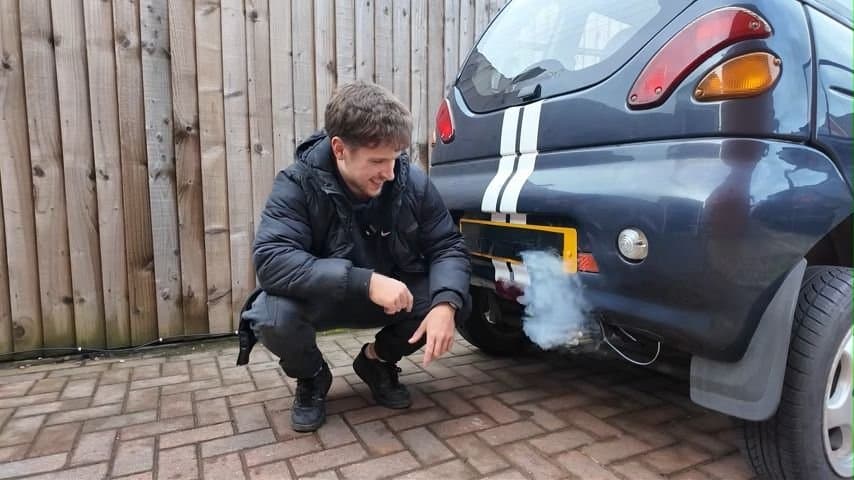
TechTuber repurposes discarded vape batteries to power 25-year-old electric car, achieving 18-mile range and 35mph top speed with USB-C charging.
TechTuber Chris Doel has successfully converted a 25-year-old electric car to run on 500 discarded disposable vape batteries, achieving an 18-mile range and 35mph top speed in his latest sustainability project. The YouTuber, known for repurposing electronic waste, documented the entire process in a video that showcases both the technical challenges and environmental implications of reusing lithium batteries from single-use vapes.
The project builds on Doel's previous work creating a home powerwall from vape components, taking the concept mobile by installing the battery array into an early 2000s Reva G.Wiz electric vehicle. The compact car, originally weighing 400kg and using lead-acid technology with a 48V battery pack, proved to be an ideal candidate for the 50V power supply derived from the vape batteries.
According to Doel, the scale of vape waste is staggering, with approximately one million single-use vapes discarded daily in the UK alone. His mission focuses on reclaiming the lithium batteries from these devices, which he initially used for small powerbanks before progressing to larger energy storage systems.
Technical Implementation
The conversion process involved several key engineering decisions. Doel's vape battery pack, previously used in his workshop powerwall project, could deliver approximately 120A of current. This limitation required careful programming of the car's inverter to prevent overloading the battery system. The original G.Wiz could draw up to 350A under full acceleration, but Doel programmed the car's profiles to limit power output to safer levels.
One of the most notable features of the conversion is the charging system. The car uses a USB-C charger for power replenishment, making it potentially the first vehicle to utilize this standard for charging. This choice reflects both the availability of USB-C power delivery systems and the relatively modest power requirements of the converted vehicle compared to modern electric cars.
Performance and Testing
During initial testing, Doel exercised extreme caution, slowly rolling the car forward and backward on his driveway before venturing onto public roads. The vehicle's performance characteristics were carefully monitored throughout the test drive, with a smartphone continuously displaying the status of individual battery cells.
Temperature monitoring proved crucial, with the highest observed cell temperature reaching only 19 degrees Celsius during winter testing in the UK. This relatively low temperature suggests the battery management system and the car's power demands were well-matched.
The test drive included various real-world scenarios: a trip through a McDonald's drive-through, a visit to a tool store, and navigation of challenging terrain including uphill sections that demanded peak currents of 150A. The car successfully completed an 18-mile journey before battery bank 12 depleted, demonstrating the practical viability of the repurposed battery system.
Comparison to Modern Electric Vehicles
Doel provides perspective on the scale of modern electric vehicles by noting that a Tesla would require approximately 12,000 vape cells and complex battery management systems to achieve comparable performance. Modern EVs also demand peak power measured in hundreds of kilowatts, far exceeding what the vape battery array can provide.
This comparison highlights both the limitations and the potential of repurposed battery technology. While not suitable for high-performance applications, the system demonstrates that discarded batteries can power functional vehicles for short-range transportation needs.
Environmental and Practical Implications
The project raises important questions about electronic waste and the potential for repurposing discarded batteries. Doel's work demonstrates that components typically considered trash can be given new life in creative applications, potentially reducing the environmental impact of single-use electronics.
However, the project also illustrates the challenges of working with repurposed battery systems, including the need for careful monitoring, limited power output, and the necessity of matching battery capabilities to appropriate applications. The success of this conversion suggests that similar approaches could be viable for other small-scale electric vehicle applications or stationary energy storage systems.
Future Applications
The G.Wiz conversion represents more than just a novelty project. It showcases the potential for creative reuse of electronic waste and demonstrates that functional electric vehicles can be built using repurposed components. The use of USB-C charging also points toward more accessible charging solutions for small electric vehicles.
Doel's work continues to push the boundaries of what's possible with discarded electronics, from powerwalls to now mobile applications. The project serves as both a technical demonstration and a commentary on consumer waste, showing how innovation can emerge from addressing environmental challenges.
The video concludes with a humorous touch, revealing that the car features a "vape exhaust" installation, maintaining the theme throughout the project while emphasizing the unconventional nature of the power source.
This conversion project represents a unique intersection of sustainability, engineering creativity, and practical transportation, demonstrating that with careful design and appropriate expectations, discarded batteries can power functional vehicles for specific use cases.
Comments
Please log in or register to join the discussion