In 1999, a Texas farmer gave away 87 acres for $10 so neighborhood kids would have somewhere to play. In 2025 that same land sold for $10 million to a data center developer. The legal scramble that followed is becoming a familiar pattern as compute infrastructure pushes into residential edges.
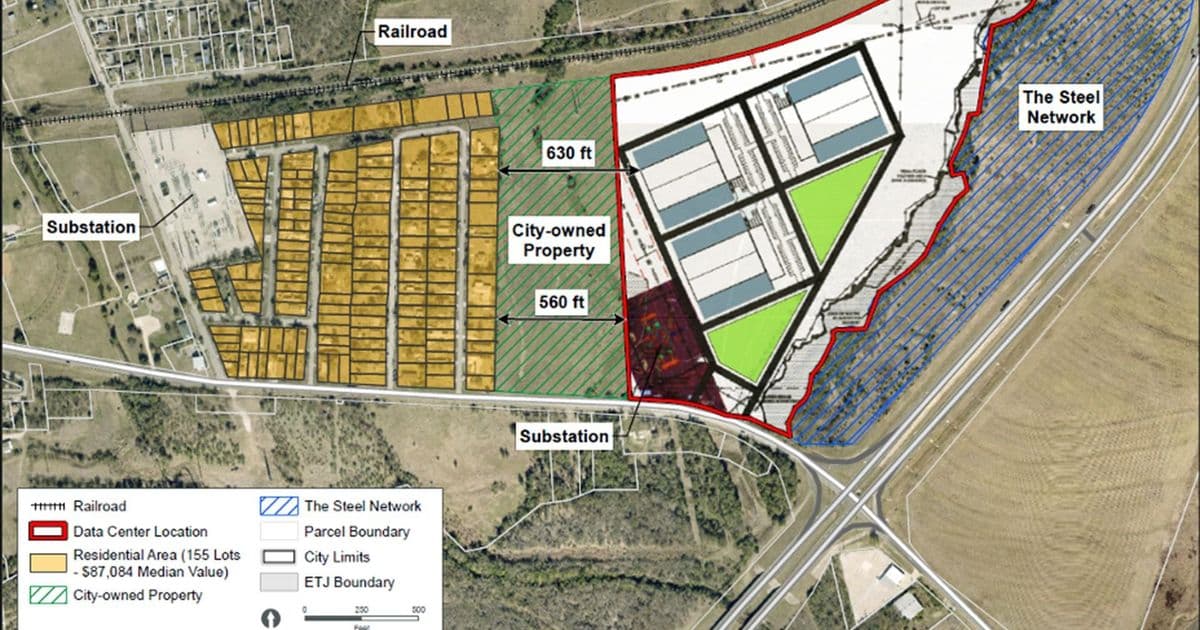
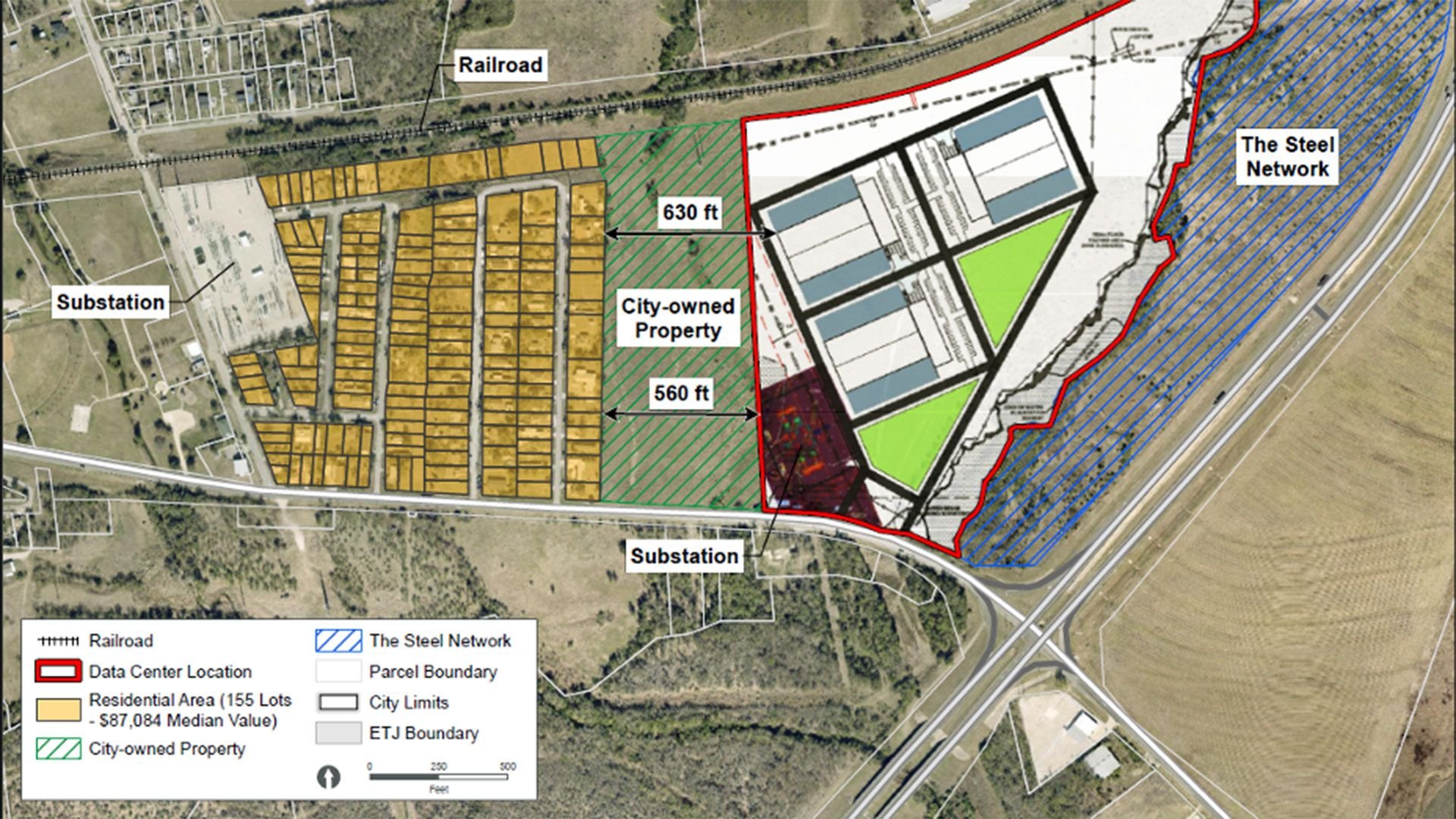
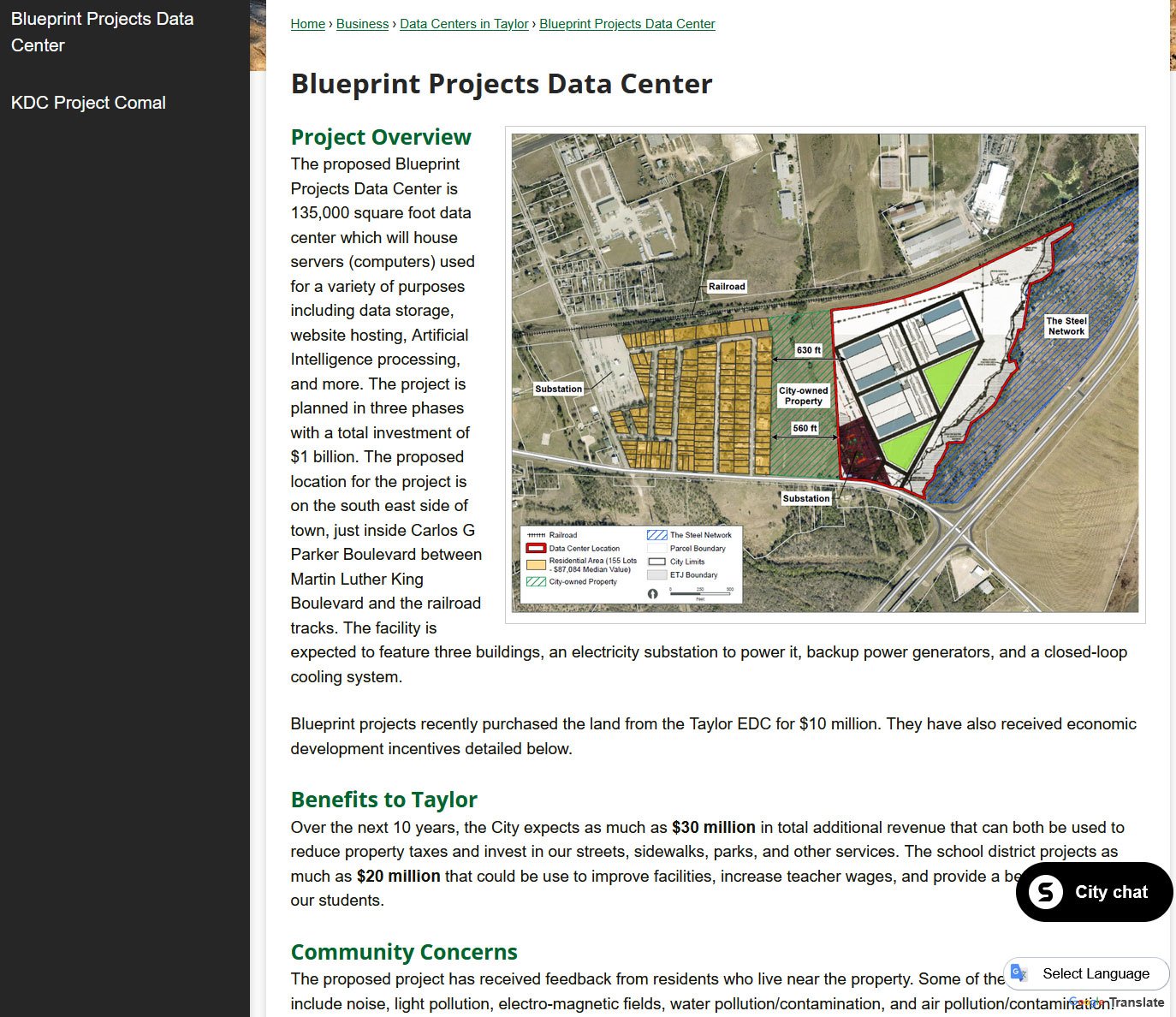
The story coming out of Taylor, Texas reads like a parable, but it is also a data point. According to a 404 Media investigation, land that a farmer named Mr. Bland donated in 1999 for a nominal $10, on the explicit condition it serve as parkland, has been sold to a data center developer called Blueprint for $10 million. The kids Bland wanted to give a place to play are grown now. The play space never materialized. A 135,000-square-foot facility might.
What makes this worth paying attention to is not just the sympathetic framing, though the framing is potent. It is that Taylor is one of dozens of communities now discovering, often late, that the AI and cloud buildout has a physical footprint, and that footprint tends to land in places with cheap power, available water, and zoning that residents never scrutinized until a substation showed up in the plans.
How the land changed hands
The chain of custody matters here, so it is worth laying out plainly:
- July 7, 1999 Bland granted the 87.97 acres to the Texas Parks and Recreation Foundation, a public trust, for $10. The deed stipulated the land be "held in trust for future use as parkland."
- 2003 The foundation transferred the land to the Williamson County Park Foundation, another non-profit.
- 2003, one month later That foundation handed the land to the City of Taylor.
- 2008 Taylor sold it to the Taylor Economic Development Corporation (TEDC) for $15,000.
- 2025 TEDC sold it to Blueprint for $10 million.
Every step is documentable, and that is exactly why the dispute is hard to resolve cleanly. Each transfer was, on its face, legal. The original restriction either survived all of these hops or it did not, and that is the question now headed to the Third Court of Appeals in Austin.
The community's case, and its limits
Pamela Griffin, a long-time local who played on the farmland as a child and raised her own kids near it, became the public face of the opposition. She found out about the project in 2025 when organizers called around the neighborhood. She told 404 Media she did not even know what a data center was at the time. After looking it up, she did what a lot of residents in similar situations have done: she got worried about air, water, electricity, and noise, then she hired a lawyer.
Her central argument is not really about the data center as technology. "I'm not fighting just because of a data center," she said. "I'm fighting because this land was deeded for parkland." In Texas, where deed restrictions carry real weight, that is a more durable legal theory than complaining about noise. It reframes the dispute from a NIMBY objection into a question of whether a public trust's conditions can be quietly unwound through a series of non-profit transfers.
So far the courts have sided with Blueprint. That is the uncomfortable part for anyone rooting for Griffin. The developer has won the legal battles to date, and the appeal is a long shot rather than a likely reversal.
The city's defense is the more interesting signal
Taylor's City Council has taken a position that deserves attention because it is becoming the standard municipal response to these projects. The council says it is essentially powerless. The 404 Media reporting traces this to the property's existing Employment Center zoning, which means the city can regulate the form of what gets built but not its function. A data center is a permitted use. The council can argue about wall height and landscaping, not about whether servers belong there at all.
This is the quiet structural reality behind a lot of the current buildout. Zoning categories written years ago, often to attract any kind of employer, now function as open doors for compute infrastructure that nobody anticipated. The developer has not yet secured planning and building permits, so the city retains some leverage on details. The fundamental decision, though, was effectively made by a zoning map long before residents were paying attention.
The council's other argument is financial, and it is not trivial. It projects an extra $30 million in tax revenue over the coming decade, with $20 million earmarked for the school district. Proposed mitigations include a barrier wall, landscaping, closed-loop water cooling, and the developer building its own power substation. The closed-loop cooling detail is notable given how much criticism data centers have drawn for water consumption. Whether these commitments hold once construction starts is the kind of thing communities elsewhere have learned to watch closely.
The pattern worth watching
It is tempting to read this as a simple morality tale: greedy development versus a dead farmer's wishes. The reality is messier. The tax revenue is real and could genuinely fund schools. The legal transfers were apparently valid. The zoning that enables the project was approved through normal processes. And yet the outcome still feels like a bait and switch to the people who live there, which is precisely why these fights keep landing in appeals courts rather than getting resolved at council meetings.
What Taylor demonstrates is that the infrastructure demands of AI and cloud computing are colliding with local land-use politics in ways the industry's boosters rarely discuss. The compute has to live somewhere physical. That somewhere increasingly turns out to be next to people who never agreed to it and have fewer tools to object than they assumed. Counter-arguments exist on both sides, and the deed dispute may yet be decided on narrow legal grounds that say nothing about whether the broader trade-off was fair. The appeal in Austin will settle one parcel in one Texas city. The underlying tension is spreading faster than any single ruling can address.
If the buildout continues at its current pace, expect more residents to start reading old deeds and zoning ordinances with the same suspicion Griffin now brings to hers. The lesson other communities are drawing is not that data centers are inherently bad neighbors. It is that the paperwork governing what can be built where deserves attention long before the first call goes around the neighborhood.
Comments
Please log in or register to join the discussion