After years of incremental fixes, the IETF’s RFC Production Center is replacing its legacy stack with a modern, Datatracker‑integrated workflow, a VS Code‑based editor, and a redesigned public website that will support five‑digit RFC numbers and improve accessibility for all users.
A New Generation of RFC Editing and Publishing Tools Arrives
Since the first RFC appeared in 1969, the series has grown to more than nine thousand documents, each reflecting the evolving practice of Internet standards. The original editing pipeline, built on a database and a collection of scripts that pre‑date many of today’s development practices, has become a bottleneck for the community. The IETF Tools team and the RFC Production Center (RPC) therefore embarked on a multi‑year effort to replace that stack with a suite of services that speak the same language as the modern IETF workflow.
Core argument: Modernizing the pipeline is essential for scalability and transparency
The central claim of the rollout announcement is that the legacy tools could not accommodate the technical and procedural demands of RFC 10 000 and beyond. The old database was described as too old, too rigid, and too fragile; the editing scripts were a patchwork of Tcl, shell, and ad‑hoc utilities that resisted change. By migrating the RPC workflow into a new application that shares the Datatracker database, the IETF creates a single source of truth for every draft, every state transition, and every editorial action. This consolidation enables two concrete benefits:
- End‑to‑end measurement of the editing process – the new state‑management system records timestamps for each editorial step, allowing the community to see where delays occur and to propose data‑driven service‑level expectations.
- Future‑proof support for five‑digit RFC numbers – the APIs and front‑end caches have been built to handle the larger identifier space without performance degradation.
Both points address long‑standing complaints from authors who have watched their drafts stall in opaque queues for months.
Key components of the new suite
1. Integrated workflow and database
The RPC’s workflow engine now talks directly to the Datatracker. A massive reconciliation effort merged divergent records, eliminating the need for manual cross‑checks. The result is a single source of truth that powers both internal tools and public views.
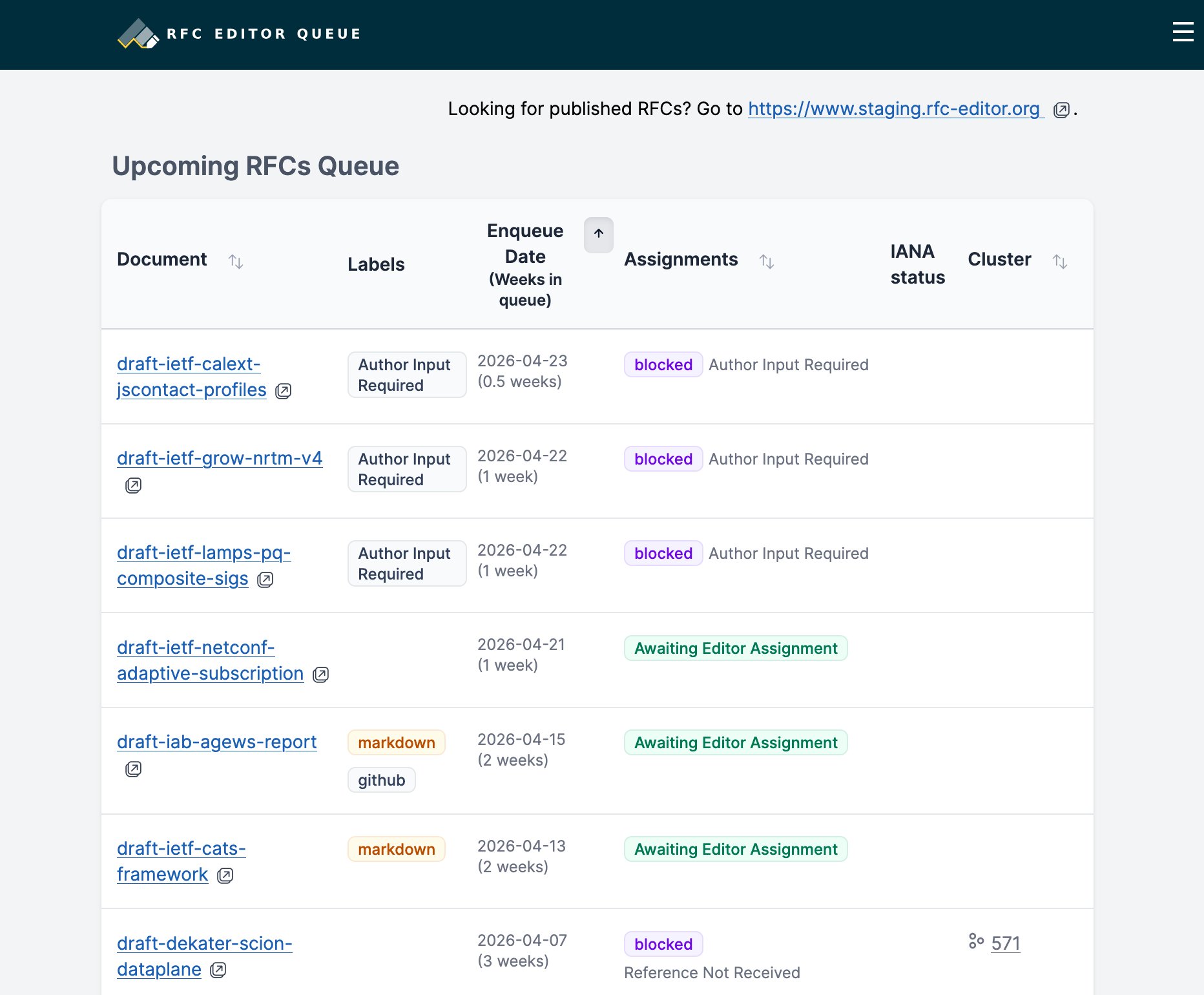
2. Public queue view – queue.rfc-editor.org
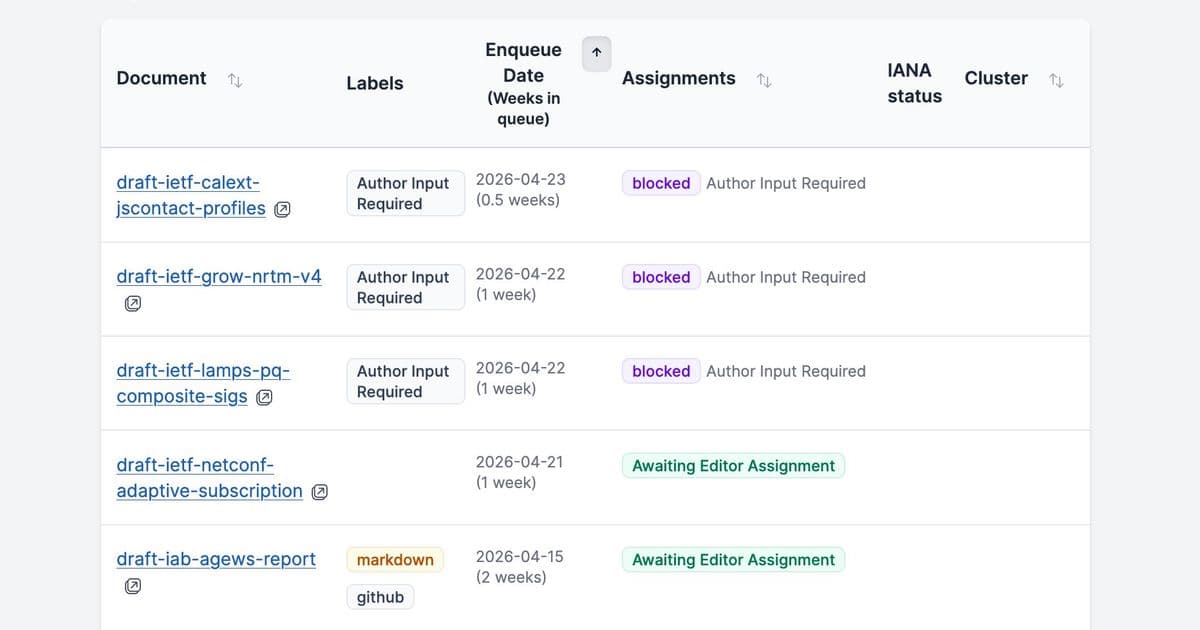
A new sub‑site gives anyone a live snapshot of every document’s editorial status. The interface, designed with professional UX specialists, presents a sortable table, colour‑coded state badges, and links to the underlying draft text. The screenshot below illustrates the improved layout.
3. Redesigned RFC repository – www.rfc-editor.org
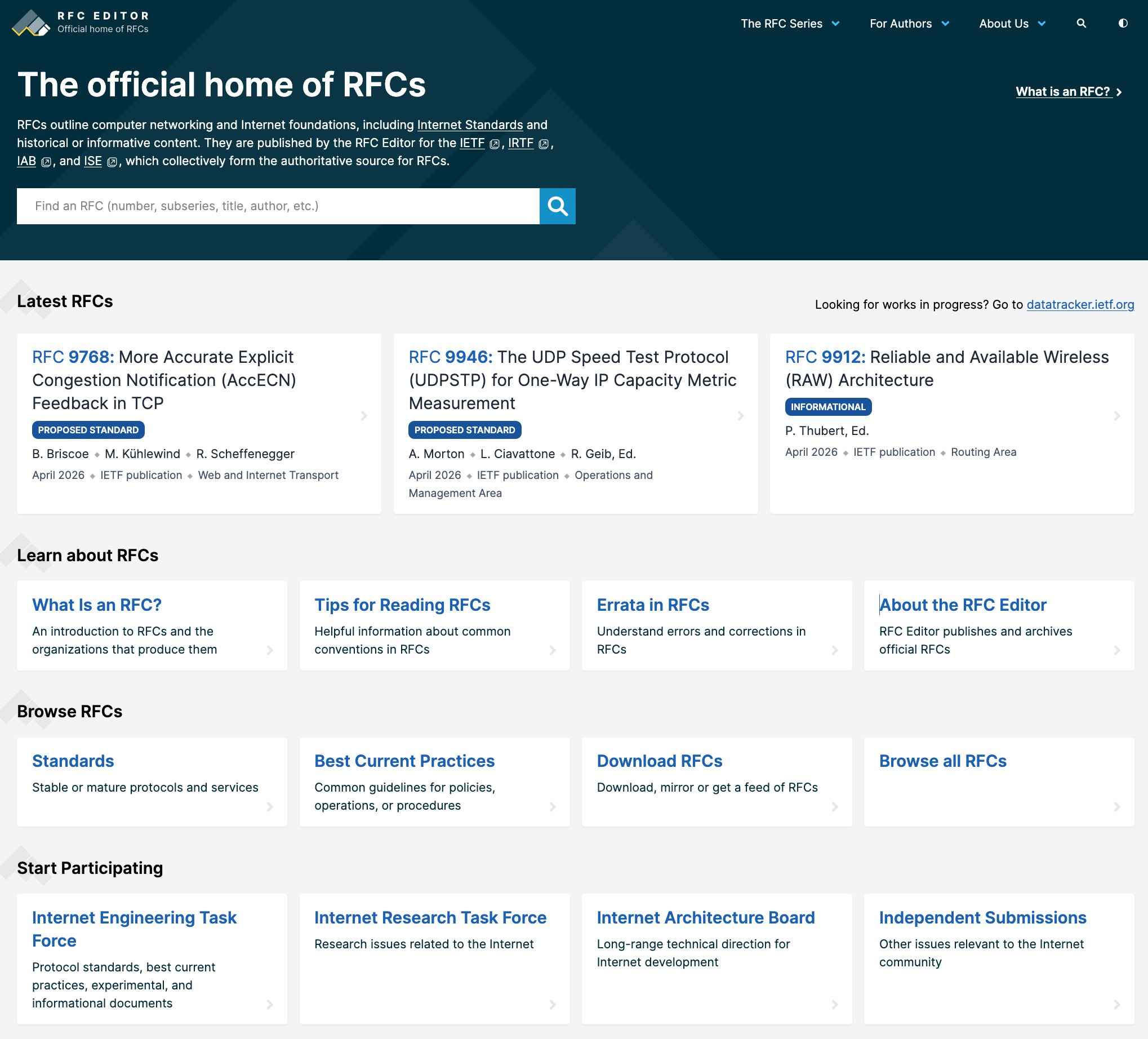
The public website has been rebuilt on a modern web framework, with accessibility consultants ensuring compliance with WCAG standards. Full‑text search now combines keyword matching with rich metadata filters, and the mobile experience has been streamlined for on‑the‑go reference. The redesign also prepares the platform for future features such as citation metrics and interactive diagrams.
4. DraftForge – a VS Code plugin for editors and authors
The RPC will adopt DraftForge, a Visual Studio Code extension that consolidates the dozens of legacy scripts into a coherent UI. DraftForge offers:
- Real‑time RelaxNG validation of draft‑ietf documents.
- One‑click submission of a draft to the RPC database.
- Two operational modes: a production mode for RPC staff and an author mode that mirrors the production workflow but leaves the final approval steps to the editors.
By delivering the editing experience inside a widely used IDE, the IETF lowers the barrier for new contributors and reduces the cognitive load of remembering command‑line flags.
Implications for the IETF ecosystem
The overhaul does more than fix technical debt; it reshapes the relationship between authors, editors, and implementers. With transparent metrics, the community can hold the RPC to measurable service expectations, potentially leading to a formal SLA that reflects real‑world usage patterns. The new errata system, now integrated with Datatracker login, streamlines the reporting and correction of defects, reducing the turnaround time for critical security fixes.
For implementers and researchers, the faster, bulk‑downloadable APIs mean that large‑scale analyses of RFC evolution become feasible without scraping the website. The enhanced search capabilities also make it easier to locate obscure specifications, a boon for developers building protocol‑aware tooling.
Counter‑perspectives and remaining challenges
While the announcement emphasizes a smooth transition, any migration of this magnitude carries risk. Legacy scripts that have been patched over decades may contain undocumented edge‑case handling that the new system must replicate. Early adopters might encounter mismatches between the public queue view and internal status if synchronization bugs arise.
Moreover, the reliance on a single Datatracker database raises questions about resilience; a failure in that service could cascade to both the editorial workflow and the public website. The IETF will need robust backup and failover strategies to mitigate such scenarios.
Finally, the shift to a VS Code‑centric editor may alienate contributors who prefer Emacs, Vim, or plain‑text workflows. Providing optional command‑line wrappers or plugin equivalents for those environments would help preserve inclusivity.
Looking ahead
The initial rollout is scheduled for the week of 18 May 2026, with the public website updating on 20 May. Subsequent phases will run through December 2026, adding features such as citation analytics and richer errata workflows. The community is invited to test the new tools, report issues, and participate in the forthcoming discussion on RPC service‑level expectations.
For more technical details, the IETF Tools team has published the source code for DraftForge on GitHub (https://github.com/ietf-tools/draftforge) and the API specifications for the new workflow engine at the IETF Tools documentation site (https://tools.ietf.org/docs/rpc‑api).
The modernization of RFC editing and publishing marks a pivotal moment for Internet standards development, aligning the process with the expectations of a global, software‑driven community while preserving the rigor that has defined the series for more than half a century.
Comments
Please log in or register to join the discussion