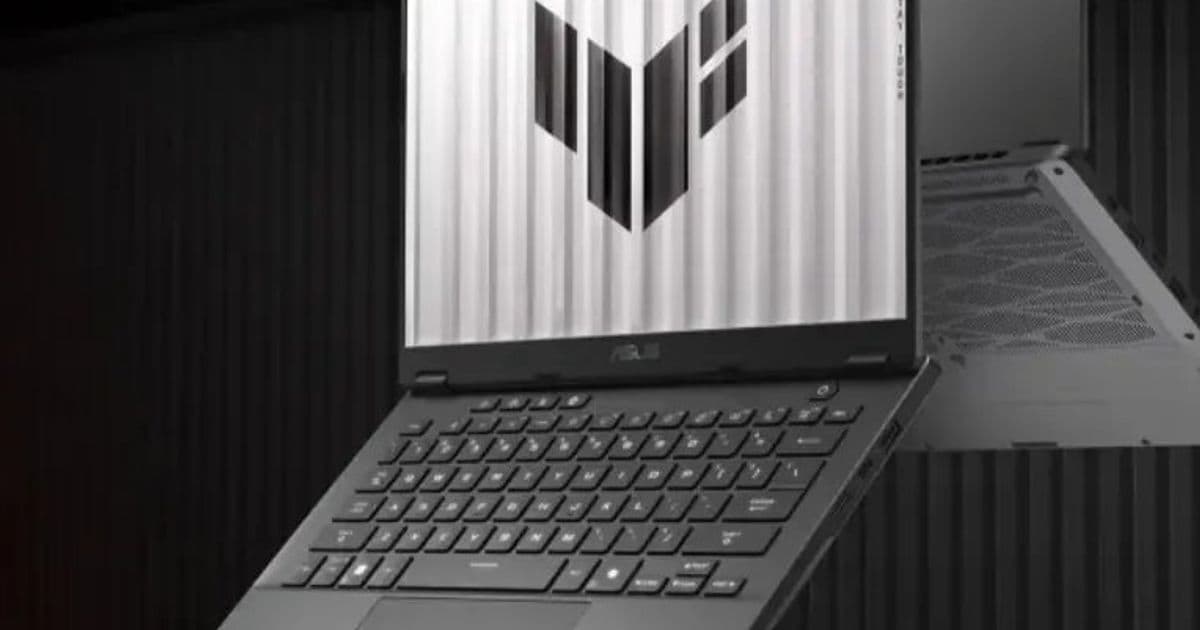
The Linux 7.1 release candidate adds platform‑driver updates that bring native configuration, thermal, and power‑management features to six recent ASUS and HP laptops, while also tightening battery safety on older Uniwill‑based machines.
Linux 7.1‑rc5 Expands ASUS and HP Laptop Support with New Platform Drivers
The latest x86 platform‑driver series, merged ahead of the Linux 7.1‑rc5 milestone, adds native support for six new laptop models and introduces a battery‑safety safeguard for legacy Uniwill hardware. The changes are part of the ongoing effort to move configuration, thermal, and power‑management logic out of user‑space tools and into the kernel, reducing latency and improving reliability across the ecosystem.
New ASUS models under the Armoury driver
The ASUS Armoury platform driver now recognises the following devices:
| Model | CPU | GPU | Notable features |
|---|---|---|---|
| TUF A14 Ryzen AI Max+ FA401EA | AMD Ryzen 7000 series (AI‑enhanced) | Integrated Radeon | Added fan curve tables and AI‑boost power limits |
| TUF Gaming F16 2025 FX607VU | Intel Core i5‑13500H | Integrated Intel Xe | Exposes configurable "Turbo Boost" states via /sys/devices/platform/armoury |
| ROG Strix G16 2025 G614FR | AMD Ryzen 9 7950HS | NVIDIA GeForce RTX 4070 | Enables per‑profile fan curves and GPU‑aware thermal throttling |
| ROG Zephyrus G16 2025 GU605CP | Intel Core Ultra 9 | NVIDIA GeForce RTX 5090 | Introduces BIOS‑level power‑limit scaling for the RTX 5090 |
The driver now reads the EC (Embedded Controller) tables shipped with these laptops and populates sysfs entries for fan speed, CPU boost limits, and GPU power caps. This eliminates the need for proprietary utilities such as Armoury Crate on Linux, allowing administrators to script performance profiles directly from the kernel.
HP WMI driver gains thermal control for Omen 16
HP’s WMI (Windows Management Instrumentation) driver has been extended to expose thermal zones for the Omen 16‑c0xxx (board ID 8902). The new entries appear under /sys/class/thermal/thermal_zone* and report:
- Current temperature of the CPU and GPU heat‑pipes
- Fan duty percentages for the three‑speed fan array
- A configurable "quiet" and "performance" mode that toggles a 5 °C offset on the fan curve
These values are now accessible to standard Linux power‑management tools such as tlp and thermald, enabling consistent cooling behavior across distributions.
Uniwill driver adds battery‑damage protection
The Uniwill platform driver, used by several TUXEDO‑branded laptops, now includes a safeguard that caps the charge‑limit register at 95 % for devices manufactured before 2021. Older firmware versions allowed the charge limit to be set to 100 % indefinitely, a condition that can cause irreversible capacity loss after 300‑400 cycles.
The kernel now writes a protective value to the EC register during boot if it detects a legacy battery‑management firmware. Users can still override the limit via a sysfs knob, but the default safe setting is applied automatically, reducing the risk of premature battery wear.
Market implications
- Enterprise adoption – By providing first‑class kernel support for high‑end gaming and workstation laptops, Linux becomes a more viable platform for engineers and designers who rely on GPU‑intensive workloads. Companies that standardise on Ubuntu or RHEL can now consider these models for field deployments without requiring third‑party tools.
- Supply‑chain resilience – The driver updates arrive just as AMD and Intel are ramping production of 2025‑generation silicon. Early kernel support helps OEMs clear inventory faster, because the laptops can ship with a fully functional Linux image out of the box.
- Battery longevity – The Uniwill fix addresses a known failure mode that has driven some users back to Windows for battery‑health reasons. By correcting the issue in the kernel, the community reduces warranty‑claim pressure on OEMs and improves the perception of Linux on portable devices.
Where to find the patches
All changes are merged in the platform‑drivers‑x86 pull request for Linux 7.1‑rc5. The full diff is available on the official kernel Git repository: https://git.kernel.org/pub/scm/linux/kernel/git/torvalds/linux.git/commit/?id=7.1-rc5-platform-drivers. The commit messages contain detailed tables of EC offsets and thermal‑zone IDs for each newly supported model.
{{IMAGE:2}}
The updated driver stack continues to push Linux toward parity with Windows on premium laptops, while also tightening power‑management safety for legacy hardware.
Comments
Please log in or register to join the discussion