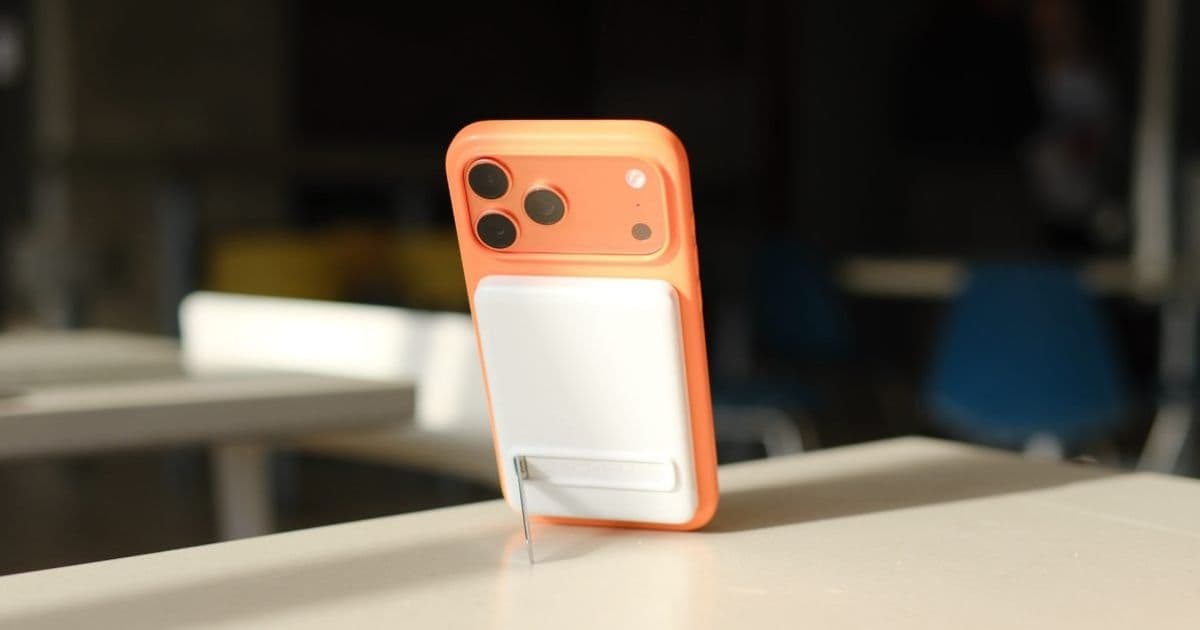
Belkin’s new BoostCharge Slim packs a 5 K mAh Qi2‑compatible battery, a built‑in kickstand and dual‑charging ports into a 1.2‑mm‑thin case. It delivers 15 W MagSafe power to iPhone 17 Pro, 20 W USB‑C output for other gear, and stays cool under heavy use—making it a practical accessory for developers who need reliable on‑the‑go charging for iOS devices and cross‑platform testing rigs.
New Belkin BoostCharge Slim arrives on the market
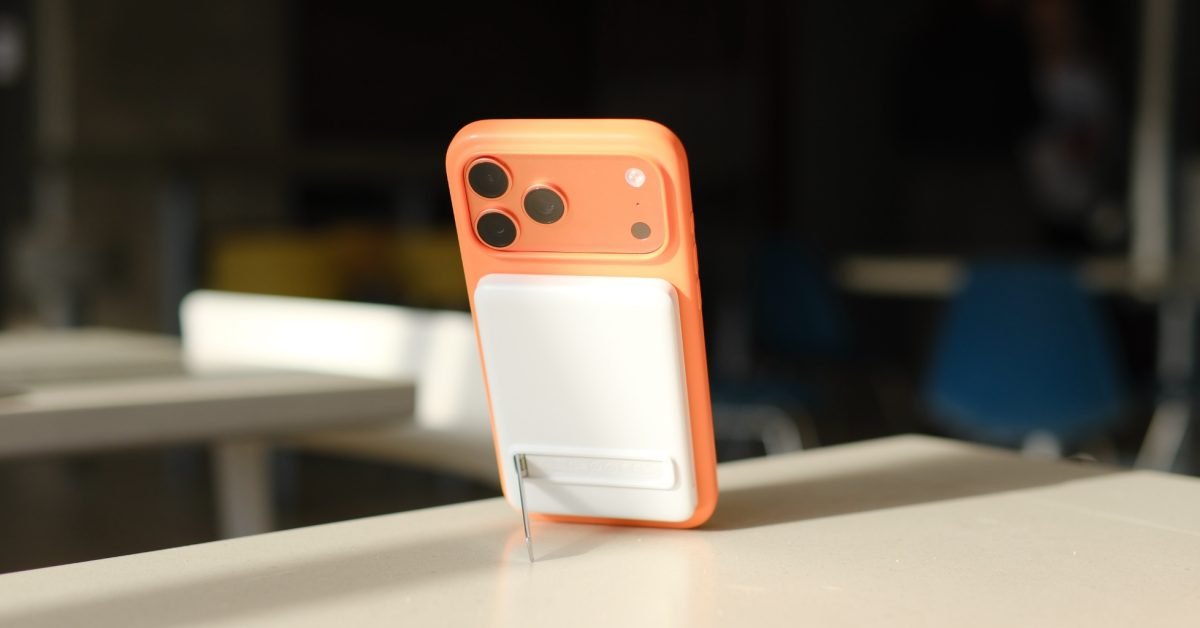 Belkin announced the BoostCharge Slim at CES 2026 and began shipping the week of May 20. The battery pack is a 5 K mAh Qi2‑compatible unit that snaps to any iPhone with MagSafe, but its most visible addition is a fold‑out kickstand that lets the phone sit upright for video, FaceTime or hands‑free work.
What the hardware brings to iOS developers
- 15 W MagSafe output – conforms to the Qi2 specification introduced in iOS 18.0. The new
MagSafeChargingframework (available from Xcode 16 SDK) reports real‑time power flow, so you can programmatically verify that your app receives the expected wattage during testing. - 20 W USB‑C port – useful for charging a MacBook Air M3, iPad Pro or any Android test device without needing a separate charger.
- Dual‑device mode – while the iPhone charges wirelessly at up to 7.5 W, a wired device can draw 12 W from the same pack. This is handy for cross‑platform UI labs where you run an iOS app on a phone and an Android app on a tablet side‑by‑side.
- Thermal performance – despite continuous 15 W output, the pack stays under 35 °C (95 °F) after an hour of use. Belkin attributes this to a graphene‑infused polymer shell, which reduces heat transfer to the phone—a common pain point for MagSafe accessories.
Platform requirements and compatibility
| Requirement | Detail |
|---|---|
| iOS version | 18.0 or later (MagSafe power monitoring APIs) |
| iPhone models | All MagSafe‑enabled iPhones (iPhone 14 Pro and newer) |
| Android | Any device supporting Qi2 wireless charging (Android 14+ on supported hardware) |
| USB‑C power delivery | Up to 20 W (PD 2.0) |
The BoostCharge Slim works out of the box with the Apple MagSafe and Qi2 standards, so no driver updates are needed on either platform. For Android developers, the pack appears as a standard Qi2 charger; the Android 14 BatteryManager API will report the wireless charging source.
Migration considerations for existing MagSafe accessories
If you already ship a MagSafe case or a wireless charger, the new Qi2 spec adds a few migration steps:
- Update your accessory’s firmware to advertise the Qi2
PDprofile. Belkin released a firmware update tool on their support site (download link). - Test with iOS 18 using the
MagSafeChargingsample project on Apple’s developer portal. The sample shows how to readchargingPowerandtemperatureproperties, which can help you catch overheating issues early. - Validate cross‑platform behavior by connecting an Android device to the USB‑C port while the iPhone is on MagSafe. Android’s
BatteryManager.EXTRA_STATUSshould reportBATTERY_STATUS_CHARGINGand the power source asPOWER_SUPPLY_TYPE_WIRELESS.
Practical use cases for cross‑platform dev teams
- Demo stations – Set the phone on the kickstand, plug a MacBook into the USB‑C port, and run a live demo of an iOS app that streams video while the MacBook runs a companion web service. No extra power bricks needed.
- Field testing – When testing iOS 18’s new background‑task limits, you can keep the device powered for hours without a wall outlet, ensuring your tests aren’t cut short by battery drain.
- Remote debugging – Pair the iPhone with Xcode over Wi‑Fi while the battery pack supplies power. The stable power source prevents intermittent disconnections that sometimes happen when a phone’s battery dips below 20 %.
Pricing and availability
The BoostCharge Slim retails for $54.99 on Belkin’s website (link). It ships in three finishes – White, Sand and Black – and includes a USB‑C to USB‑C charging cable (30 W). Shipping begins May 22 and is expected to be in stock for the next 12 months.
Bottom line for developers
Belkin’s slim 5 K mAh MagSafe battery bank isn’t the first on the market, but the integrated kickstand and solid thermal design give it a functional edge for developers who need a reliable, portable power source. Its compliance with the new Qi2 and iOS 18 MagSafe APIs means you can test power‑related features without extra hardware, and the USB‑C port keeps your whole testing suite charged from a single pocket‑sized device.
For more details on the Qi2 spec, see Apple’s MagSafe documentation and the Wireless Power Consortium’s Qi2 page.
Comments
Please log in or register to join the discussion