
At a 30‑year college reunion, the author discovers a shared dread of AI’s impact on knowledge work and a nostalgic yearning for a 1990s multiplayer Tetris variant, BattleTris. By leveraging an LLM to resurrect the decades‑old game, the story illustrates how AI can both provoke fear and enable the revival of cherished human experiences, prompting reflection on the tool versus overlord narrative surrounding large language models.
A Portentous Reunion
When a group of 1996 Brown alumni gathered for their thirtieth reunion, two currents ran through every conversation. The first was a grave concern for the future of AI and its encroachment on knowledge work, a sentiment that echoed across generations: my mother’s 1968 classmates feared the draft, yet the anxiety of 2026 feels singular because every discussion returned to the influence of large language models (LLMs). The second was a specific brand of nostalgia for a three‑decade‑old multiplayer Tetris game called BattleTris, a project born in a Colorado basement in 1993 and later polished for a software‑engineering class at Brown.
The AI Angst That Binds a Generation
The reunion highlighted how each cohort measures its present against the technological forces that defined its youth. For the Baby Boomers, the Vietnam draft was an existential threat; for the ’90s graduates, the rise of LLMs is the new specter. The common thread is not the technology itself but the perceived loss of agency—the feeling that machines might eclipse human judgment in fields once thought uniquely human.
This anxiety is not unfounded. Recent reports show that AI‑generated code now accounts for 30 % of new software contributions in some firms, and content‑creation tools are displacing writers at unprecedented rates. Yet the fear often overlooks the instrumental nature of these models. As I argue in Oxide RFD 576, LLMs are tools—extremely powerful, but still tools. When we elevate them to mythic overlords, we surrender agency before the technology has even proven its limits.
BattleTris: A Micro‑History of a Forgotten Game
BattleTris began as a whimsical twist on Randall Cook’s “asshole Tetris.” The idea was simple: two players duel, earning “money” from cleared lines to purchase weapons that sabotage the opponent—flipping the board, spawning odd‑shaped pieces, and more. The original implementation used a null‑modem cable for networking, a common hack before Ethernet became ubiquitous in dorm rooms.
The game quickly became a campus legend:
- 1994 – A polished version was showcased on demo day, filling the Sunlab with dozens of simultaneous matches.
- 1999 – A Brown alumnus organized a tournament, prompting the author to invite him to Sun Microsystems, where the code was ported to Solaris on both x86 and SPARC.
- 2001 – A personal milestone: a decisive victory over the author’s girlfriend led to a marriage proposal, cementing BattleTris in the family lore.
- 2002‑2010 – Development stalled as the team shifted focus to DTrace and other projects; the codebase grew stale and platform‑specific.
Fast forward to 2026, and the game resurfaced thanks to an LLM named Claude. By feeding the original source files to Claude, the author obtained:
- Bug identification – A stack overflow caused by mismatched
intandunsigned longsizes on 64‑bit Linux. - Porting assistance – Automated patches for X11 dependencies, build scripts, and a modern Makefile.
- Testing scaffolding – A lightweight harness to simulate two players on a single machine.
The result was a working Linux binary, verified by a live duel between the author and Adam, the very intern who once organized the 1999 tournament.
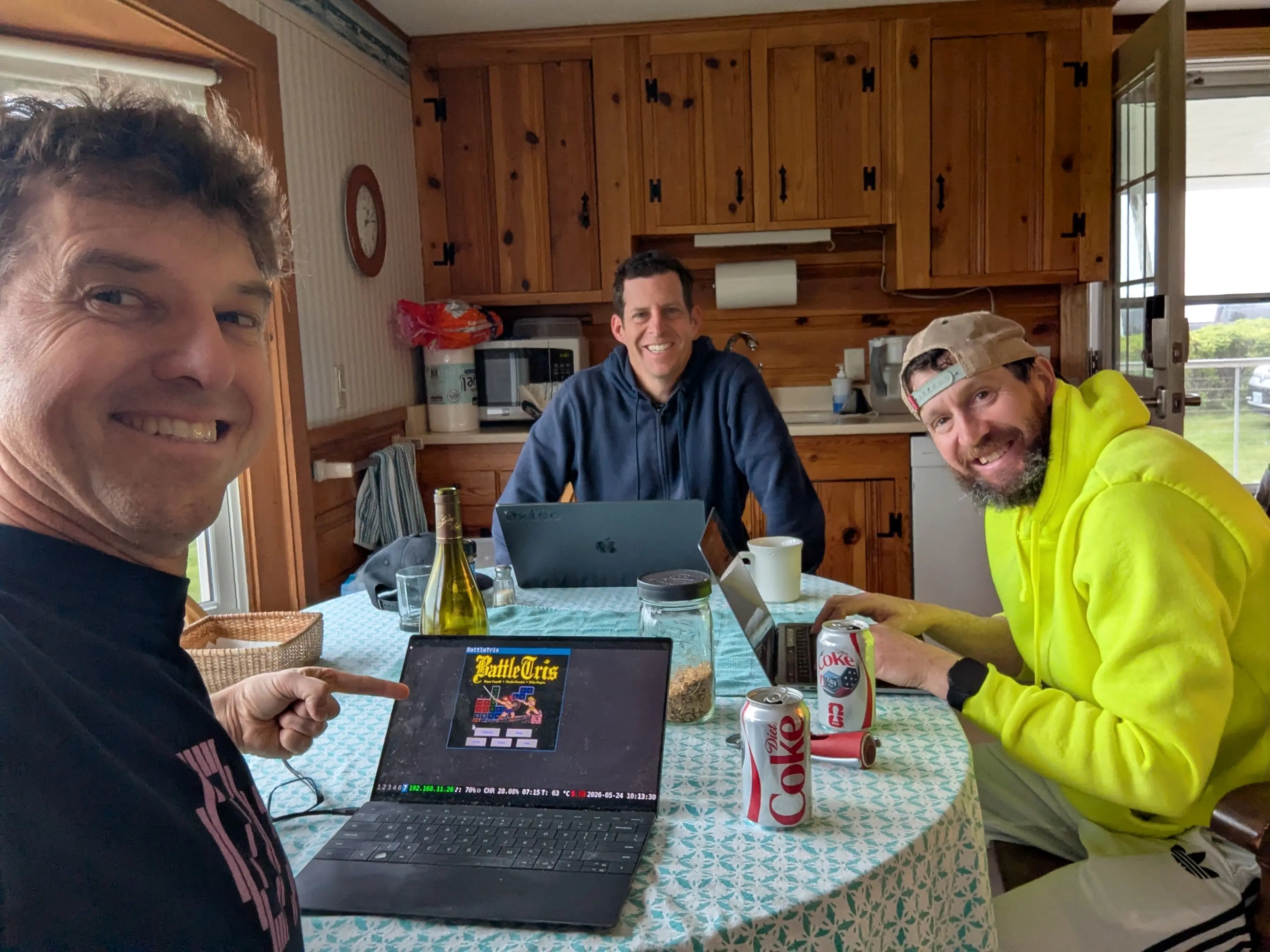
The screenshot of the revived BattleTris splash screen, a visual bridge between past and present.
Implications: When AI Revives the Past
1. Accelerating Legacy Modernization
The BattleTris revival demonstrates that LLMs can dramatically reduce the friction of porting legacy code. Where a human team might spend weeks untangling platform‑specific assumptions, an LLM can surface the exact line of code responsible for a crash, propose a fix, and even generate a pull request. This capability reshapes how organizations might approach technical debt: instead of abandoning old tools, they can be resurrected for educational or nostalgic purposes.
2. Reframing the Tool‑Overlord Debate
The same technology that sparked existential dread also enabled a deeply human moment—friends re‑connecting over a game that defined their youth. This paradox suggests that the narrative of AI as a dehumanizing force is incomplete. When developers treat LLMs as collaborators rather than replacements, the output can amplify human creativity rather than suppress it.
3. Cultural Preservation
Games like BattleTris are cultural artifacts, embodying the social fabric of early internet‑age computing. LLM‑assisted restoration offers a new pathway for digital archaeology, preserving experiences that would otherwise be lost to obsolete hardware and operating systems.
Counter‑Perspectives
Critics argue that reliance on LLMs for code repair may entrench opaque decision‑making; the model’s suggestions are not always transparent, and developers may accept patches without fully understanding the underlying bug. Moreover, the speed of AI‑driven fixes could encourage a short‑term mindset, where teams patch rather than redesign flawed architectures.
Another concern is the bias toward well‑documented languages. BattleTris, written in C with X11 calls, was amenable to Claude’s training data. Projects in niche or proprietary languages might not receive the same benefit, potentially widening the gap between maintainable and abandoned codebases.
Looking Forward
The reunion story ends with a promise: “stay tuned for more BattleTris.” Beyond the game itself, the episode serves as a microcosm of the broader tension between AI‑induced anxiety and AI‑enabled renaissance. As LLMs become more integrated into development pipelines, the community must cultivate a mindset that treats them as augmentative tools, preserving the human judgment that gives software its purpose.
In the end, the revival of a 1990s multiplayer Tetris variant illustrates a hopeful possibility: that the very technology we fear may also be the conduit through which we reconnect with the past, celebrate shared creativity, and reaffirm why we build software in the first place.
Further reading
- The original BattleTris source repository (archived) – https://github.com/bcantrill/battletris (historical snapshot)
- Claude’s documentation on code assistance – https://docs.anthropic.com/claude
- Oxide RFD 576 on LLMs as tools – https://oxide.computer/rfd/576
Comments
Please log in or register to join the discussion