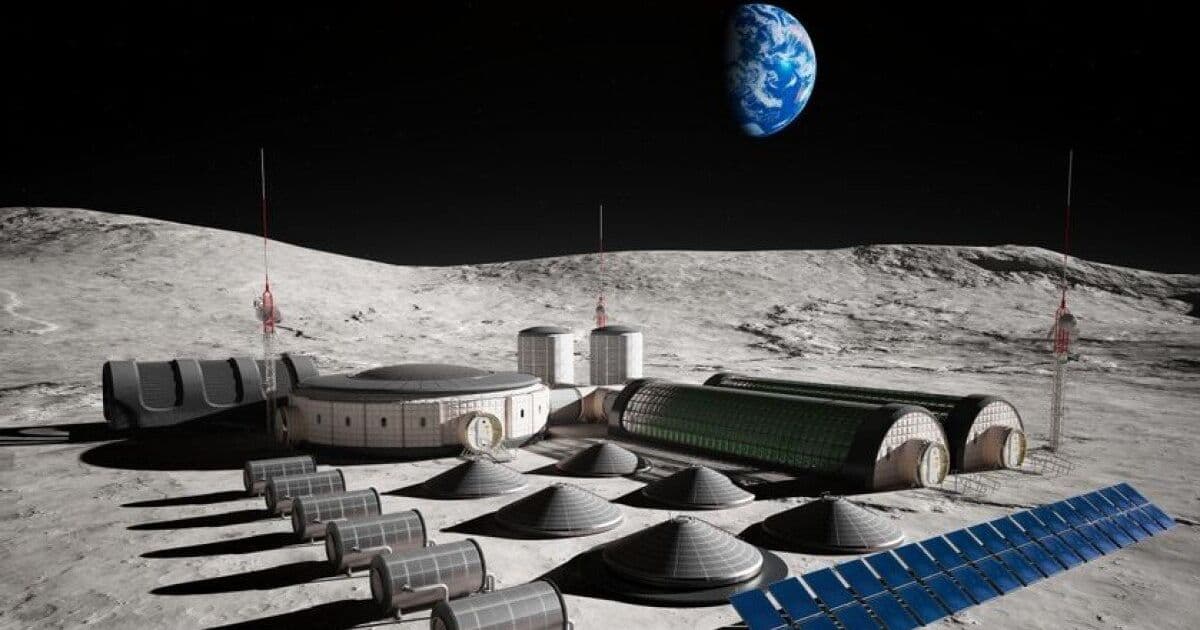
NASA has awarded contracts to four companies for its Moon Base initiative, requiring adherence to strict regulatory standards for space operations, international agreements, and payload delivery compliance.
NASA has announced significant contract awards for its Moon Base program, establishing a complex regulatory framework that requires compliance from multiple private sector partners. The agency has awarded contracts to Blue Origin, Astrolab, Lunar Outpost, and Firefly Aerospace, with each contract containing specific regulatory requirements and compliance timelines.
The regulatory landscape for lunar operations includes strict payload delivery specifications, international space treaty obligations, and safety protocols for crewed missions. NASA's three-phase Moon Base plan establishes clear compliance milestones that contractors must meet to continue participation in the program.
Blue Origin received a $188 million task order plus a $280.4 million option period to deliver NASA's lunar terrain vehicles to the South Pole region. The contract requires compliance with NASA's Human Landing System requirements, including payload capacity specifications and landing precision regulations. The first mission, designated Moon Base I, must deliver science payloads to the Shackleton Connecting Ridge no earlier than fall 2026, with regulatory approval required before payload deployment.
Astrolab and Lunar Outpost won contracts worth $219 million and $220 million respectively for crewed and autonomous lunar terrain vehicles. These contracts require compliance with NASA's space vehicle safety standards, including operational velocity limits of 9 mph (14.5 km/h) and range capabilities exceeding 124 miles (200 kilometers). Both companies must demonstrate compliance with NASA's environmental protection regulations for lunar operations, including contamination control protocols.
NASA's regulatory framework for the Moon Base program establishes three distinct compliance phases:
Phase 1 (through 2029): Requires delivery of approximately four metric tons of cargo to the lunar surface with documented chain-of-custody procedures and payload verification protocols. This phase includes 21 lunar landings, each requiring pre-launch regulatory approval and post-landing compliance verification.
Phase 2 (2029-2032): Will introduce semi-permanent infrastructure including power systems, communications networks, and habitation modules. Contractors must comply with NASA's long-duration habitat safety standards and international space resource utilization regulations.
Phase 3 (beginning 2032): Targets sustained human habitation with advanced surface nuclear power systems. This phase requires compliance with NASA's nuclear safety regulations for space applications and international non-proliferation agreements.
Firefly Aerospace's contract to build the carrier spacecraft for NASA's "MoonFall" drones requires compliance with orbital insertion accuracy standards and payload deployment protocols. The drones must map the lunar surface at centimeter-scale resolution while complying with NASA's planetary protection regulations and data transmission security standards.
The Moon Base program also requires compliance with international regulatory frameworks, including the Artemis Accords. NASA is currently negotiating contribution agreements with international partners, with each agreement requiring separate regulatory approval processes and compliance verification procedures.
Funding for the program comes from multiple sources with distinct compliance requirements: more than $10 billion from reconciliation legislation, fiscal year 2026 appropriations, and fiscal year 2027 presidential budget request. Each funding source has specific reporting requirements and compliance documentation obligations.
NASA's Office of Inspector General will conduct regular compliance audits of all Moon Base program contractors, with audit reports required quarterly for Phase 1 operations and monthly for subsequent phases. Contractors must maintain detailed compliance documentation including safety certifications, environmental impact assessments, and international agreement adherence reports.
Additional regulatory requirements include:
- Export control compliance for all dual-use technologies
- Data protection regulations for scientific data transmission
- Occupational safety standards for crewed operations
- Emergency response protocols for contingency operations
The Moon Base program represents a significant expansion of NASA's regulatory framework for private sector participation in space exploration, establishing new precedents for compliance requirements in lunar operations.
Comments
Please log in or register to join the discussion