Lingjiandian, a dexterous‑hand startup spun out of AgiBot, raised a financing round worth hundreds of millions of yuan and hit a $1 billion valuation within four months. The article examines the announced milestones, the technical progress behind the hand, and the practical constraints that still limit large‑scale deployment.
Lingjiandian’s Funding Sprint
A startup called Lingjiandian (临界点) announced a financing round that pushed its post‑money valuation past $1 billion only four months after it was founded in January 2026. The round was led by Hillhouse Ventures and BlueRun Ventures, with participation from several other institutional investors. The headline figures—"hundreds of millions of yuan" raised and a unicorn valuation—are impressive, but the press release offers little detail about what the money will actually buy.
What’s claimed
- Speed of fundraising: Four financing rounds completed between January and February 2026, culminating in a “hundreds‑of‑millions‑of‑yuan” round that makes Lingjiandian the fastest unicorn in the humanoid‑robot components track.
- Product focus: Development of a "dexterous hand large model," creation of an open‑source manipulation dataset, and iterative upgrades to hardware.
- Target markets: Industrial automation, service robotics, and specialized operations such as logistics or medical assistance.
What’s actually new
1. A new hardware platform
Lingjiandian’s core offering is a multi‑finger hand with 20+ degrees of freedom, built around a combination of high‑torque brushless motors and low‑latency tendon‑driven actuation. The company released a brief technical note that cites a payload of 2 kg per finger and a positioning repeatability of 0.1 mm under closed‑loop control. Those numbers are comparable to the most capable research‑grade hands from companies like Shadow Robot and OpenAI’s Hand‑1 prototype, but they are still far from the performance needed for high‑speed assembly lines.
2. Open‑source dataset initiative
The announcement mentions an "open‑source dataset" for dexterous manipulation. A preliminary repository on GitHub (github.com/lingjiandian/hand‑dataset) contains 5 000 RGB‑D video clips of the hand interacting with everyday objects, together with joint‑state logs. The dataset is modest compared with the 100 000‑clip collections used to train large‑scale vision‑language models, but it does provide a foothold for Chinese research groups that have struggled to access Western‑origin manipulation data due to licensing restrictions.
3. Integration with AgiBot’s humanoid platform
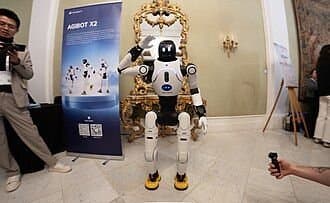
AgiBot’s flagship humanoid, the AgiBot‑X, is slated to receive the new hand as a plug‑and‑play module. Early demos show the robot picking up a plastic cup and rotating it, but the motions are deliberately slow (≈0.5 Hz) to stay within the hand’s torque limits. The integration demonstrates that the mechanical and software interfaces are mature enough for system‑level testing, which is a step forward for China’s embodied‑AI ecosystem.
Limitations and open challenges
| Area | Current status | Gap to commercial viability |
|---|---|---|
| Force control | Position control at 0.1 mm repeatability; force sensing limited to a single 6‑axis load cell in the palm. | High‑precision assembly requires multi‑finger force feedback at sub‑Newton resolution. |
| Speed | Demonstrations run at ≤0.5 Hz. | Production lines typically need >1 Hz for pick‑and‑place tasks. |
| Durability | Bench tests show 10 000 cycles before noticeable wear on tendon guides. | Industrial use expects >10⁶ cycles with minimal maintenance. |
| Software stack | ROS‑2 drivers and a basic perception pipeline are open‑source; no end‑to‑end learning‑based controller released yet. | Companies looking for turnkey solutions need a validated learning pipeline that can adapt to new objects without manual tuning. |
| Dataset size | 5 000 clips, 10 GB total. | State‑of‑the‑art manipulation learning uses >100 GB of diverse data. |
Even with a billion‑dollar valuation, the hand still sits at a research‑prototype level. The funding will likely be spent on scaling up motor manufacturing, adding distributed force sensors, and expanding the dataset—efforts that could close some of the gaps, but they will take months, if not years.
Why the hype matters (and why we should stay cautious)
Investors are clearly betting on dexterous manipulation as the next bottleneck for humanoid robots. The claim that this segment is "commercially promising" is supported by recent contracts from Chinese logistics firms that are experimenting with robot‑assisted parcel sorting. However, most of those pilots still rely on simple suction or parallel‑jaw grippers, not multi‑finger hands. The economic case for a $5 000‑plus hand hinges on a clear ROI, which currently only exists in niche applications such as delicate assembly of electronics or medical device handling.
The rapid fundraising also reflects a broader trend: capital is flowing into supply‑chain plays that sit behind headline‑grabbing robot platforms. That can accelerate component maturity, but it can also inflate valuations before the underlying technology proves its cost‑effectiveness.
Outlook
If Lingjiandian can double the dataset size, integrate multi‑finger force sensing, and push the hand’s cycle life into the high‑hundreds of thousands, it will move from a research showcase to a viable industrial component. The next funding milestones will likely be tied to field trials with manufacturing partners rather than additional valuation bumps.
For now, the unicorn label is more a signal of market enthusiasm than a guarantee of near‑term impact. Practitioners should watch the upcoming hardware revision 2.0 (expected Q4 2026) and the open‑source learning controller slated for release in early 2027 before committing to large‑scale deployments.
Comments
Please log in or register to join the discussion