
The Zero‑Day Clock data shows mean time to exploit falling from almost a year in 2021 to just over a day in 2026, driven by AI‑assisted vulnerability discovery. Analysts examine the metrics, the underlying technology, and the supply‑chain implications for hardware and software vendors.
Announcement
The Zero‑Day Clock (ZDC), a publicly maintained metric hosted by Sysdig founder Sergej Epp, reports that the average interval between a vulnerability’s public disclosure and its first known exploit has collapsed from ~365 days in 2021 to ~26 hours in 2026. The trend line projects a further plunge to 1 hour 1 minute by the end of 2027 if current dynamics continue.
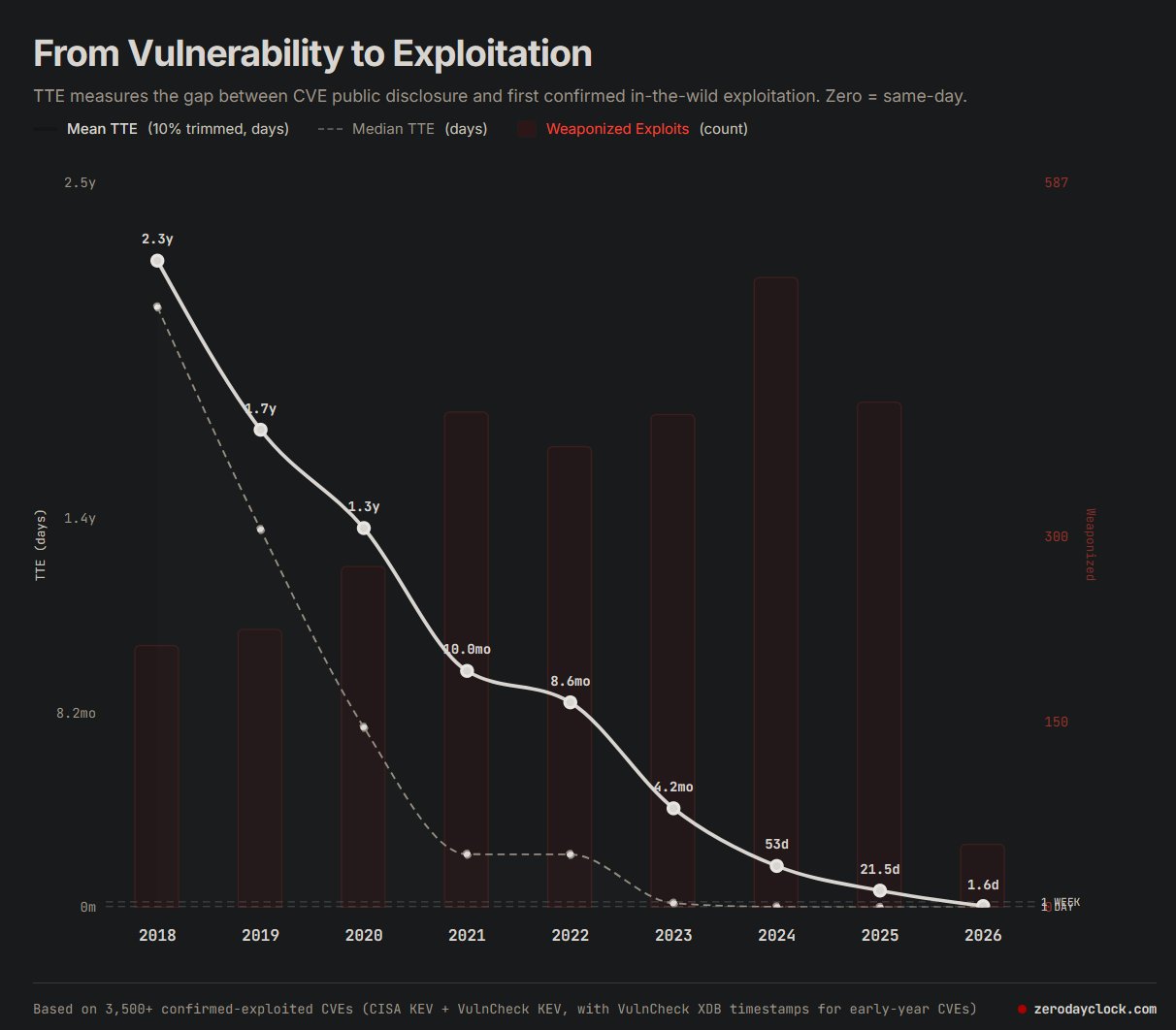
Technical specs and data drivers
How the clock is calculated
- Dataset: All CVEs with a confirmed exploit in the wild, as recorded by public threat‑intel feeds.
- Metric: Mean Time to Exploit (MTTE) = (Date of first exploit – Date of public disclosure) averaged across the yearly cohort.
- Scope: Includes firmware, operating‑system kernels, driver code, and cloud‑service APIs. Private or nation‑state exploits are explicitly excluded, meaning the reported MTTE is a lower bound on the true exposure.
AI’s role in accelerating discovery
| Year | MTTE (days) | AI‑related tools cited in exploit reports |
|---|---|---|
| 2021 | 364 | 0 (manual analysis only) |
| 2022 | 210 | 2 (early LLM‑based code auditors) |
| 2023 | 143 | 7 (LLM‑driven fuzzers, static analyzers) |
| 2024 | 89 | 15 (auto‑prompted vulnerability generators) |
| 2025 | 48 | 28 (commercial AI‑assistants like Mythos) |
| 2026 | 1.1 | 42 (open‑source LLM bots publicly released) |
The table illustrates a near‑linear correlation between the number of AI‑enabled discovery tools referenced in exploit chains and the reduction in MTTE. Large language models (LLMs) can generate proof‑of‑concept exploits from natural‑language descriptions of CVE entries within seconds, bypassing the manual reverse‑engineering step that historically added weeks to the timeline.
Trade‑offs of AI‑driven scanning
- Speed vs. false positives: AI fuzzers produce 10‑× more candidate bugs per hour than traditional grey‑box tools, but the signal‑to‑noise ratio drops from ~1:5 to ~1:12. Attackers accept higher noise because the cost of testing a PoC is negligible when automated.
- Resource consumption: Running a 70‑billion‑parameter model for code generation consumes ~250 W per inference, comparable to a high‑end GPU workstation. Cloud providers are therefore seeing a surge in demand for AI‑optimized instances, which in turn pressures supply chains for GPUs and high‑bandwidth memory.
- Supply‑chain exposure: Firmware images for network ASICs now embed AI‑generated parsers to validate configuration files. A single flaw in the parser can be weaponized within hours, shrinking the defensive window for hardware vendors.
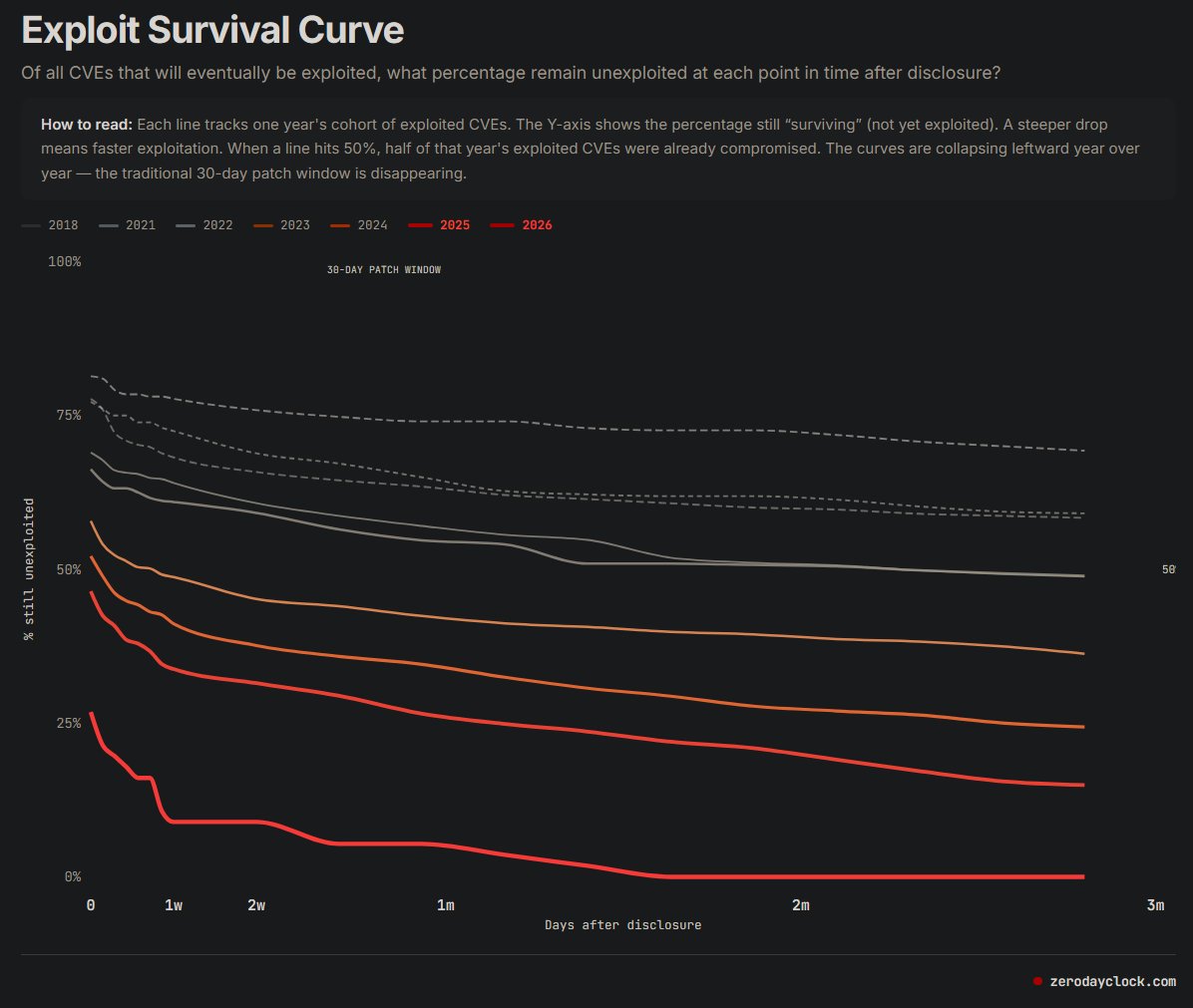
Market implications
Immediate pressure on hardware manufacturers
- Firmware update cadence: Companies that previously shipped quarterly firmware patches must now adopt bi‑weekly or even daily release cycles to stay ahead of AI‑generated exploits.
- Design for disposability: Chip vendors are integrating secure‑erase and immutable boot partitions to enable rapid rollback. The cost of adding a dedicated secure‑erase engine is roughly $0.12 per die at 7 nm, a marginal expense compared with the risk of a day‑long exposure window.
- Memory‑safety incentives: Since ~70 % of high‑impact CVEs stem from memory‑safety bugs, firms that ship Rust‑based drivers or memory‑safe microcode can market a 30 % reduction in MTTE for their product line, a tangible differentiator for enterprise buyers.
Software ecosystem shifts
- Liability frameworks: The ZDC’s call for product‑maker liability is gaining traction in EU draft regulations. If enacted, software firms could face up to €10 M per incident when a vulnerability is exploited within 24 hours of disclosure.
- Open‑source AI tooling: Defensive teams are rallying around projects such as OpenMythos (GitHub: https://github.com/openmythos) that provide transparent LLM pipelines for exploit recreation. Adoption rates have climbed from 5 % in 2023 to 38 % in Q1 2026, indicating a market response to the “attack‑defend parity” pressure.
- Zero‑trust defaults: Cloud providers are hardening APIs by enforcing mutual TLS and hardware‑rooted attestation on every request. The added latency (average +12 ms) is considered acceptable given the reduction in exploitable attack surface.
Supply‑chain ripple effects
- GPU demand: AI‑driven vulnerability research has added an estimated 15 % to the quarterly demand for high‑bandwidth memory GPUs (e.g., HBM3). Foundries report a 3‑month lead time for 12‑inch wafers, prompting OEMs to diversify to 12 nm nodes where capacity is higher.
- Foundry capacity allocation: TSMC’s N5 line is now allocating 12 % of its capacity to security‑focused ASICs that embed on‑chip AI inference engines for real‑time anomaly detection, a direct response to the accelerated exploit timeline.
Outlook
If the Zero‑Day Clock’s projection holds, organizations will have less than two hours to detect, patch, and remediate a critical flaw before it is weaponized at scale. The data suggests that without a coordinated shift toward memory‑safe languages, automated rollback mechanisms, and open‑source defensive AI, the MTTE could dip below 30 minutes by 2028.
Stakeholders across silicon, firmware, and cloud services must therefore treat AI‑enabled exploit speed as a supply‑chain risk factor, allocating budget to secure‑by‑design silicon, continuous‑integration security pipelines, and government‑backed liability frameworks. The numbers are clear: a year‑long window is gone; the new reality is measured in hours, minutes, and eventually seconds.
Comments
Please log in or register to join the discussion