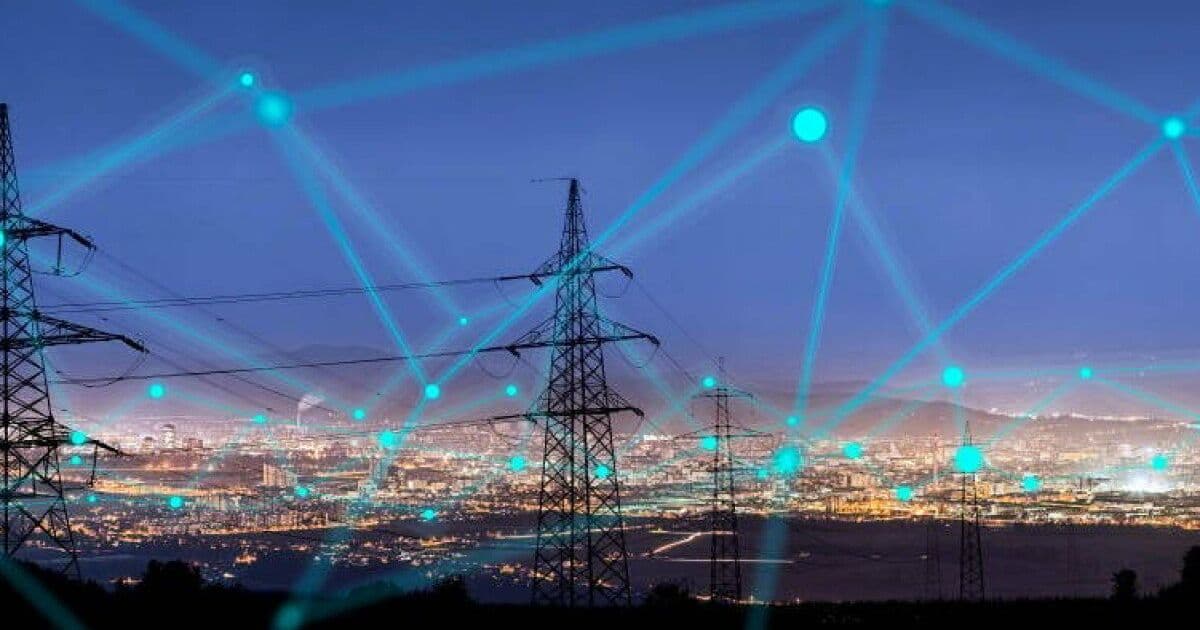
A Wood Mackenzie report warns that the rapid build‑out of gigawatt‑scale AI data centers is outpacing the aging U.S. electricity grid. Operators face a stark choice between waiting years for grid upgrades or installing on‑site generation that brings technical and regulatory headaches, while ratepayers brace for higher electricity bills.
AI Data Center Surge Stresses U.S. Power Grid, Raising Cost and Reliability Risks
What happened – The United States is witnessing a wave of AI‑focused data centers that require massive, uninterrupted power. Wood Mackenzie analysts estimate that more than 90 GW of generation capacity is already being co‑located with these facilities, but the legacy grid cannot reliably supply the sudden spikes in demand that AI workloads generate.
Legal and regulatory backdrop
The Federal Energy Regulatory Commission (FERC) and state public utility commissions have long required utilities to give priority to grid stability during shortages. Recent rule changes in several interconnection pipelines grant utilities the right to curtail co‑located generators when the system is stressed. Those provisions, while aimed at protecting the broader grid, effectively make it impossible for a data center to rely on on‑site generation as a back‑up without risking forced reductions in output.
Impact on users and companies
| Stakeholder | Consequence |
|---|---|
| AI data‑center operators | Must choose between a five‑to‑ten‑year wait for transmission upgrades or costly on‑site generation that may be curtailed. Both paths raise capital expenditures and operational risk. |
| Utility companies | Face pressure to accelerate multi‑billion‑dollar grid‑modernization programs, which will be funded through higher rates for all customers. |
| End‑users and businesses | Will see electricity bills rise as the cost of grid upgrades is spread across ratepayers. Smaller cloud providers may be priced out of the market, consolidating power with the largest hyperscalers. |
| Regulators | Must balance grid reliability with the need to support emerging AI workloads, a tension that could trigger political backlash over rising energy costs. |
The technical challenges are stark. AI workloads can swing power demand by several gigawatts within seconds. Traditional reciprocating engines and gas turbines suffer mechanical stress under such rapid changes, while battery systems degrade quickly when asked to respond to every spike. The phenomenon known as sub‑synchronous oscillation can destabilize not only local generators but also distant plants on the transmission network, threatening overall grid stability.
What changes are needed
- Accelerated grid modernization – Utilities are already planning billions in transmission upgrades, but the timeline (often a decade) does not match the speed of AI data‑center deployment. Faster permitting, targeted investment in high‑capacity corridors, and advanced grid‑management software are essential.
- Clear interconnection rules – Regulators should define transparent curtailment policies that protect data‑center uptime guarantees while preserving grid safety. A tiered priority system could allow critical AI workloads to retain a baseline of power during emergencies.
- Hybrid power solutions – Rather than relying solely on on‑site generation, operators could combine renewable sources, battery storage, and demand‑response contracts. Projects that integrate fast‑responding flywheel storage or advanced power‑electronic converters can mitigate the risk of oscillations.
- Cost allocation frameworks – To avoid a blanket rate hike, policymakers could create cost‑recovery mechanisms that charge the beneficiaries of grid upgrades—namely the AI data‑center developers—directly, similar to the way large industrial customers finance dedicated transmission lines.
- Industry collaboration – Standards bodies such as the IEEE and the Open Compute Project should develop design guidelines for co‑locating AI workloads with generation assets, ensuring that equipment can tolerate the rapid load changes without premature wear.
Looking ahead
Wood Mackenzie concludes that the collocation model will remain niche because of its high capital cost and technical risk. The more likely path is a mixed approach: utilities will gradually expand capacity, while the biggest AI players invest in private generation and sophisticated energy‑management systems to bridge the gap.
For smaller cloud providers, the outcome may be exclusion from the most power‑intensive AI projects unless they partner with larger hyperscalers or secure dedicated grid connections through new financing structures.
The stakes are clear: without swift, coordinated action, the United States could see a bifurcated AI ecosystem where only the deepest‑pocketed firms can afford the energy needed to stay competitive, while the rest face prohibitive costs and unreliable service.
The analysis draws on the Wood Mackenzie report titled “AI Data Center Boom Collides with US Grid Reality” and statements from the firm’s global head of grid transformation, Ben Hertz‑Shargel.
Comments
Please log in or register to join the discussion