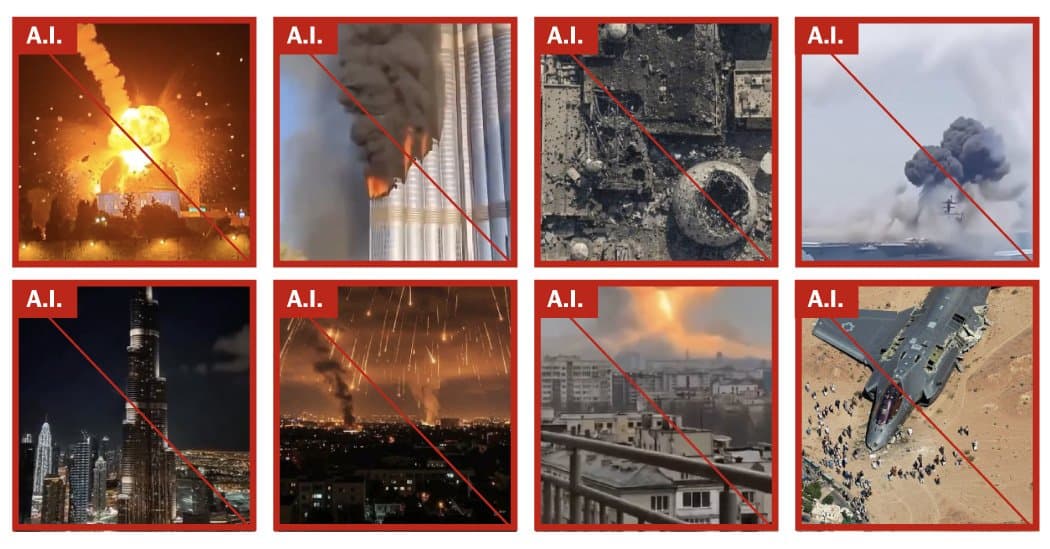
A New York Times study finds most AI-generated videos about the Iran war on social media push pro-Iranian narratives, often exaggerating military capabilities, raising concerns about AI's role in modern information warfare.
A comprehensive study by the New York Times has revealed that the vast majority of AI-generated videos about the war in Iran circulating on social media platforms push pro-Iranian narratives, often significantly exaggerating the country's military capabilities and sophistication.
The research, conducted during the first weeks of the conflict, found that artificial intelligence tools have been weaponized to create and spread misleading visual content at an unprecedented scale. These AI-generated videos frequently depict Iranian military forces as more advanced, numerous, and successful than they actually are, contributing to a distorted understanding of the conflict among global audiences.
This phenomenon represents a new frontier in information warfare, where the barrier to creating convincing but false visual content has been dramatically lowered. Unlike traditional propaganda that required significant resources and expertise, modern AI tools allow even amateur users to generate realistic-looking videos that can spread rapidly across platforms.
The Scale of the Problem
The study documented a "torrent" of fake videos and images generated by artificial intelligence that have overrun social networks during the conflict. These range from fabricated footage of military operations to AI-enhanced images that make Iranian forces appear more technologically advanced than they are.
Social media platforms have struggled to keep pace with this flood of AI-generated content. While some platforms have implemented detection tools, the sheer volume and sophistication of the generated material makes comprehensive moderation extremely difficult.
Technical Capabilities and Accessibility
Recent advances in AI video generation have made it possible for users with minimal technical expertise to create convincing footage. Tools that can generate realistic human movement, military equipment, and even entire battle scenes are now widely available, often for free or at low cost.
This democratization of content creation has a dark side when applied to conflict situations. The same technology that enables creative expression and accessibility can be repurposed to manufacture consent, spread disinformation, and manipulate public opinion on a massive scale.
The Impact on Public Perception
One of the most concerning findings from the study is how effectively these AI-generated videos shape public understanding of the conflict. Viewers often cannot distinguish between authentic footage and AI-generated content, leading to a situation where perception of military capabilities and conflict dynamics is increasingly divorced from reality.
The pro-Iranian bias in the generated content appears to stem from several factors, including the availability of training data, the political leanings of some AI tool developers, and the targeting strategies of those creating the content. However, the study notes that similar techniques could be used to generate content favoring any side in a conflict.
Broader Implications for Information Warfare
This development represents a significant escalation in the information warfare capabilities available to state and non-state actors. The ability to rapidly generate and disseminate large volumes of convincing but false visual content creates new challenges for journalists, researchers, and the public in understanding real-world events.
Military analysts and intelligence agencies are now grappling with how to verify visual evidence in an era where any footage could be AI-generated. The traditional methods of assessing military capabilities and movements through open-source intelligence are becoming increasingly unreliable.
Platform Response and Technical Solutions
Social media companies are racing to develop better detection tools for AI-generated content. Some platforms have begun implementing labels or warnings on content that appears to be AI-generated, though the effectiveness of these measures remains limited.
Technical solutions being explored include watermarking AI-generated content at the creation stage, developing more sophisticated detection algorithms, and creating public databases of known AI-generated material. However, these approaches face challenges including the rapid evolution of AI generation techniques and the global nature of social media platforms.
The Future of AI in Conflict
The study's findings suggest we are entering an era where visual evidence from conflict zones must be treated with heightened skepticism. The ability to generate realistic but false footage about military operations, casualties, and strategic developments creates new opportunities for deception and manipulation.
As AI video generation technology continues to improve, the line between authentic and generated content will likely become even more blurred. This raises fundamental questions about how societies will verify information about conflicts and other critical events in the future.
Countermeasures and Media Literacy
Experts recommend several approaches to address this challenge. Media literacy education needs to evolve to help people understand the capabilities and limitations of AI-generated content. News organizations are developing new verification protocols for visual evidence. Some researchers are working on blockchain-based systems to authenticate the origin of video footage.
The study concludes that while AI-generated content presents significant challenges for accurate information about conflicts, awareness of these capabilities is the first step toward developing effective countermeasures. As this technology becomes more prevalent, the ability to critically evaluate visual information will become an increasingly important skill for citizens navigating the modern information landscape.
This situation represents a pivotal moment in the evolution of information warfare, where the tools of content creation have become so accessible that the very concept of "seeing is believing" is being fundamentally challenged. The implications extend far beyond the current conflict, suggesting that future wars will be fought as much in the realm of perception and information as on physical battlefields.
Comments
Please log in or register to join the discussion