The democratization of computing power through affordable smartphones faces an existential threat as AI's insatiable demand for memory drives prices to unprecedented levels, potentially reversing decades of technological accessibility.
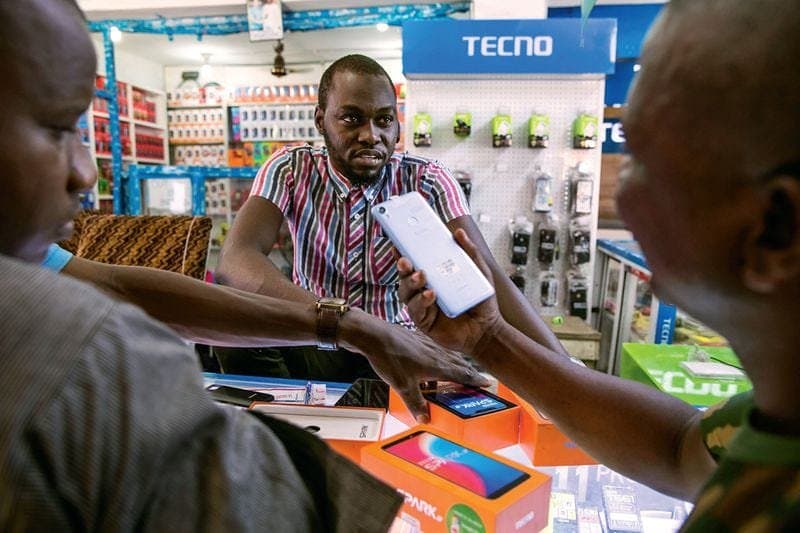
The smartphone revolution that put powerful computing devices in billions of pockets worldwide is facing an unexpected adversary: artificial intelligence. For decades, consumer electronics followed a predictable pattern of becoming more powerful while simultaneously becoming cheaper. This trend enabled unprecedented global access to computing power, particularly in developing markets where budget smartphones like the Tecno Spark Go provided internet access to hundreds of millions of people who previously had none. Now, this era of democratized computing is showing signs of reversing, with AI's voracious appetite for memory creating a supply crunch that's dramatically increasing costs across the consumer electronics landscape.
The fundamental issue lies in the physics of memory production. Unlike processors, which have benefited from Moore's Law's exponential improvements, memory technology has advanced at a much slower pace—historically around 7% annually compared to processors' 60%. This "memory wall" has always been a bottleneck in computing, but it's now becoming a crisis point. Building state-of-the-art DRAM fabrication facilities costs $15-20 billion, with additional billions required for specialized equipment, creating a market dominated by just three players: South Korea's SK Hynix and Samsung, and the U.S.-based Micron.
What makes the current situation unique is the emergence of AI as a dominant consumer of memory. AI workloads require an entirely different type of memory called High Bandwidth Memory (HBM), which stacks memory dies vertically to create parallel data pathways to processors. This design allows HBM to transfer an order of magnitude more data than traditional DDR memory, making it essential for AI training and inference workloads. However, HBM is extraordinarily wafer-intensive—each gigabyte of HBM consumes more than three times the wafer capacity of gigabytes of DDR or LPDDR memory.
The shift has been dramatic. In 2023, HBM accounted for just 2% of memory makers' wafer capacity; by the end of 2026, that share is expected to hit 20%, with an additional 3% allocated toward high-density DDR for AI servers. SK Hynix, which pioneered leading-edge HBM production, saw its HBM revenue increase fourfold in 2024 alone, with HBM now accounting for over 40% of the company's DRAM revenue. This reallocation has been incredibly profitable for memory makers, who are projected to earn more than $140 billion in combined profit in 2026, but devastating for consumer electronics manufacturers.
The consequences are already visible across the market. Between Q1 2025 and Q1 2026, prices for LPDDR4 memory increased 250%, while LPDDR5 prices jumped 220%. In some markets, DDR5 prices surged 414% year-over-year. Memory now accounts for up to 50% of the bill of materials for budget smartphones, compared to just 15% a few years ago. This has made sub-$100 smartphones "permanently uneconomical," forcing manufacturers to either increase prices dramatically or exit the market entirely.
The impact is most severe in developing markets. In Africa, where 81% of smartphone shipments were in the sub-$200 category in 2025, consumers are being systematically priced out of smartphone ownership. Transsion, which holds 48% of the African smartphone market, reported a 54% drop in net profit for 2025 and cut its shipment target by 40%. India's sub-$100 smartphone market collapsed 59% year-on-year in early 2026, creating what analysts call "forced premiumization." Even mid-range manufacturers like Oppo and Vivo have reduced shipment targets by 15-20%.
But the crisis isn't confined to budget devices. Higher-end manufacturers are feeling the pinch as well. Samsung's consumer division couldn't secure a long-term LPDDR agreement with its own memory division, resulting in the Galaxy S26 shipping with less memory than expected at higher prices. Dell hiked laptop prices by 15-20% in late 2025. Even Apple, with its significant bargaining power, has been forced to pay a 100% premium on LPDDR5X memory for the iPhone 17 Pro after its long-term agreements expired, leading to production delays for the iPhone 18 and new Mac Studio.
Some industry experts question whether this memory crunch represents a permanent shift or a temporary imbalance. "Memory makers have always been overly cautious due to the industry's boom-and-bust cycles," argues Dr. Elena Rodriguez, a semiconductor analyst at TechInsights. "They're likely to expand capacity aggressively once they see sustained profitability, which could alleviate shortages by 2028." Others point to emerging Chinese memory manufacturers like ChangXin Memory Technologies, which already commands over 30% of China's LPDDR market and is scaling rapidly to fill the gap for consumer memory.
However, the fundamental economics suggest the crunch may persist. Hyperscalers like Microsoft and Google are reportedly "practically taking up permanent residence in Korea" to lobby memory makers for allocation, with DRAM now accounting for over 30% of hyperscaler capital expenditures. Even Chinese manufacturers are planning to convert about 20% of their capacity to HBM. As Nvidia prepares to launch its Vera Rubin platform in late 2026, which is projected to consume more LPDDR than Apple and Samsung combined, the pressure on memory supplies will only intensify.
The long-term implications extend beyond smartphones. JPMorgan projects memory could account for 45% of the iPhone's component cost by 2027, up from roughly 10% today. This suggests either significant price increases or margin compression across the consumer electronics industry. The era of devices becoming more powerful while simultaneously becoming cheaper appears to be ending, potentially reversing the democratization of computing that has defined the past few decades.
For the world's poorest consumers, the consequences are immediate and severe. For wealthier markets, the transition will be more gradual but no less significant. As memory continues to be the most critical bottleneck in computing, the allocation decisions made by a handful of memory makers in Seoul and Boise will increasingly determine who can access the digital economy and who cannot. The smartphone revolution that connected billions may be entering a period of contraction, with AI's insatiable appetite for memory serving as the primary catalyst.
Comments
Please log in or register to join the discussion