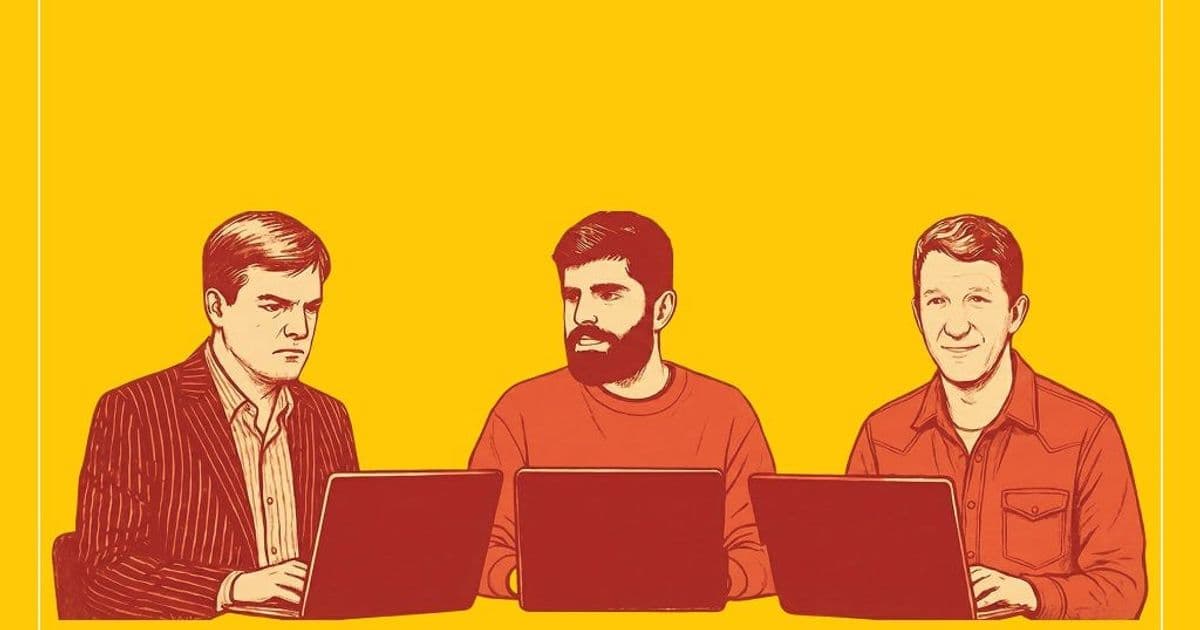
A rare collaboration between Michael Burry, Anthropic co-founder Jack Clark, and AI podcaster Dwarkesh Patel sparks intense debate about AI's real-world impact, productivity claims, and employment disruption.
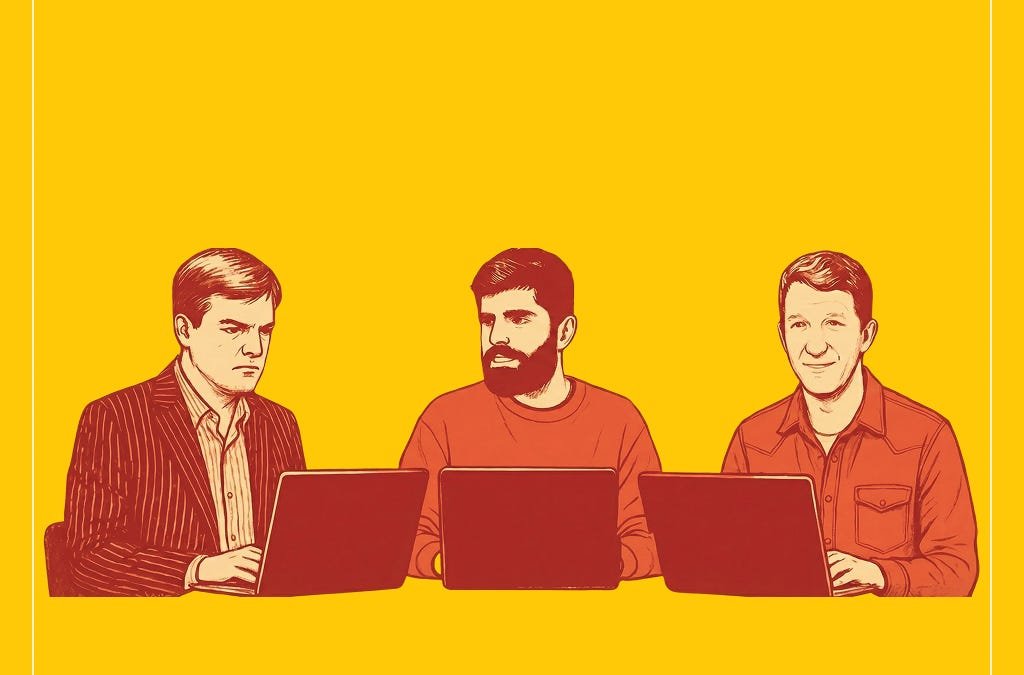
The most revealing AI discourse often happens far from staged keynotes. When Michael Burry – the investor who foresaw the 2008 housing crash – joins forces with Anthropic co-founder Jack Clark and independent AI analyst Dwarkesh Patel, the resulting dialogue cuts through industry hype. Their recently published discussion grapples with three critical questions: Are AI tools genuinely boosting productivity? Will they trigger catastrophic job losses? And where is this technology fundamentally taking humanity?
Productivity: The Great Disconnect Clark argues that AI's productivity impact is already measurable but unevenly distributed. "We're seeing double-digit efficiency gains in specific verticals like code generation and legal document review," he notes, pointing to Anthropic's enterprise data. However, Burry counters with skepticism reminiscent of his subprime mortgage analysis: "Productivity statistics are lagging indicators. What we're seeing now is speculative froth – companies buying AI tools because they fear being left behind, not because they've proven ROI." Patel bridges the gap, observing that early studies show AI benefits junior employees more than seniors: "It's a democratizing force for entry-level tasks but creates competency cliffs where human judgment becomes critical."
The Employment Dilemma On job displacement, tensions surface. Clark acknowledges short-term disruption but emphasizes adaptation: "History shows technology creates new roles we can't envision – prompt engineering didn't exist three years ago." Burry delivers a characteristically grim assessment: "This isn't the industrial revolution. AI automates cognitive labor, not just mechanical. We're facing structural unemployment in knowledge work that no 'reskilling' program can address at scale." Patel raises the underdiscussed risk of wage suppression: "When AI handles 30% of your job, employers won't pay 100% of your salary. We need policy frameworks for partial displacement now."
Existential Horizons The conversation pivots to AI's trajectory. Clark defends incremental safety efforts at Anthropic: "We're engineering systems with constitutional constraints precisely to avoid runaway scenarios." Burry, channeling his macro-economic lens, warns of concentration risk: "Five companies control the infrastructure. That's a single point of failure for civilization." Patel proposes a nuanced middle path: "The danger isn't superintelligence emerging overnight, but mediocre AI systems making high-stakes decisions without oversight in healthcare or finance because we trusted the hype."
The Consensus Challenge All three agree that current AI discourse suffers from polarized thinking. Clark criticizes both 'accelerationists' ignoring risks and 'doomers' stifling progress. Burry laments financial markets treating AI stocks like 1999 dot-com plays. Patel identifies a critical gap: "We're debating AGI while most real-world harm comes from today's narrow systems – biased hiring algorithms, deepfake scams, and copyright erosion."
This collision of perspectives highlights AI's thorniest contradictions: unprecedented potential coupled with unquantifiable risk, efficiency gains shadowed by employment anxiety, and philosophical questions masquerading as technical problems. As Patel concludes: "The future isn't being decided in labs alone, but in these messy, multidisciplinary conversations where economics meets ethics."
Comments
Please log in or register to join the discussion