Amazon's $20 billion semiconductor business growth creates unprecedented control over AI infrastructure, raising significant data protection challenges and concentration risks that regulators worldwide are struggling to address.
Amazon's custom silicon business has exploded into a $20 billion annual operation, fundamentally reshaping the datacenter chip market and creating unprecedented concentration of power in cloud infrastructure. During the company's first quarter earnings call, CEO Andy Jassy revealed that if Amazon treated its chip business as a standalone entity selling to both AWS and external customers, the revenue would approach an astonishing $50 billion annually.
This vertical integration—where Amazon controls not just the cloud services but the underlying hardware—raises profound questions about data protection, regulatory oversight, and the future of privacy in the AI era. As Amazon's Graviton processors, Trainium AI training chips, and Nitro security chips become increasingly embedded in global digital infrastructure, the company's influence extends from the silicon layer up to the application layer, creating new challenges for privacy advocates and regulators alike.
What Happened: Amazon's Semiconductor Ambitions
Amazon's semiconductor business has evolved from an internal efficiency initiative to one of the world's top three datacenter chip operations. The company's portfolio includes:
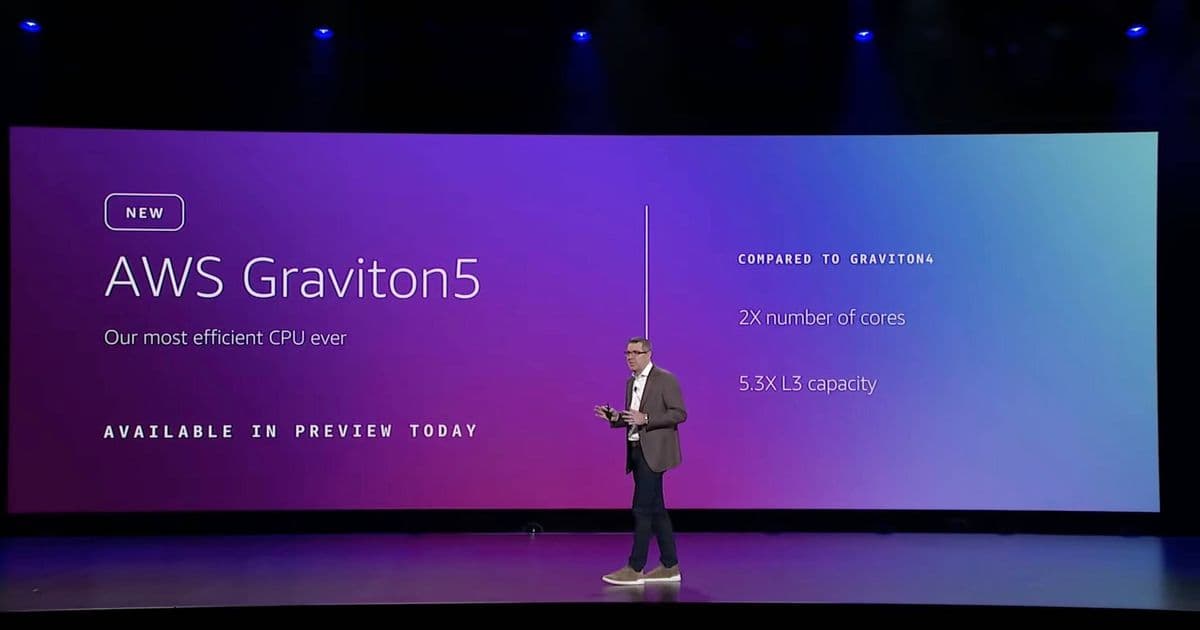
- Graviton processors: Used by 98% of the top 1,000 EC2 customers, claimed to deliver 40% better price performance than x86 alternatives
- Trainium AI training chips: With $225 billion in committed revenue, including multi-gigawatt deals from OpenAI and Anthropic
- Nitro security chips: Designed to enhance cloud security while optimizing performance
The company reported that Trainium2 has largely sold out, Trainium3 is nearly fully subscribed, and much of Trainium4 (still 18 months from availability) has already been reserved, indicating overwhelming demand for Amazon's AI-optimized silicon.
The Legal Basis: Regulatory Challenges
Amazon's control over both hardware and software creates a unique challenge for data protection frameworks like the EU's General Data Protection Regulation (GDPR) and California's CCPA. When a single entity designs the chips, operates the cloud infrastructure, and provides the AI services, traditional notions of data controller and processor become blurred, making it difficult for individuals to exercise their data rights effectively.
"This level of integration creates what we might call a 'black box' of data processing," explains Dr. Elena Martinez, a privacy technology researcher at the International Digital Rights Institute. "When Amazon designs the chips that process your data, the cloud infrastructure that stores it, and the AI models that analyze it, there are limited ways for regulators or individuals to understand or challenge how personal information is being handled."
The European Union's Digital Markets Act (DMA) was designed to prevent gatekeeper platforms from engaging in self-preferencing and other anti-competitive practices. However, the DMA's effectiveness against Amazon's semiconductor ambitions remains uncertain, as the legislation focuses on service-level behaviors rather than hardware integration.
In the United States, the Federal Trade Commission and Department of Justice have shown increasing interest in tech sector consolidation, but Amazon's semiconductor ambitions present novel challenges. Unlike past tech monopolies, Amazon's power extends across multiple layers of the technology stack, making it difficult to define relevant markets for enforcement purposes.
Impact on Users and Companies
For individual users, Amazon's semiconductor expansion carries significant privacy implications that extend beyond traditional data collection concerns. When AI systems are trained on Amazon's proprietary hardware, the resulting models may carry embedded biases or design decisions that reflect Amazon's priorities rather than user needs.
"The chip architecture itself can influence how AI models process information," notes Dr. Sarah Johnson, an AI ethics researcher. "If Amazon's Trainium chips are optimized for certain types of neural network operations, it may create incentives for developers to build AI systems that align with these architectural strengths, potentially leading to unintended consequences for privacy and fairness."
For enterprise customers, Amazon's semiconductor strategy presents both opportunities and risks. On one hand, the company claims its Graviton processors deliver significant performance improvements. On the other hand, this deep integration creates substantial switching costs, as companies build their infrastructure around Amazon's proprietary chips and services.
The most significant impact may be felt by the AI research community. Amazon's multi-billion dollar commitments from OpenAI and Anthropic represent a substantial portion of the available AI training capacity, potentially concentrating the development of advanced AI models in the hands of a few well-funded organizations. This concentration could accelerate AI progress but also raise concerns about the diversity of AI development and potential alignment issues.
What Changes: The Need for New Regulatory Approaches
Amazon's semiconductor expansion necessitates a fundamental rethinking of regulatory approaches to data protection and competition. Traditional frameworks were developed in an era where hardware, cloud services, and AI applications were more distinct. Amazon's integrated approach creates gaps in oversight that regulators are only beginning to address.
"We're entering uncharted territory," says Marco Ricci, a competition policy expert at the University of Amsterdam. "Traditional antitrust enforcement looks at market shares and pricing, but Amazon's semiconductor strategy creates a form of technological lock-in that goes beyond these traditional metrics. When your competitors can't access your hardware innovations, and your hardware is optimized for your own cloud services, you're creating barriers that are difficult to measure with existing tools."
For privacy advocates, the most concerning aspect is the lack of transparency in this integrated system. When Amazon designs the chips that process data, the infrastructure that stores it, and the AI models that analyze it, there are limited ways for external oversight to ensure that privacy protections are being implemented effectively.
"We need new approaches to privacy governance that can address these integrated ecosystems," argues Dr. Martinez. "Traditional privacy regulations assume a separation between different components of the technology stack, but Amazon's approach blurs these lines. We may need to develop new frameworks that can evaluate privacy implications at the architectural level, rather than focusing solely on application-level compliance."
The Environmental and Ethical Dimensions
Amazon's semiconductor expansion also carries significant environmental implications that intersect with privacy concerns. The company's multi-gigawatt training commitments from OpenAI and Anthropic highlight the enormous energy requirements of modern AI infrastructure, creating environmental impacts that disproportionately affect marginalized communities.
From an ethical standpoint, the concentration of AI infrastructure in the hands of a few large corporations raises important questions about algorithmic governance and accountability. When critical AI services are built on proprietary hardware with limited transparency, it becomes more difficult for independent researchers to audit these systems or develop privacy-preserving alternatives.
Looking Forward
As Amazon continues to expand its semiconductor ambitions—with Trainium4 already largely reserved despite being 18 months from availability—the company's influence over the digital economy will only grow. For privacy advocates and regulators, the challenge is to develop governance frameworks that can address the unique risks posed by this level of vertical integration while still allowing for innovation and competition.
Several potential approaches are emerging:
- Hardware-level transparency requirements that would mandate disclosure of chip design decisions that affect data processing
- New regulatory categories for "integrated technology ecosystems" that recognize the unique competitive dynamics of companies like Amazon
- Enhanced data portability requirements that would make it easier for users and businesses to move between different technology platforms
- Public investment in alternative infrastructure to prevent over-reliance on private technology conglomerates
In conclusion, Amazon's transformation into a major semiconductor manufacturer represents one of the most significant developments in the tech industry in recent years. While the company's integrated approach offers compelling performance benefits, it also creates unprecedented challenges for data protection and regulatory oversight. As AI becomes more deeply integrated into society, the decisions made by companies like Amazon about chip design and infrastructure deployment will shape the digital future in ways that extend far beyond the datacenter, carrying profound implications for privacy, competition, and technological sovereignty.
Comments
Please log in or register to join the discussion