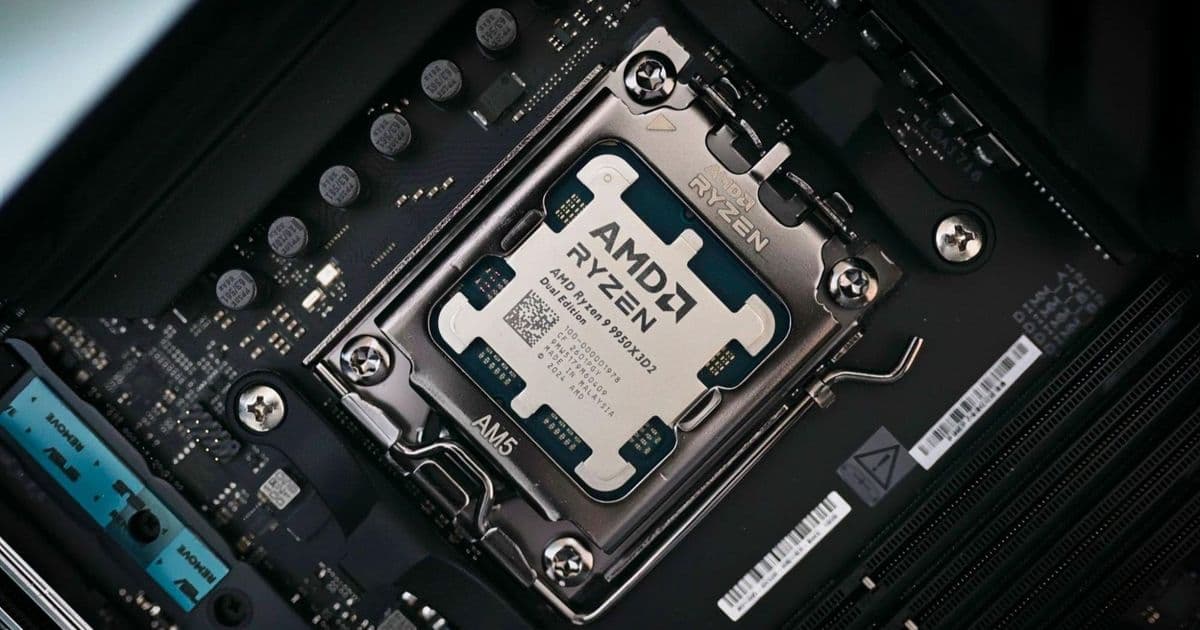
AMD has confirmed extended support for its AM5 socket through 2029, extending the platform's lifespan by two years beyond previous commitments. This move ensures at least two more CPU generations (Zen 6 and potentially Zen 7) will utilize the current socket, providing stability for consumers and enterprises. The announcement comes alongside news of EXPO Ultra Low Latency memory technology promising 4% performance gains.
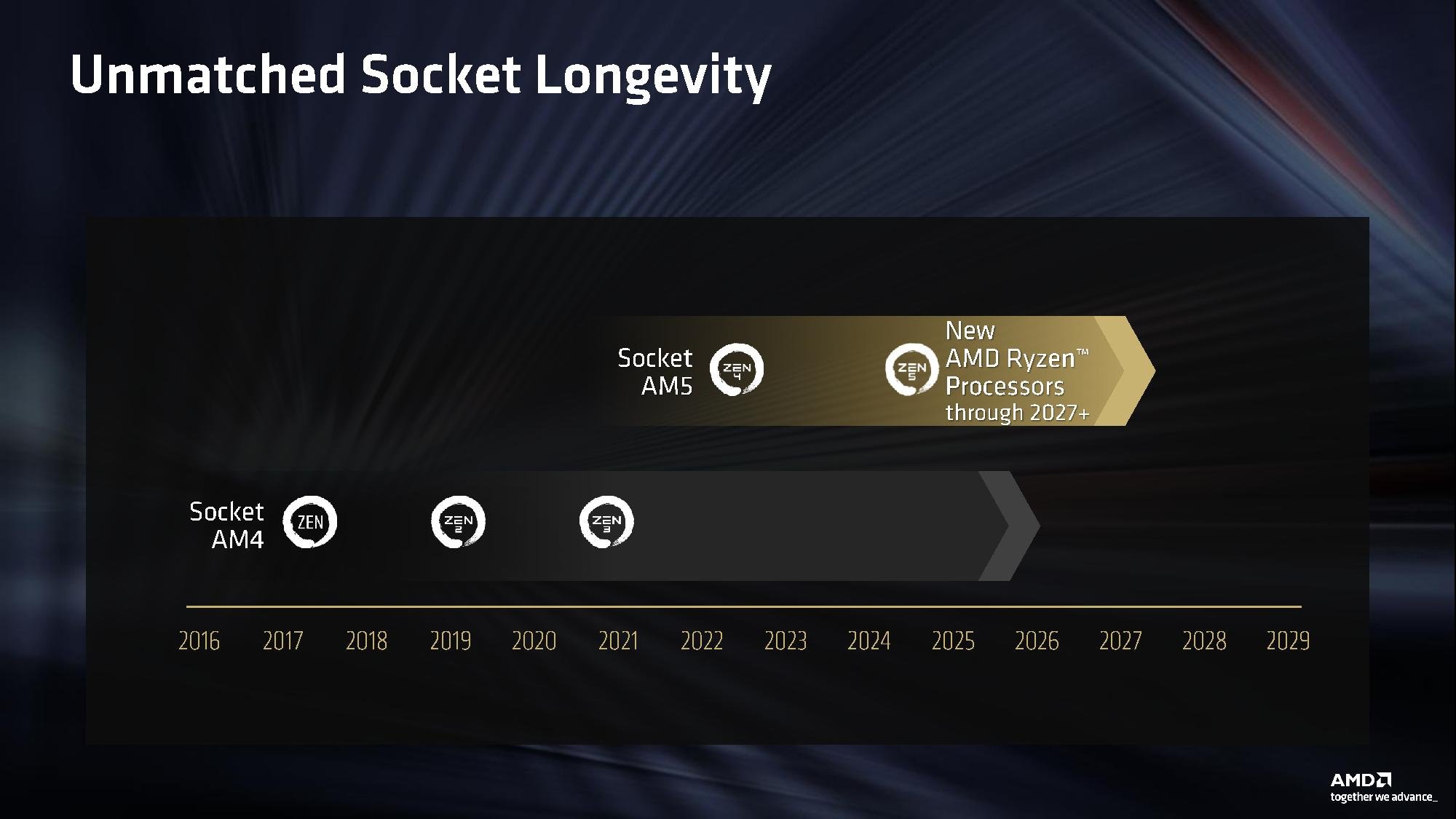
At Computex 2026, AMD made a significant announcement that extends the lifespan of its current AM5 socket platform through 2029, representing a two-year extension beyond the previously committed 2027 support window. This strategic decision confirms that consumers and enterprise customers can expect at least two more CPU generations to utilize the AM5 socket before potential architectural changes occur.
Platform Evolution and Commitment Timeline
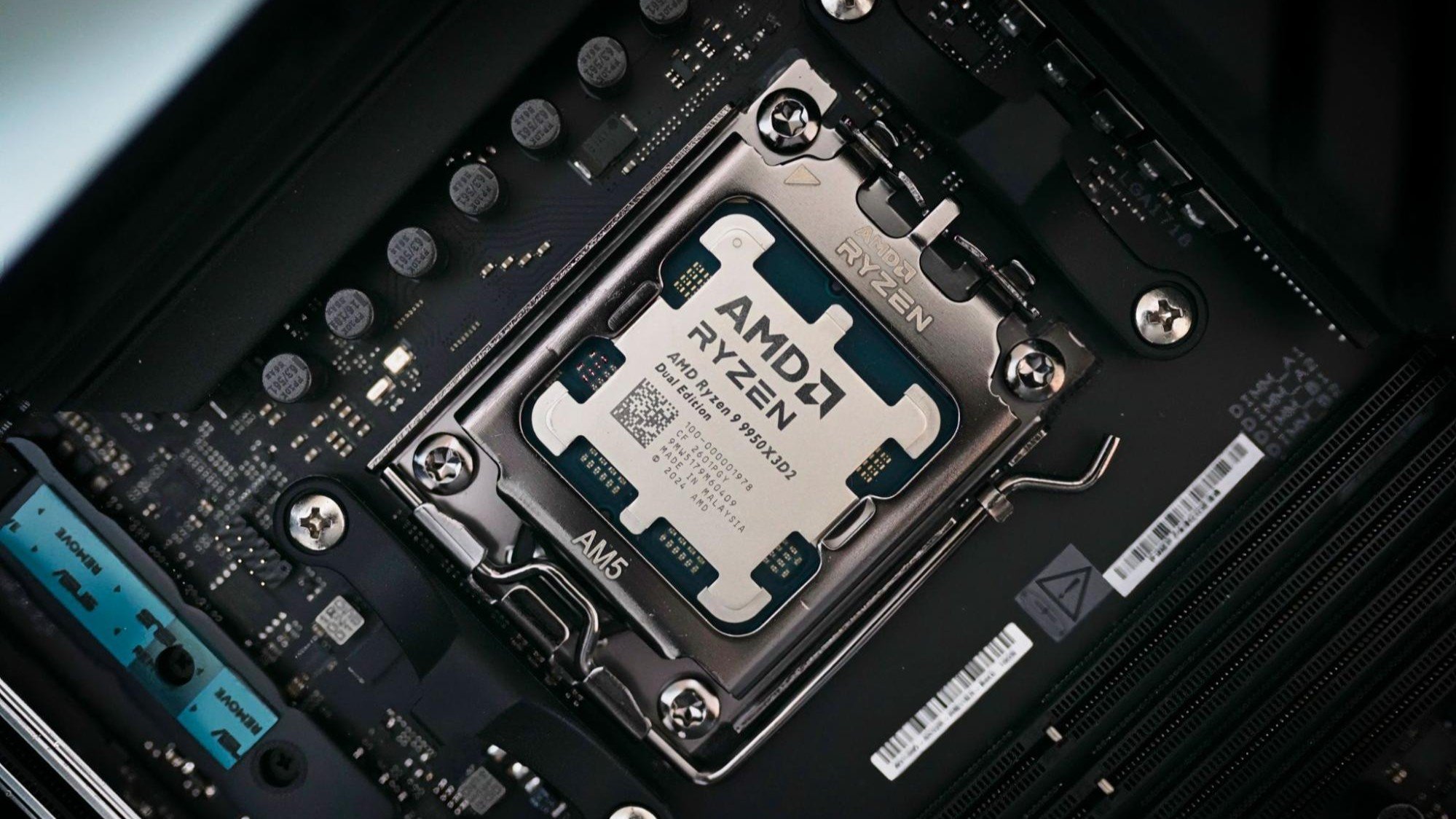
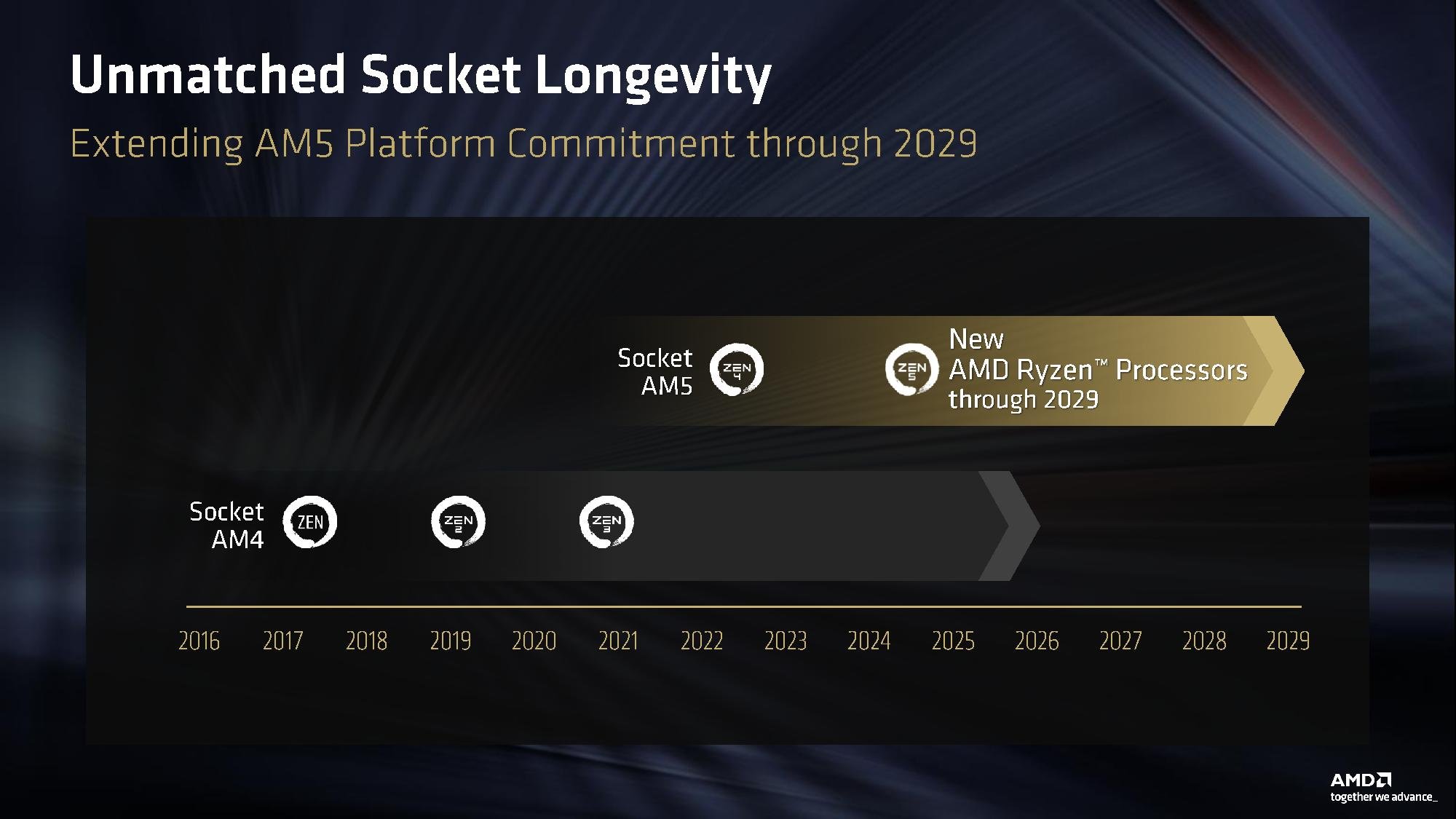
The AM5 socket, introduced alongside Ryzen 7000 CPUs with Zen 4 architecture in 2022, has undergone several commitment timeline extensions. Initially, AMD pledged support through "2025+," which was extended to "2027+" with the release of Zen 5 in 2024. The latest commitment of "2029"—notably without the plus sign that typically indicates potential further extension—suggests a more concrete long-term vision for the platform.
This extended timeline aligns with AMD's typical product cadence, where the company has traditionally released new CPU architectures every 2-3 years. With Zen 4 launching in late 2022 and Zen 5 following in 2024, the pattern suggests Zen 6 could arrive in 2025-2026, with Zen 7 potentially following in 2027-2028, allowing the platform to reach its 2029 endpoint with a full generation cycle.
Technical Specifications and Architecture Implications
The AM5 socket, featuring LGA1718, represents a significant departure from AMD's previous AM4 platform. It supports DDR5 memory, PCIe 5.0, and incorporates an integrated voltage regulator (IVR) for improved power efficiency and overclocking capabilities.
Looking at the expected specifications of future generations:
Zen 6: Expected to leverage TSMC's 3nm process node, potentially delivering 15-20% IPC improvements over Zen 5. The architecture may introduce enhanced AI capabilities, improved branch prediction, and refined cache hierarchy. With Zen 6 already confirmed for data center deployment in 2025, the consumer version on AM5 would likely follow in 2026.
Potential Zen 7: If released before the 2029 endpoint, Zen 7 could utilize TSMC's 2nm process, potentially delivering another 10-15% IPC gains. This would complete a nearly decade-long run for the AM5 platform architecture, from 2022 to 2029.
EXPO Ultra Low Latency: Memory Performance Enhancement
Alongside the socket extension, AMD teased EXPO Ultra Low Latency (ULL), a new version of its automatic memory overclocking technology. According to AMD's presentation, EXPO ULL promises an average 4% performance uplift compared to the original EXPO standard, and a 13% improvement over running DDR5 at JEDEC default speeds.
The EXPO standard, introduced in 2022, simplifies memory overclocking by providing pre-configured profiles that work across compatible motherboards. EXPO ULL appears to refine this approach with tighter timings and optimized voltage profiles specifically designed for low-latency scenarios, which would benefit gaming and certain workstation applications.
Memory partners including G.Skill, Kingston, V-Color, Teamgroup, Lexar, and XPG have confirmed plans to release EXPO ULL-compatible modules, though AMD has not provided a specific launch date beyond "coming soon."
Market Implications and Competitive Positioning
The extension of AM5 support through 2029 represents several strategic advantages for AMD:
Consumer Upgrade Cycles: By extending socket compatibility, AMD provides a longer upgrade path for existing AM5 users. This increases the total cost of ownership for the ecosystem, as consumers can upgrade CPUs without requiring motherboard changes for up to 7 years (2022-2029).
Competitive Response: Intel's recent socket changes (LGA1700 to LGA1851) with its Arrow Lake and future Lunar Lake architectures have created uncertainty in the upgrade market. AMD's extended AM5 timeline offers a counter-narrative of platform stability.
Enterprise and Data Center Strategy: With Zen 6's data center debut in 2025, the extended AM5 timeline provides continuity for enterprise customers who may have standardized on AM5-based systems for certain workloads.
Motherboard Market Impact: The extended AM5 lifespan provides motherboard manufacturers with a longer sales window for their products, potentially reducing R&D pressure to develop new socket platforms sooner than necessary.
Supply Chain and Manufacturing Considerations
The extended AM5 timeline also reflects manufacturing realities. As TSMC's 3nm and 2nm processes become more mature and cost-effective, AMD can leverage these advanced nodes for its consumer CPUs while maintaining platform compatibility. This approach contrasts with Intel's strategy of introducing new sockets with each major architecture change.
The decision to extend AM5 support also suggests confidence in the platform's power delivery and electrical characteristics. The AM5 socket's design with integrated voltage regulation provides sufficient headroom for multiple generations of CPU architectures, even as power requirements may evolve.
Performance Projections and Real-World Impact
Based on historical performance improvements between AMD's architectures:
- Zen 4 to Zen 5 delivered approximately 13-15% IPC improvements
- Zen 5 to Zen 6 could potentially deliver 15-20% IPC gains
- Combined with EXPO ULL's 4% memory performance improvement
This suggests that a complete upgrade from Zen 4 to Zen 7 with EXPO ULL memory could deliver cumulative performance improvements of 35-45%, representing a significant generational leap over the platform's lifespan.
For gaming specifically, the combination of improved CPU architectures and lower-latency memory could translate to 5-10% higher frame rates in CPU-bound scenarios, with particular benefits in open-world games and simulations where CPU performance directly impacts frame times.

Conclusion: Strategic Platform Longevity
AMD's decision to extend AM5 support through 2029 demonstrates a strategic commitment to platform stability while continuing to deliver architectural improvements. The move balances technical innovation with practical considerations for consumers, system builders, and enterprise customers.
With Zen 6 expected in data centers later in 2025 and likely to reach consumers in 2026, followed by potentially Zen 7 in 2027-2028, AMD has positioned AM5 as a long-term platform capable of supporting nearly a decade of CPU evolution. This approach contrasts with more frequent socket changes and provides a compelling alternative to Intel's more aggressive platform refresh strategy.
The combination of extended socket support and memory technologies like EXPO ULL suggests AMD is focusing on delivering sustained performance improvements within a stable ecosystem, potentially addressing one of the key concerns of PC enthusiasts and enterprise buyers: platform longevity and upgrade flexibility.
Comments
Please log in or register to join the discussion